
How to remove front panel of Kenmore washer?
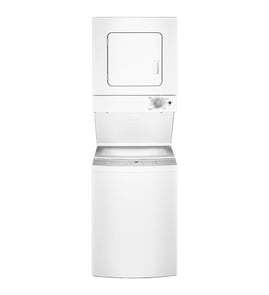
For the Kenmore 41789395100 stacked laundry center, we remove the washer front panel by disconnecting power and water, then taking off the top and control components to access the front-panel screws and bottom retaining clips. This gives you access to the door boot area, pump, and internal wiring.
Before you start (safety and prep)
- Unplug the laundry center (or switch off the breaker).
- Shut off both water supply valves.
- Place a towel and shallow pan under the front area (small spills are common).
- Protect the floor; the cabinet edges can scratch.
- Take photos of wire routing and screw locations as you go.
Typical front panel removal steps
- Remove the top panel: take out the rear screws, slide the top back, then lift it off.
- Remove the control panel area: pull the knob(s) if needed, remove visible screws, then release any locking tabs/clips.
- Open the washer door and remove the spring clamp holding the door boot (bellows) to the front panel; peel the boot lip off the front panel only.
- Remove the door lock screws (usually accessible from the front once the boot lip is free) and gently push the lock into the cabinet.
- Remove front panel fasteners: look along the top edge (under the control area) and the lower edge (near the toe/kick area).
- Lift and pull the front panel: tilt it forward, then lift to release the bottom clips.
Where people get stuck
| Symptom | Most common cause | What to do |
|---|---|---|
| Panel will not pull forward | Bottom clips still engaged | Lift the panel upward while pulling the top toward you |
| Boot will not come off | Clamp still installed | Work the clamp off slowly with a flat screwdriver |
| Door lock will not clear | Lock screws still in place | Remove screws, then push lock inward before lifting panel |
Why it matters
Removing the front panel the right way prevents tearing the door boot, stripping cabinet screw holes, or pulling on the door lock wiring. That saves time and avoids leaks after reassembly.
Parts you may need after reassembly
If you find a missing or stripped fastener during the job, match it to the correct replacement from the parts list for this model, such as the screw 131168200.
Last updated: February 2026
Is it worth repairing a Kenmore washing machine?
Yes, repairing a Kenmore washer is usually worth it when the problem is a common, contained failure (like a leaking inlet valve or a worn hose connection) and the rest of the machine is in good shape. For the Kenmore 41789395100 laundry center, many repairs are straightforward and cost far less than replacing the unit.
A practical way to decide
Use these checkpoints before you buy parts or schedule service:
- Repair it if the issue is isolated (leak, no fill, loose connection, minor hardware damage).
- Repair it if the washer still spins and drains normally and the tub and cabinet are solid.
- Consider replacement if you have repeated major failures (drive system, tub, or multiple electrical issues).
- Consider replacement if repair cost is close to half the price of a comparable new unit.
- Repair it if you can confirm the failure with basic checks (hoses, screens, power, lid/door closure).
Common “worth it” repairs on this model
These are frequent, high-impact fixes that typically restore normal operation:
- Replace a leaking or non-filling inlet valve: water valve 134190200
- Stop drips at the hose connection with a new seal: hose washer 5303161296
- Fix a cracked or leaking drain line: drain hose 131210200
- Tighten or replace stripped fasteners (panels, brackets): screw 131168200
Quick cost-to-benefit comparison
| Situation | Typical outcome | Usually worth repairing? |
|---|---|---|
| Won’t fill or fills slowly | Often a valve or clogged inlet screen | Yes |
| Leaks at supply hose | Often a hose washer or loose connection | Yes |
| Leaks from drain path | Often a drain hose or clamp issue | Yes |
| Multiple major symptoms at once | Can indicate broader wear | Sometimes |
Why it matters
A stacked laundry center like the Kenmore 41789395100 is expensive to replace and harder to swap due to venting, water hookups, and tight spaces. Fixing a single failed part (valve, hose, seal, clamp) often gets you back to reliable washing with minimal downtime.
Helpful DIY prep
Before you start any repair, we recommend reviewing basic safety and tool readiness: are diy appliance repairs safe and must have tools for appliance repair.
Last updated: February 2026
Where to find the model number on a Kenmore laundry center?
On Kenmore laundry center model 41789395100, the model number is printed on a rating label attached to the unit’s cabinet or frame. Most commonly, you’ll find it under the washer lid on the top frame, on the side of the washer cabinet near the bottom, or in the washer door jamb on front-load style units.
Common label locations to check
Look for a sticker or metal tag with the model number and serial number. Check these spots first:
- Under the washer lid, on the top rim of the washer opening
- Inside the washer opening, along the front frame
- On the left or right side panel of the washer cabinet (often near the bottom front)
- In the washer door jamb (if your unit has a front-load washer)
- Behind the lower access panel area (some stacked units place the tag low on the cabinet)
What the model number label looks like
The label usually includes several identifiers. Use the model number for parts lookup.
| Label item | What it’s used for | Example format |
|---|---|---|
| Model number | Finding correct parts diagrams and parts | 41789395100 |
| Serial number | Identifying production run details | Letters and numbers |
| Electrical ratings | Verifying power requirements | Volts/amps |
Why it matters for parts and repairs
We use the full model number to match the exact configuration of your laundry center (controls, wiring, water valve style, and cabinet parts). Even small model number differences can change which parts fit.
If the label is missing or unreadable
Use these practical options:
- Check for a faint “shadow” outline where a sticker used to be
- Look for a second tag on a side panel or inside the washer opening
- If you’re replacing a common leak or fill issue, match parts by model once you locate it (for example, the water valve 134190200)
Anchoring a repair to the correct model number helps avoid ordering the wrong screw, clamp, hose washer, or inlet valve.
Last updated: February 2026
What is the average lifespan of a Kenmore washer?
A Kenmore washer typically lasts 10 to 15 years with normal household use and basic maintenance. For your Kenmore 41789395100 stacked laundry center, lifespan depends most on load size, detergent choice, and keeping water fill and drain systems working correctly (hoses, inlet valve, and drain path).
Typical lifespan by use level
Lifespan is driven more by usage than by brand name. Here’s a practical rule of thumb:
| Use pattern | What it looks like | Typical lifespan |
|---|---|---|
| Light | 1 to 3 loads/week | 12 to 15 years |
| Average | 4 to 7 loads/week | 10 to 13 years |
| Heavy | 8+ loads/week | 7 to 10 years |
What shortens washer life fastest
These are the most common “lifespan killers” we see on laundry centers like model 41789395100:
- Overloading the washer, which strains the drive system and suspension
- Too much detergent, which causes residue, odors, and extra wear
- Poor water supply, including restricted inlet screens or a failing inlet valve
- Drain restrictions, such as a kinked drain hose or slow household drain
- Running unlevel, which increases vibration and component fatigue
Maintenance that adds years (simple, high impact)
Use these habits to keep performance steady and reduce breakdowns:
- Keep loads balanced and avoid packing the tub tight
- Use HE detergent in the correct amount (even if the machine is older)
- Periodically run a hot cleaning cycle (or hot wash with no laundry)
- Check fill hoses for bulges or leaks; replace if worn
- Inspect the drain setup and replace a cracked or leaking drain hose 131210200 when needed
Parts that commonly affect longevity on this model
If the washer is not filling correctly, fills slowly, or overfills, the inlet valve is a frequent wear item. If you’re troubleshooting fill problems, start with the water valve 134190200.
Quick symptom-to-part guide
- Slow fill or no fill: inlet screens, then inlet valve
- Leaks at the back or standpipe area: drain hose and clamps
- Excess vibration: leveling legs and proper installation
Why it matters
A washer that fills and drains correctly runs cooler, spins more smoothly, and puts less stress on the motor, drive components, and tub support. That directly translates into fewer repairs and a longer service life.
Last updated: February 2026