Owner’s manual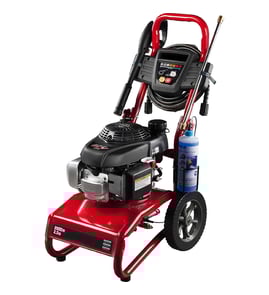



Can you put 87 gas in a pressure washer?
Yes. For the Craftsman 580768332 gas pressure washer, regular unleaded gasoline with an 87 octane rating is the correct fuel choice for normal operation. Always refuel only after the engine cools, and use the fuel and safety guidance in the owner's manual.
Fuel guidance for model 580768332
Use clean, fresh unleaded gasoline and avoid mixing fuels or using stale gas.
- Use 87 octane unleaded for everyday use.
- Keep the fuel container clean and sealed to reduce moisture and contamination.
- Do not overfill the tank; leave room for expansion.
- Wipe up spills immediately and move the unit away from fumes before starting.
- Store gasoline safely and away from heat, sparks, or open flame.
Safe refueling steps (important)
Gasoline vapors can ignite easily, so we recommend this routine every time:
- Shut the pressure washer off and let the engine cool completely.
- Refuel outdoors in a well-ventilated area.
- Keep cigarettes, flames, sparks, and hot surfaces away.
- Tighten the fuel cap securely before restarting.
Quick reference table
| Fuel question | What we recommend | Notes |
|---|---|---|
| Can I use 87 octane? | Yes | Standard unleaded is the normal choice. |
| Can I use higher octane? | Usually yes | Higher octane typically does not improve cleaning power; follow the manual’s guidance. |
| Can I run it without water hooked up? | No | Always supply water before running the pump to help prevent damage. |
Why it matters
Using the right fuel and safe refueling practices helps your engine start easier, run smoother, and reduces fire risk. Separately, supplying proper water flow (and staying under the maximum inlet water temperature listed in the manual) helps protect the pump and seals.
Last updated: February 2026
Is it worth repairing a pressure washer?
Yes, repairing a Craftsman pressure washer like model 580768332 is usually worth it when the problem is a wear item (hose leak, clogged inlet screen, routine tune-up) and the engine and pump are still in good shape. Our rule: if a safe, reliable repair restores pressure and prevents pump damage, repair wins.
Quick way to decide
Use this checklist first; it matches the maintenance and inspection items called out in the owner's manual.
- Repair it if the issue is a leak, clog, or routine maintenance item (oil, spark plug, air filter, inlet screen).
- Repair it if the unit runs well but performance is inconsistent (often air in the pump, dirty filter, or a worn valve).
- Repair it if the high-pressure hose shows wear; replace it rather than risking a burst.
- Replace it if the engine has severe internal damage (knocking, no compression) or the pump is cracked.
- Replace it if multiple major systems are failing at once (engine + pump + frame damage).
What we check first (most common, low-cost fixes)
Before spending money, we focus on the items the manual says to inspect before each use:
- Engine oil level
- Water inlet screen condition (clean if clogged, replace if torn)
- High-pressure hose condition (cuts, leaks, bulges, damaged couplings)
- Spray gun and nozzle extension leaks; trigger and safety latch function
- Purge air/contaminants from the pump
Repair vs replace: practical comparison
| Situation | Typical outcome | Best move |
|---|---|---|
| Hose leaks, kinks, bulges, or damaged couplings | Pressure loss; safety risk | Replace the hose (do not patch) |
| Clogged inlet screen or in-line filter | Pulsing, low pressure | Clean/service the screen or filter |
| Engine runs but loses power under load | Poor cleaning performance | Diagnose fuel/air/spark and maintenance items |
| Pump damage from running without water | Persistent low pressure, noise, leaks | Pump repair or replacement may be needed |
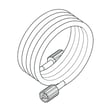
If you need a direct-fit replacement hose for this model, we recommend using the exact rated hose listed for your unit, such as the hose-2400psi 84006753.
Why it matters
A small leak or restriction can make the washer feel “worn out,” but it also increases strain on the pump and can lead to bigger failures. The manual specifically warns to replace a damaged high-pressure hose and to keep water supplied to the pump to avoid damage.
Last updated: February 2026
What is a good PSI for a gas pressure washer?
For most home cleaning, a good gas pressure washer PSI is typically 1,300 to 2,800 PSI. Your Craftsman pressure washer model 580768332 is rated at 2,400 PSI, which is a strong all-around level for driveways, siding, decks, and general outdoor cleanup (with the right spray tip and technique). See the owner's manual for the model’s full specifications and safe-use limits.
Quick PSI guide for common jobs
- 1,300 to 2,000 PSI: cars, patio furniture, grills, delicate surfaces
- 2,000 to 2,800 PSI: driveways, sidewalks, fences, most home exteriors
- 2,800 to 3,500 PSI: heavy mildew, tough concrete stains, larger areas
- 3,500+ PSI: commercial or frequent heavy-duty use (higher risk of surface damage)
Match PSI with the right nozzle and technique
Even with a 2,400 PSI machine, the spray tip and distance control how aggressive the cleaning feels.
| What you change | What it does | Best practice |
|---|---|---|
| Spray tip angle | Narrower angle hits harder | Start with a wider fan tip first |
| Distance to surface | Closer increases impact | Test a small area before full cleaning |
| Trigger time | Heat builds in the pump when not spraying | Avoid idling with trigger off for long periods |
Model-specific specs that matter (580768332)
From the product specifications in the owner's manual, this model is designed around:
- Pressure: 2,400 PSI
- Flow rate: 2.2 GPM
- Water supply temperature: not to exceed 140°F
- Thermal relief behavior: warm-water discharge can occur after 3 to 5 minutes of running without spraying (this is normal pump protection)
Why it matters
Choosing the right PSI helps you clean faster without damaging wood, paint, or siding. With a 2,400 PSI rating, your 580768332 sits in the “sweet spot” for most homeowner tasks, especially when you start gently and increase intensity only as needed.
Last updated: February 2026