Owner’s manual
 Error Codes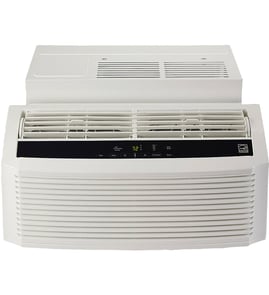




Does my LG portable air conditioner need to be drained?
Yes. Your LG LP1311BXR portable air conditioner can collect water during normal cooling, and you may need to drain it when the internal tank fills or if you see water leaking. For the exact drain location and steps for your unit, follow the LP1311BXR owner's manual.
When you typically need to drain it
- The unit shuts off and indicates the tank is full (varies by model and display)
- You notice water pooling under or behind the unit
- You are storing the unit for the season and want to empty residual water
- You are running it in very humid conditions for long periods
How to drain a portable AC safely
- Turn the unit off and unplug it.
- Move it to a spot where water can be captured (shallow pan) or drained.
- Locate the drain port near the lower rear of the cabinet.
- Remove the drain cap, then let water flow out.
- Reinstall the cap securely before restarting.
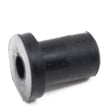
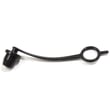
If your drain cap is missing or won’t seal, replace it with the correct part for this model: room air conditioner drain hose cap COV30330403.
Quick part and symptom guide
| Symptom | Most likely cause | What to check |
|---|---|---|
| Water leaks from the back/bottom | Drain cap loose or missing | Drain cap fit and seal |
| Water won’t drain well | Hose/cap issue or blockage | Drain opening for debris |
| Musty odor after storage | Water left inside | Drain fully before storing |
Why it matters
Draining when needed helps prevent leaks, reduces musty odors, and protects internal electrical components from moisture.
Last updated: January 2026
Is the LG portable air conditioner any good?
Yes. LG portable air conditioners are a solid choice for spot-cooling bedrooms, offices, and other small to medium rooms when they are sized correctly and vented properly. For the LG LP1311BXR, performance depends most on correct exhaust setup, clean airflow, and a working control system; see the LP1311BXR owner’s manual for operating and maintenance details.
What “good” looks like for a portable AC
A portable air conditioner is doing its job when it cools steadily, manages humidity, and runs without frequent shutoffs.
- Cools the intended room size without running nonstop
- Exhaust hose is short, straight, and well-sealed at the window
- Air filter is clean and airflow is strong
- Condensate management matches your mode (cool, dry, fan)
- Noise level is acceptable for the room (portable units are typically louder than window units)
Quick pros and cons (portable AC in general)
| Category | What to expect | What to watch for |
|---|---|---|
| Cooling | Effective for targeted rooms | Undersizing leads to constant running |
| Installation | No permanent mounting | Poor window seal reduces cooling |
| Humidity | Can dehumidify while cooling | May need draining in humid climates |
| Noise | Normal compressor and fan noise | Often louder than a window unit |
If it is not cooling well, check these first
Before assuming the unit is “bad,” we recommend these basics for the LP1311BXR:
- Confirm the exhaust duct is attached and sealed; warm air leaks cancel cooling
- Clean the air filter and clear intake and discharge vents
- Set mode to Cool and temperature well below room temp; use High fan for faster pull-down
- Make sure doors and blinds are closed; reduce heat sources in the room
- If the unit trips or will not start, test the outlet and cord, then check for overheating protection
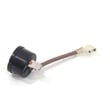
If the unit powers on but behaves erratically (random shutoffs, wrong temperature behavior), a failed sensor such as the room air conditioner thermistor COV30334601 or a control issue can cause poor performance.
Why it matters
Portable ACs are very sensitive to venting and airflow. A great unit can feel weak with a leaky window kit or clogged filter, while a properly installed unit can cool quickly and remove noticeable humidity.
Last updated: January 2026
What is the common problem of an LG air conditioner?
For the LG LP1311BXR room air conditioner, the most common problems are weak or no cooling, water leaking, and the unit not starting. In many cases, the fix is basic maintenance (airflow and drainage), but electrical or sensor issues can require parts testing.
Most common issues (and what usually causes them)
- Not cooling or weak cooling: clogged air filter, dirty evaporator/condenser coils, blocked exhaust/airflow, incorrect mode or temperature setting
- Water leaking: unit not level, clogged drain path, missing/loose drain components
- Won’t turn on: tripped breaker, loose plug, control problem
- Short cycling (turns on and off too often): restricted airflow, thermistor sensing issues
- Unusual noise or vibration: blower wheel debris, loose mounting, fan imbalance
Quick checks we recommend first
- Confirm the unit is set to Cool and the temperature is set well below room temperature.
- Clean the filter and make sure intake and discharge vents are not blocked.
- Verify the unit is sitting level and draining correctly.
- Power reset: unplug for 5 minutes, then plug back in.
- If symptoms persist, follow the troubleshooting steps in the LP1311BXR owner’s manual.
Parts that commonly relate to these symptoms
If maintenance and setup checks do not solve it, these model-matched parts are often involved:
| Symptom | Common part to check | What it affects |
|---|---|---|
| Weak/no cooling, short cycling | Room air conditioner thermistor COV30334601 | Temperature sensing and cycling behavior |
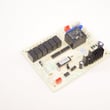
| Won’t start, erratic operation | Room air conditioner electronic control board COV30331502 | Power distribution and control logic |
| Water leaking | Room air conditioner drain hose COV30330402 and room air conditioner drain hose cap COV30330403 | Condensate routing and sealing |
Why it matters
Restricted airflow and poor drainage can make an LG portable air conditioner run longer, cool worse, and leak water. Catching those issues early also helps protect higher-cost components like the compressor.
Last updated: January 2026
What is the life expectancy of a LG portable air conditioner?
Most LG portable air conditioners, including model LP1311BXR, typically last 5 to 10 years with normal seasonal use and basic maintenance. Regular filter cleaning, correct drainage, and keeping airflow unobstructed are the biggest factors that help you reach the high end of that range; see the LP1311BXR owner's manual for model-specific care steps.
What affects lifespan the most
- Filter maintenance: a clogged filter makes the unit run hotter and longer.
- Drainage and humidity: poor draining can lead to water buildup and corrosion.
- Airflow and placement: blocked intake or exhaust raises operating temperature.
- Electrical supply: weak outlets, long extension cords, or frequent power issues stress the compressor.
- Storage habits: storing the unit wet or dirty shortens component life.
Maintenance checklist to help it last longer
- Clean the air filter on a regular schedule during heavy use.
- Keep the exhaust path clear and the ducting properly connected.
- Empty or drain water as needed for your humidity level.
- Keep the unit level so condensate flows correctly.
- If you see water leaking, inspect the drain connection and cap.
Common “end-of-life” symptoms vs. fixable issues
| Symptom | Often fixable? | What it usually points to |
|---|---|---|
| Runs but does not cool well | Yes | Dirty filter, airflow restriction, sensor issue |
| Shuts off and restarts frequently | Sometimes | Thermistor/sensor readings, control issue |
| Loud rattling or scraping | Sometimes | Fan or blower wheel wear |
| Trips breaker or will not start | Sometimes | Electrical issue, overload protector, control board |
If you’re troubleshooting water management, the room air conditioner drain hose COV30330402 and room air conditioner drain hose cap COV30330403 are common wear items that can help prevent leaks and moisture-related problems.
Why it matters
Portable AC units are compact and work hard in hot, humid conditions. Keeping airflow clean and condensate controlled reduces heat stress on the compressor and electronics, which is the main path to a longer service life.
Last updated: January 2026