
How much does downdraft ventilation cost?
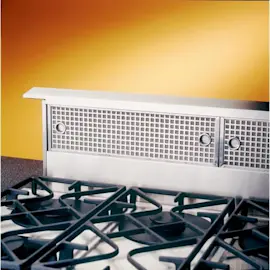
A downdraft ventilation system like the Bosch DHD3614UC typically costs about $900 to $2,000 for the unit itself, with total installed cost often higher depending on ducting, electrical work, and countertop modifications. Most downdraft systems include a removable grease filter for routine cleaning.
What affects the total cost
Downdraft ventilation pricing varies mainly by installation complexity and the parts needed to fit your kitchen layout.
- Vent type and duct run: longer ducting and more elbows usually increase labor and materials
- Electrical needs: adding or relocating a circuit can add cost
- Cabinet and countertop work: cutouts, reinforcement, and finishing can add significant labor
- Replacement vs. new install: replacing an existing downdraft is usually less expensive
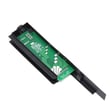
- Parts condition: worn lift components or controls can add repair cost (for example, a failed downdraft vent control panel 00681032)
Typical cost ranges (planning guide)
| Cost item | Typical range | Notes |
|---|---|---|
| Downdraft unit | $900 to $2,000 | Varies by size, finish, and features |
| Installation labor | $300 to $1,500+ | Depends on ducting and carpentry |
| Ducting and materials | $50 to $400+ | Longer runs and transitions cost more |
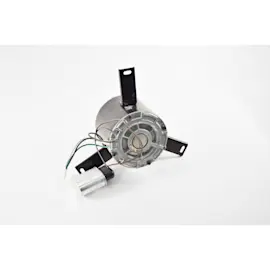
| Optional repairs (parts) | Varies | Control, wiring, motor, switches |
Common features you will see
Most downdraft ventilation systems are built around a lift mechanism, a blower, and easy-to-service filtration.
- Removable grease filter(s) (most common)
- Multi-speed fan control
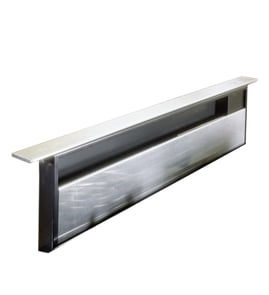
- Lift-up/down vent tower
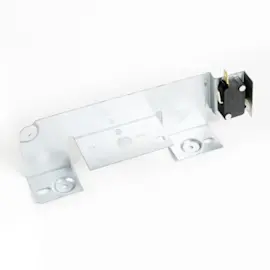
- Interlock and safety switching (example: range hood interlock switch 00603901)
- Wiring harnesses and low-voltage components (example: downdraft vent low-voltage transformer 00499780)
Why it matters
Downdraft installs can look straightforward, but duct routing and cabinet modifications often drive the final price more than the downdraft unit itself. Planning for both installation and potential replacement parts helps avoid surprises.
Last updated: February 2026
Do downdraft vents need to be vented outside?
Yes. For the best smoke, grease, and odor capture, a Bosch downdraft ventilation system like model DHD3614UC is typically installed as a ducted system that vents to the outside. Some downdraft setups can be configured to recirculate air back into the kitchen with the right kit and filters, but ducted venting performs better.
Best practice: ducted to the outside
A ducted (outside-vented) downdraft moves cooking air through ductwork and exhausts it outdoors, which generally provides stronger ventilation and less lingering odor.
We recommend outside venting when you can because it:
- Removes heat, moisture, smoke, and odors from the home
- Reduces grease buildup on cabinets and nearby surfaces
- Typically runs more efficiently than recirculating setups
- Helps keep filters cleaner longer
- Improves overall kitchen air quality
When recirculating can make sense
Recirculating (ductless) configurations are used when outside ducting is not practical. In that setup, air is pulled in, filtered, and returned to the kitchen.
Expect these tradeoffs:
- Odor removal is more limited than ducted venting
- Filters must be cleaned or replaced more often
- Grease capture depends heavily on filter condition and fan speed
Quick comparison
| Setup | Where the air goes | Typical performance | Ongoing maintenance |
|---|---|---|---|
| Ducted (outside vent) | Outdoors | Best overall capture | Clean grease filters as needed |
| Recirculating (ductless) | Back into kitchen | Good for light cooking | More frequent filter upkeep |
Why it matters
Downdraft systems pull air downward, which is naturally harder than capturing rising heat and smoke. Venting outside helps your downdraft do its job more effectively, especially with high-heat cooking.
If your downdraft is not venting well
Before assuming you need a new unit, we check these common issues:
- Grease filter is clogged or overdue for cleaning (see downdraft vent grease filter 00669975)
- Fan runs but airflow is weak due to duct restrictions (long runs, too many elbows, crushed duct)
- The vent does not raise or lower smoothly (drive components can bind)
- Controls are unresponsive (see downdraft vent control panel 00681032)
Last updated: February 2026
What is downdraft ventilation?
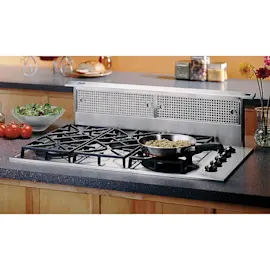
Downdraft ventilation pulls cooking smoke, steam, grease, and odors downward at the cooktop surface and routes them through ducting (or a filter path) instead of using an overhead hood. On the Bosch DHD3614UC downdraft ventilation system, the intake typically rises near the cooking surface when you turn it on.
How a downdraft system works
A downdraft setup is designed to capture contaminants close to the source, then move them away from the cooking area.
- The vent intake opens or rises to create a capture area next to the cooktop.
- A blower pulls air down through the intake.
- Grease is trapped by a grease filter.
- Air is routed through ductwork (common) or a recirculating path (model dependent).
- Controls on the unit set fan speed and operation.
What you will notice in everyday use
Downdraft ventilation feels different than an overhead range hood because it is working against rising heat and steam.
| Feature | Downdraft ventilation | Overhead hood |
|---|---|---|
| Capture point | At cooktop level | Above the cooking surface |
| Best at | Light to moderate smoke and steam near the intake | Broad capture across the whole cooktop |
| Common limitation | Can miss tall pots or heavy smoke that rises quickly | Needs overhead space and proper mounting |
Why it matters
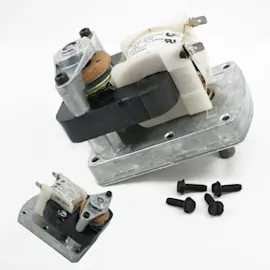
Understanding downdraft ventilation helps you set expectations: it is most effective when cookware is close to the intake and the fan is started early. If the vent does not rise, does not run, or will not respond to the controls, common repair paths include checking the control and lift components such as the downdraft vent control panel 00681032 or the Bosch downdraft vent gear motor 00684962.
Last updated: February 2026
Does downdraft cooktop ventilation work?
Yes. A downdraft ventilation system like the Bosch DHD3614UC pulls smoke, steam, and cooking odors downward at the cooktop, so it works well for everyday simmering and light frying. It is typically less effective than an overhead hood for heavy smoke, high-heat searing, or tall pots that block airflow.
What downdraft ventilation does best
- Captures steam and odors close to the cooking surface
- Helps when an overhead hood is not practical (island layouts, sightlines)
- Works well on low to medium heat cooking
- Reduces lingering smells when used early (turn it on before cooking)
When performance can feel weak
Downdraft systems rely on airflow at the surface. Anything that disrupts that airflow reduces capture.
- High-heat searing and wok cooking create fast-rising plumes
- Large or tall cookware can deflect smoke away from the intake
- Cross drafts (open windows, ceiling fans, HVAC supply vents) can overpower the pull
- Grease buildup on the filter can restrict airflow
Quick checks to improve capture
- Start the vent 1 to 2 minutes before cooking and let it run a few minutes after.
- Use the highest speed for searing, then reduce once smoke drops.
- Keep the intake area clear; avoid placing foil, utensils, or towels near the vent opening.
- Clean or replace the grease filter on schedule; a clogged filter is a common airflow killer.
- If the vent will not raise, will not run, or runs intermittently, check the electrical and control components.
Common parts involved (when symptoms match)
| Symptom | Often-related part | What it affects |
|---|---|---|
| Vent will not raise/lower | Bosch downdraft vent gear motor 00684962 | Lift mechanism movement |
| No response from buttons | Downdraft vent control panel 00681032 | User input and commands |
| Dead or intermittent power | Downdraft vent low-voltage transformer 00499780 | Control power supply |
| Runs but acts erratic | Downdraft vent wire harness 00669979 | Electrical connections |
Why it matters
Downdraft ventilation is all about capture at the source. When airflow is restricted (dirty filter) or the lift/control system is not operating correctly, performance drops quickly, and smoke and odors spread through the kitchen.
Last updated: February 2026