Owner’s manual
 View engine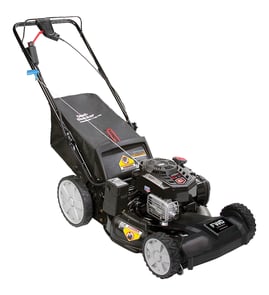


How old is my mower by serial number?
For Craftsman rotary lawn mower model 917386140, the serial number and the engine identification code are the most reliable ways to determine the build date. We match the serial tag format and the engine code style to common manufacturer date patterns, then confirm the correct number locations in the Craftsman 917386140 owner's manual.
Where to find the numbers you need
On most walk-behind mowers, the mower serial/model tag is on the deck; the engine has its own ID label.
- Check the mower deck near the rear or side (often close to a wheel height adjuster)
- Wipe off grass and dirt so every character is readable
- Record the model number and serial number from the mower tag
- Record the engine brand and the engine model/type/code from the engine label
- Take a clear photo before the label fades further
How serial and engine date codes usually work
Many mowers do not use one universal Craftsman serial format; the date is often embedded as a short code on the mower tag or in the engine “code” number.
- 6-digit code: commonly MMDDYY or YYMMDD
- 4-digit code: commonly YYMM
- Engine code: often includes the production date in a manufacturer-specific pattern
| Code length | Common pattern | Example result |
|---|---|---|
| 6 digits | MMDDYY or YYMMDD | month, day, year |
| 4 digits | YYMM | year and month |
| Engine code | varies by engine maker | build date embedded |
Tips to avoid decoding the wrong number
- Do not use stamped deck numbers that look like part numbers
- Use the mower tag for the mower serial; use the engine label for the engine code
- If the mower tag has no obvious date code, use the engine code as the build-date reference
- Use the identification section in the Craftsman 917386140 owner's manual to confirm label locations and terminology
Why it matters
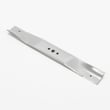
Knowing the build date helps us select the correct parts for your production run, such as the husqvarna lawn mower 20-in deck blade 532145106 and related blade hardware.
Last updated: January 2026
Is it cheaper to repair or replace a lawn mower?
For a Craftsman rotary lawn mower like model 917386140, it’s cheaper to repair when you’re fixing normal wear items (blade, fasteners, pull-start hardware). It’s cheaper to replace when engine or drive problems push the total repair cost to about half the price of a comparable new mower.
Quick decision checklist
Use these points to decide before you buy parts or schedule service:
- Repair when the mower runs well and you’re correcting one issue (poor cut, vibration, loose handle).
- Repair when the fix is a maintenance item you can do yourself in under an hour.
- Replace when the engine smokes heavily, knocks, or has low compression.
- Replace when the deck is cracked or rusted through near the blade area.
- Replace when multiple major problems stack up (engine plus deck damage plus drive issues).
Typical cost rule (repair vs replace)
| Situation | Usually the better value |
|---|---|
| One wear part needed (blade, adapter, hardware) | Repair |
| One moderate issue (starter rope/guide, minor fuel tune-up) | Repair |
| Major engine internal work or bent crankshaft symptoms | Replace |
| Repair estimate is about 50% or more of a new mower | Replace |
Examples of “repair-worthy” parts for this model
These model-matched parts support low-cost repairs:
- Husqvarna lawn mower 20-in deck blade 532145106 for restoring cut quality and reducing vibration.
- Lawn mower blade adapter 581547901 for correcting blade centering and wobble when the adapter is worn.
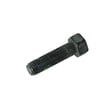
- Lock nut 532409149 for securing blade or handle fasteners that keep loosening.
Why it matters
Repairing a 917386140 is the best value when you’re restoring safe cutting and normal performance. Replacing is the better deal when reliability is compromised by engine or deck damage because repeat repairs and downtime quickly outweigh savings.
For model-specific maintenance intervals and safety steps, use the 917386140 owner's manual.
Last updated: January 2026
Should I use 87 or 91 gas for lawn mower?
For the Craftsman 917386140 gas walk-behind mower, we recommend using fresh 87-octane (regular) unleaded gasoline for normal operation. Higher octane (like 91) does not add power in a typical small mower engine; it mainly resists knock, which most mowers do not require.
What to use (and what to avoid)
- Use 87 octane unleaded gas from a busy station (fresher fuel).
- Use fuel that is 30 days old or less (or treat it with stabilizer).
- Avoid old gas, which commonly causes hard starting, surging, and stalling.
- Avoid mixing octane grades to “clean” the engine; octane is not a cleaner.
- Avoid fuel spills on the deck and engine; wipe up immediately and let vapors clear before starting.
When 91 octane makes sense
91 octane is fine to run, but it is usually unnecessary. It only becomes useful when:
- The engine knocks or pings under load (uncommon on walk-behind mowers).
- You are forced to buy premium because regular is unavailable.
| Fuel choice | Best for | What you’ll notice |
|---|---|---|
| 87 octane (regular) | Everyday mowing | Normal performance, lowest cost |
| 91 octane (premium) | Special cases only | Typically no performance change |
Why it matters
Most “won’t start” and “runs rough” complaints on walk-behind mowers trace back to fuel quality and storage, not octane rating. Using fresh 87 octane helps protect the carburetor and keeps starting and throttle response consistent.
Helpful resources
- Check the fuel recommendations and storage guidance in the Craftsman 917386140 owner’s manual.
- If you suspect stale fuel or storage issues, follow the steps in how to keep lawn mower gas from going bad.
Last updated: January 2026