Owner’s manual
 Error Codes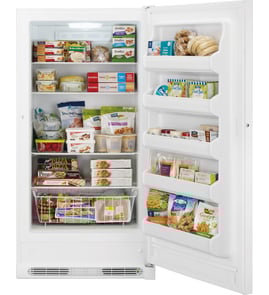


How can I tell how many cubic feet my freezer is?
For your Frigidaire FFU17FC4AW2 upright freezer, you can estimate cubic feet by measuring the usable interior space (in inches) and converting it to cubic feet. This gives a reliable capacity estimate even when the exact published spec is not handy; confirm the rated capacity in the FFU17FC4AW2 owner's manual.
How to calculate cubic feet (quick method)
- Empty the freezer enough to measure the interior.
- Measure interior:
- Height (top to bottom)
- Width (side to side)
- Depth (back wall to inside of the door liner)
- Multiply: Height × Width × Depth (in inches).
- Divide by 1,728 (cubic inches in 1 cubic foot).
Formula:
- Cubic feet = (H × W × D) ÷ 1,728
Measuring tips that improve accuracy
- Measure the largest open rectangle of usable space; shelves, bins, and the evaporator cover reduce usable volume.
- Close the door gently and re-check depth; door liners can steal more space than expected.
- If the freezer has a hump or interior ducting, measure in sections and add them.
Example calculation
| Interior measurement | Inches |
|---|---|
| Height | 60 |
| Width | 24 |
| Depth | 20 |
| Estimated capacity | (60×24×20)÷1,728 = 16.7 cu ft |
Why it matters
Knowing cubic feet helps you compare storage capacity, plan food organization, and confirm whether temperature issues are related to overloading or blocked airflow.
Related maintenance that affects usable space
- Keep frost buildup under control; heavy frost reduces capacity and airflow.
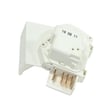
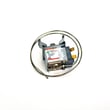
- If you see recurring frost or warm temps, defrost-system parts can be involved (for example, a failed defrost timer 5304518034 or freezer defrost heater 216730700).
Last updated: January 2026
What is the lifespan of a Frigidaire upright freezer?
A Frigidaire upright freezer like model FFU17FC4AW2 typically lasts 12 to 20 years. Consistent maintenance (good airflow, clean condenser area, and a tight door seal) helps the compressor and sealed system run less and can extend service life; see the FFU17FC4AW2 owner's manual for care and operating guidance.
Typical lifespan and what affects it
Most upright freezers reach the longer end of the range when they stay dry inside, maintain stable temperatures, and avoid heavy frost buildup.
- Room conditions: Hot garages and tight enclosures shorten life by increasing run time.
- Door seal condition: A leaking gasket forces longer run times and can cause frost.
- Defrost performance: Poor defrosting leads to ice on the evaporator and weak cooling.
- Cleaning and airflow: Dust and restricted airflow raise operating temperatures.
- Usage habits: Frequent door openings and warm food loads increase stress.
Quick maintenance checklist (high impact)
Use these habits to keep your FFU17FC4AW2 efficient and reduce wear on the compressor and fan motor.
- Keep the freezer reasonably full for temperature stability (leave air paths open).
- Confirm the door closes easily and seals all the way around.
- Wipe moisture and spills promptly to reduce ice buildup.
- Defrost and clear ice if you notice thick frost or reduced airflow.
- Replace worn sealing parts when needed, such as the freezer door gasket 5304507199.
What “end of life” usually looks like
| Symptom | Common cause | What to check first |
|---|---|---|
| Warmer temps, runs constantly | Air leak or frost restriction | Door seal, frost on back wall |
| Heavy frost buildup | Defrost system issue | Defrost timer, defrost heater |
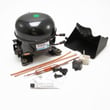
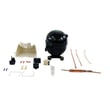
| Clicking, won’t start | Start components or compressor issue | Relay/capacitor, compressor |
Why it matters
A freezer that runs longer than necessary uses more electricity and can shorten the life of key components like the compressor, evaporator fan, and defrost system. Preventive care protects food quality and reduces unexpected breakdowns.
Last updated: January 2026
Why is my Frigidaire upright freezer not freezing?
If your Frigidaire FFU17FC4AW2 upright freezer is running but not freezing, the most common causes are warm air leaking past the door seal, poor airflow from an evaporator fan issue, or a defrost system problem that has iced up the evaporator. Start with temperature settings and door sealing, then check for frost buildup and fan operation.
Quick checks we recommend first
- Set the control colder and give it 24 hours to stabilize after any adjustment.
- Confirm the door closes fully and is not held open by packages or shelves.
- Look for heavy frost on the back interior panel (a strong sign of a defrost problem).
- Listen for the evaporator fan when the door is closed (it should run during cooling).
- Make sure the freezer is not overpacked; blocked vents stop cold air circulation.
What the symptoms usually mean
| What you notice | Most likely area | What to do next |
|---|---|---|
| Runs constantly, still warm | Air leak or poor heat removal | Check door gasket seal; clean condenser area |
| Heavy frost on back wall | Defrost system not working | Check defrost heater, defrost thermostat, defrost timer |
| Warm top, colder bottom (or vice versa) | Airflow problem | Check evaporator fan motor/blade and vent blockage |
| Clicking, humming, then stops | Start components or compressor issue | Check start relay/capacitor; consider sealed system service |
Parts that commonly fix “not freezing” on this model
These are model-matched parts we often see involved when cooling is weak or frost builds up:
- Defrost timer 5304518034
- Freezer defrost heater 216730700
- Thermostat 297216600 (defrost bi-metal thermostat)
- Freezer door gasket (inspect for gaps, tears, or a loose fit)
Why it matters
When the freezer can’t move heat out (dirty condenser area) or can’t move cold air around (fan or frost blockage), temperatures rise quickly and food safety and ice quality suffer. Catching a door-seal or defrost issue early also prevents excessive ice buildup that can strain the cooling system.
Model-specific guidance
Use the FFU17FC4AW2 owner's manual to confirm the correct temperature control setting, airflow clearances, and any model-specific operating notes before replacing parts.
Last updated: January 2026