Error Codes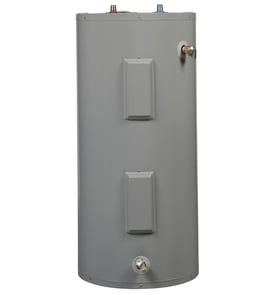


How to replace the elements in an electric water heater?
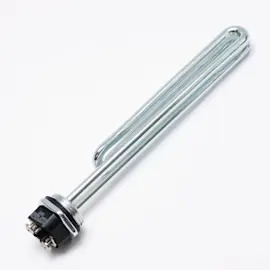
To replace a heating element in your American water heater model MHE2F30HS035V, we shut off power, drain the tank below the element, remove the element and wiring, then install a matching replacement element, refill fully, and only then restore power. Use the correct replacement such as the element 100109629.
- Turn OFF the water heater breaker (typically 240V); verify power is off with a meter.
- Let water cool if possible to reduce scald risk.
- Never energize the heater with an empty tank; the new element can burn out quickly.
- If wiring insulation is brittle, overheated, or melted, stop and have it repaired before restoring power.
- Heating element wrench (or large socket) and adjustable wrench
- Screwdriver and needle-nose pliers
- Garden hose (for draining)
- Multimeter (recommended)
- New element gasket (usually included with the element)
- Shut off power at the breaker; confirm with a multimeter.
- Shut off cold water supply to the tank.
- Relieve pressure by opening a hot water faucet.
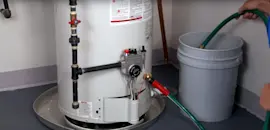
- Drain below the element: connect a hose to the drain valve and drain until the water level is below the element you are replacing.
- Remove the access cover and insulation; peel back the plastic shield.
- Label and disconnect wires from the element terminals.
- Use an element wrench to remove the old element; clean the tank opening sealing surface.
- Install the new element with gasket; tighten snugly (do not over-torque).
- Reconnect wires firmly; reinstall the shield, insulation, and cover.
- Refill the tank: open cold supply and keep a hot faucet open until air stops sputtering.
- Check for leaks at the element; then restore power.
| Symptom | Most likely cause | What we check next |
|---|---|---|
| No hot water | Failed element or thermostat | Test element resistance; inspect thermostat wiring |
| Not enough hot water | One element not heating | Replace the failed element; verify both thermostats |
| Water too hot | Thermostat stuck high | Inspect/replace thermostat |
If you suspect a control issue, we use the same model-specific parts list to match components like the top t-stat 100108424. For diagnostic help, use American electric water heater error codes.
A correct element replacement restores heating performance and prevents repeat failures caused by powering the heater before it is fully refilled, loose wiring connections, or a leaking gasket.
Last updated: January 2026
What is the lifespan of a 30 gallon water heater?
A 30-gallon tank-style water heater typically lasts 8 to 12 years. For the American MHE2F30HS035V electric water heater, planning on replacement around the 10-year mark is a practical expectation, with longer life possible when sediment is flushed and key components are kept in good condition.
| Water heater type | Typical lifespan | Notes |
|---|---|---|
| Electric tank (30-gallon) | 10 to 15 years | Often lasts longer with regular flushing and anode rod maintenance |
| Gas tank (30-gallon) | 8 to 12 years | Burner and venting conditions can shorten life |
| Any tank water heater in hard water areas | 8 to 10 years | Sediment buildup accelerates tank wear |
- Hard water and sediment: buildup insulates the heating element and stresses the tank.
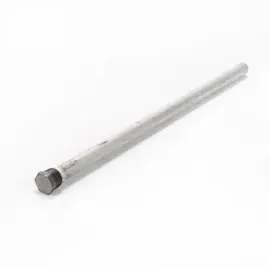
- Anode rod condition: a depleted anode rod lets the tank corrode faster.
- Operating temperature: higher setpoints increase scaling and wear.
- Usage patterns: frequent heavy draws can increase cycling and stress.
- Timely part replacement: fixing heating and control issues early helps prevent overheating and damage.
- Drain and flush the tank periodically (see how to drain the tank on an electric water heater video).
- Test temperature stability; if it swings, inspect thermostats and wiring.
- If you have “no hot water” or slow recovery, check the heating circuit and element condition.
- Replace failed controls promptly, such as the top t-stat 100108424 when it will not regulate temperature correctly.
- Replace a failing heater component, such as the element 100109629, if it is open, grounded, or heavily scaled.
- Rust-colored hot water or metallic odor that returns quickly after flushing
- Water pooling at the base of the tank (not from plumbing fittings)
- Rumbling or popping sounds that persist after flushing
- Repeated heating element or thermostat failures
- Not enough hot water even after repairs and correct temperature settings
A 30-gallon electric water heater that is near end-of-life can become less efficient and more failure-prone. Staying ahead of sediment buildup and addressing thermostat or heating element problems early helps protect the tank and maintain reliable hot water.
Last updated: January 2026
What is the most common problem with water heaters?
The most common problem we see with tank-style water heaters, including the American MHE2F30HS035V electric water heater, is sediment buildup in the bottom of the tank. Sediment causes rumbling or popping noises, reduces heating efficiency, and can shorten tank life by overheating components.
- Rumbling, popping, or crackling sounds during heating
- Hot water runs out faster than it used to
- Water temperature fluctuates or seems lukewarm
- Higher electric bills for the same hot water use
- Cloudy or rusty-looking hot water (can also indicate internal corrosion)
Before replacing parts, we recommend checking these basics safely (turn off power at the breaker first):
- Sediment in the tank: Drain and flush the tank to remove buildup.
- Heating element issues: A scaled or failed element can’t transfer heat well; see element 100109629.
- Thermostat problems: A thermostat that sticks or reads wrong can cause no heat or overheating; see top t-stat 100108424.
- Loose fittings or valve leaks: Look for moisture at connections and the drain valve.
- Error indications (if equipped): Use American electric water heater error codes to interpret symptoms.
| Symptom | Most likely cause | Typical next step |
|---|---|---|
| Rumbling/popping | Sediment buildup | Drain and flush tank |
| No hot water | Tripped reset, failed thermostat or element | Test thermostat/element |
| Not enough hot water | Sediment, one element out, thermostat set low | Flush; test components |
| Water too hot | Thermostat stuck high | Replace thermostat |
| Water around heater | Fitting/valve leak or tank leak | Inspect source; repair or replace |
Sediment acts like insulation between the heating element and the water. That forces longer heat cycles, increases energy use, and can overheat parts like the thermostat and heating element, leading to earlier failures.
Last updated: January 2026
What's the average cost to replace a 50 gallon electric water heater?
Replacing a 50-gallon electric water heater typically runs about $700 to $2,500 total installed. For your American water heater model MHE2F30HS035V, the exact replacement cost is not tied to the model number alone; it mainly depends on tank size, electrical and plumbing changes, and local labor rates.
- New 50-gallon electric tank: commonly $500 to $1,200
- Labor/installation: commonly $200 to $600
- Common add-ons: haul-away, new shutoff valve, expansion tank, pan, code updates
- Higher-cost options: high-efficiency electric or hybrid heat pump models
- Tight installation space or difficult access (attic, crawlspace)
- Electrical updates (breaker, wiring, disconnect)
- Plumbing updates (corroded piping, new fittings, shutoff valve)
- Local permit/inspection requirements
- Water damage mitigation (pan, drain line, leak alarm)
If your tank is otherwise in good shape, repairing can be a smart short-term option.
| Option | Best when | Typical cost impact |
|---|---|---|
| Replace the whole water heater | Tank is leaking, very old, or heavily corroded | Highest upfront cost |
| Replace a heating component | No hot water or slow recovery, tank is sound | Lower cost than replacement |
| Replace a control component | Temperature swings or overheating symptoms | Lower cost than replacement |
For the MHE2F30HS035V, we often see these service parts used during “no hot water” or “not enough hot water” troubleshooting:
- Element 100109629 (heating element)
- Top t-stat 100108424 (upper thermostat)
- Wiring connections and terminal screws (inspect for heat damage)
- High-limit reset (often part of the upper control area)
A replacement quote can look high because installers are pricing not just the tank, but also safety and code-related items that reduce leak risk and electrical hazards. If the tank is not leaking, a thermostat or element repair may restore hot water for much less.
Related help: water heater common questions
Last updated: January 2026