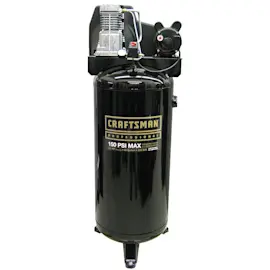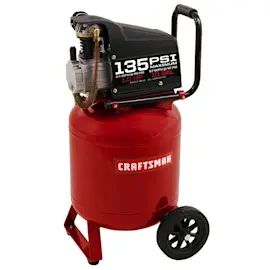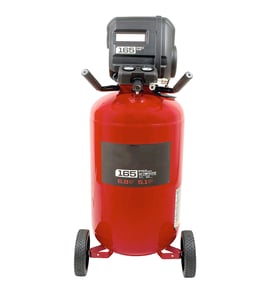

How to find air compressor model number?
On a Craftsman air compressor, the model number is printed on the rating plate (data label) attached to the unit; for this page, the model number is 10289690. The label is usually a metal or durable sticker and is meant to be easy to read for parts lookup and service.
Check these common spots first:
- On the air tank near the drain valve or tank seam
- On the pump or motor shroud/guard area
- Near the pressure switch cover or regulator manifold
- On the frame/base rail (portable units)
- On the back side of the tank where it is less likely to get scraped
Most air compressor data labels include several identifiers. Use the model number for parts searches, and record the rest for accuracy.
| Label item | What it’s used for | Tip |
|---|---|---|
| Model number | Finding the correct parts list | Copy it exactly, including any dashes or suffixes |
| Serial number | Production run identification | Helpful when multiple versions exist |
| Voltage/amps | Electrical troubleshooting | Match to your outlet and circuit |
| Max PSI | Safe operating limit | Never exceed this value |
If the plate is painted over, scratched, or gone:
- Wipe the area with a damp rag; then try a flashlight at an angle to read stamped text
- Look for a second label on the motor housing or under a plastic shroud
- Check any paperwork that came with the compressor (receipt, carton, or maintenance notes)
- Use the compressor’s key specs (tank size, max PSI, oil-free vs. oil-lubricated) to narrow matches
Using the correct model number prevents ordering the wrong pressure switch, check valve, regulator, or gauge; small design changes between similar Craftsman compressors can affect fit and pressure settings.
For common identification and repair help, use our DIY resources like air compressor common questions.
Last updated: February 2026
How to read compressor model number?
For a Craftsman air compressor, the model number is the identifier you use to match the correct parts list and diagrams to your exact unit. On model 10289690, the model number itself does not “decode” into specs; it primarily tells us which Craftsman build and parts breakdown you have.
Most air compressors show the model number on a rating plate or label. Check these common spots:
- On the tank near the motor/pump assembly
- On the frame or handle upright
- Near the pressure switch cover
- Close to the regulator and gauge panel
- On the underside of a shroud or belt guard (if equipped)
Air compressor labels usually include multiple identifiers. Use this quick guide:
| Label item | What it means | What to use it for |
|---|---|---|
| Model number (example: 10289690) | The exact product identifier | Finding the correct parts list and diagrams |
| Serial number | Unique number for your specific unit | Tracking production run and service history |
| Electrical rating (volts/amps/Hz) | Power requirements | Checking outlet/circuit compatibility |
| Max tank pressure (PSI) | Tank pressure limit | Setting expectations and safe operation |
| SCFM/CFM @ PSI | Air delivery | Matching tools to compressor output |
These steps prevent ordering the wrong parts or troubleshooting the wrong system:
- Copy the model number exactly as printed (including any dashes or suffixes).
- Don’t use the motor or pump casting numbers as the compressor model.
- If the label is worn, take a clear photo and zoom in to confirm characters.
- Match symptoms to the correct system: power (motor/capacitor), control (pressure switch), or air (check valve/leaks).
On air compressors, small design changes can affect pressure switch settings, check valve style, regulator type, and gauge ranges. Using the exact model number (like Craftsman 10289690) keeps your parts lookup and repair steps aligned with your unit.
If you are trying to identify the unit because it is failing, start with a symptom-based path such as air compressor won't start.
Last updated: February 2026
How to tell if an air compressor pressure switch is bad?
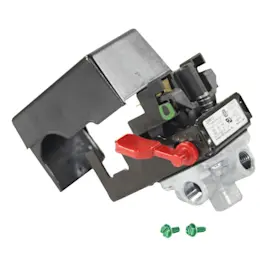
On a Craftsman 10289690 air compressor, a bad pressure switch usually shows up as the motor not starting or not shutting off at the right tank pressure, short-cycling, or constant hissing from the unloader line after the motor stops. These symptoms point to worn contacts, a stuck mechanism, or an internal air leak.
- Compressor will not start even with power available
- Compressor runs but will not shut off (or shuts off too early)
- Rapid on/off cycling (short cycling)
- Air leaks from the unloader valve or unloader line after shutoff
- Breaker trips or the switch housing feels hot (electrical load issue)
- Tank pressure gauge rises but cut-in or cut-out behavior is inconsistent
- Confirm power first: verify the outlet has power and the cord/plug is in good condition.
- Listen at shutoff: when the compressor stops, a brief “psst” is normal; continuous hissing often indicates the switch/unloader is not sealing.
- Watch the cut-in behavior: bleed tank pressure down and see if the motor restarts smoothly at a consistent pressure point.
- Check for short cycling: if it starts and stops every few seconds without building stable tank pressure, the switch can be misreading pressure or the contacts can be failing.
A pressure switch is often blamed first, but these issues can create the same symptoms:
| Symptom | Pressure switch likely | Other common causes |
|---|---|---|
| Won’t start (tank has pressure) | Yes | Check valve leaking back, motor/capacitor issue |
| Runs continuously | Yes | Major air leak, worn pump valves, bad regulator reading |
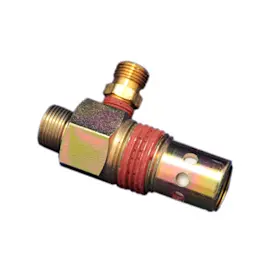
| Hissing after shutoff | Yes | Check valve not sealing, unloader line fitting leak |
| Won’t build pressure | Sometimes | Pump seals/valves, intake filter restriction |
The pressure switch controls cut-in/cut-out and works with the unloader to let the motor restart without fighting head pressure. When it fails, you can get hard starts, overheating, nuisance breaker trips, and poor tank pressure control.
Use our DIY guide how to replace an air compressor pressure switch to match the symptom to the right repair approach and avoid replacing parts unnecessarily.
Last updated: February 2026
What is the most common cause of air compressor failure?
The most common cause of failure on a Craftsman air compressor like model 10289690 is poor maintenance that leads to heat and wear: restricted airflow (dirty intake/filter area), running too long without cool-down, and lubrication or internal pump wear issues. These conditions damage valves, seals, and bearings over time.
- Overheating from blocked cooling fins, poor ventilation, or extended run time
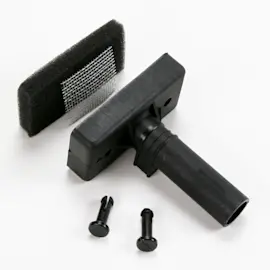
- Restricted intake airflow (dirty filter area or debris around the pump/motor)
- Moisture and corrosion from not draining the tank; leads to leaks and weak tank pressure
- Air leaks at fittings, regulator, hose, or drain valve; forces longer run time and heat
- Pressure switch or check valve problems; causes hard starting and repeated cycling
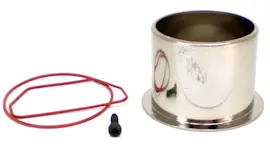
- Pump wear (reed valves, piston seal, cylinder wear); shows up as low or slow pressure build
- Unplug the compressor; let it cool fully.
- Drain the tank completely; listen for constant leaking afterward.
- Inspect for obvious air leaks (soapy water on fittings works well).
- Confirm the unit has clear airflow on all sides; clean dust from the pump and motor area.
- If it struggles to start, test with an empty tank versus a partially full tank.
| What you notice | Most likely cause | What to check next |
|---|---|---|
| Won’t start | Pressure switch, capacitor, thermal overload, power supply | Breaker, cord, switch function |
| Runs but won’t build pressure | Pump valves/seals, major leak | Leak test, intake, pump condition |
| Starts hard with pressure in tank | Check valve/unloader issue | Unloader line, check valve sealing |
| Pressure gauge reads wrong | Gauge failure or blockage | Gauge port, vibration damage |
Heat and run time are the fastest ways to shorten compressor life. Fixing airflow restrictions and leaks early reduces cycling, protects the pump, and helps the pressure switch and motor last longer.
- Use our guide for air compressor won't start if the motor won’t run or trips the breaker.
- If pressure is low or slow to build, follow air compressor won't build tank pressure.
- For persistent hissing, use air compressor air leaks to pinpoint the leak.
Last updated: February 2026