


Are rear discharge mowers any good?
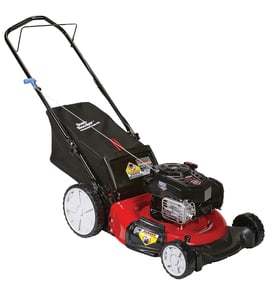
Yes. Rear-discharge mowers are a solid choice when you want clippings directed behind the deck instead of out the side; on a Craftsman 131973911 20-inch power-propelled mower with rear bagger, rear discharge also pairs well with bagging because airflow naturally moves clippings toward the back.
- You mow around patios, driveways, pools, or flower beds and want fewer clippings thrown sideways.
- You prefer bagging and want clippings routed toward the rear bagger opening.
- You mow in tighter areas where side discharge would blow debris into obstacles.
- You want a cleaner mowing path along fences and landscaping edges.
Rear discharge is not “better” for every yard; it depends on grass conditions and how you mow.
| Situation | Rear discharge tends to do well | Another option may do better |
|---|---|---|
| Regular weekly mowing | Consistent cut and tidy clipping direction | Any deck style works |
| Heavy, wet, or overgrown grass | Can clump if you push too fast or bag is full | Side discharge can spread volume better |
| Leaf cleanup | Works well with a bagger | Mulching can reduce bag emptying |
- Mow when grass is dry and avoid taking off more than about 1/3 of the blade height.
- Slow down in thick grass; self-propelled speed that is too fast can overload the deck.
- Keep the blade sharp and balanced; a dull blade tears grass and reduces airflow.
- Check for deck buildup and clear packed grass (disconnect the spark plug first).
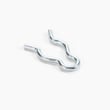
- Replace worn hardware that lets the deck or handle loosen over time, such as a missing hairpin 532051793.
Rear discharge changes where clippings go and how the deck moves air. Good airflow and a sharp blade help your Craftsman 131973911 cut cleanly, bag efficiently, and leave fewer stray clippings where you do not want them.
Last updated: February 2026
How do I find my lawn mower model number?
For your Craftsman walk-behind mower, the model number is on the mower’s ID label (not on the engine). For this parts page, the mower model is 131973911; match that number exactly to ensure the correct blade, axle hardware, and other chassis parts.
Most walk-behind mowers place the ID label in one of these spots:
- On the rear of the mower deck near the bagger opening
- On the top of the deck near the engine mounting area
- On the side of the deck by a rear wheel height adjuster
- On the handle bracket or frame near where the handle bolts on
- Under the rear flap (lift the flap and look at the deck surface)
Use the mower model number for non-engine parts like wheels, blade adapters, and deck hardware. Use the engine model and type numbers only when ordering engine-specific parts (carburetor, ignition, air filter).
| You’re replacing | Use this number | Example for this mower |
|---|---|---|
| Deck, wheels, blade, bagger parts | Mower model number | 131973911 |
| Carburetor, spark, fuel, air parts | Engine model/type | Listed on engine label |
- Write down the full model number exactly as shown on the label
- Take a clear photo of the label before ordering
- If the label is dirty, wipe it and use a flashlight at an angle to read stamped text
- Confirm the part category matches what you’re fixing (blade vs. axle hardware)
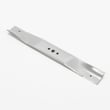
If you are shopping for common wear items after confirming the model, examples for this mower include the blade 532145106 and deck hardware like the axle bolt 532067609.
Craftsman walk-behind mowers can look similar across multiple model series, but blades, axle bolts, and fasteners vary by deck design and year. Matching the model number keeps fit and safety correct.
Last updated: February 2026
How many acres can a 72 inch mower cut in an hour?
A 72-inch mower cuts about 3 to 5 acres per hour in typical real-world mowing. Your Craftsman model 131973911 is a 20-inch power-propelled lawn mower with rear bagger, so its coverage rate is much lower; most owners mow about 0.25 to 0.75 acre per hour depending on conditions.
We use this standard productivity formula:
- Acres/hour = (deck width in inches × mph × efficiency) ÷ 99
- Typical efficiency is 0.70 to 0.85 (open rectangles are higher; lots of turns and obstacles are lower).
| Input | Value |
|---|---|
| Deck width | 72 in |
| Speed | 8 mph |
| Efficiency | 0.80 |
| Estimated output | ~4.7 acres/hour |
- Ground speed (mph): faster speed increases acres/hour quickly.
- Turning and obstacles: trees, beds, gates, and tight corners reduce efficiency.
- Grass height and moisture: tall or wet grass forces slower passes.
- Bagging vs mulching/side discharge: bagging usually slows you down due to stops and heavier load.
- Blade condition: a sharp blade maintains cut quality at normal speed; replace a worn blade with the correct blade 532145106 when needed.
| Mower type | Typical acres/hour |
|---|---|
| 72-inch zero-turn/ride-on | 3.0 to 5.0 |
| 20-inch power-propelled walk-behind (like 131973911) | 0.25 to 0.75 |
Acres per hour helps you estimate mowing time and choose the right deck size. A 72-inch deck is designed for large, open acreage; a 20-inch power-propelled mower like Craftsman 131973911 is best for smaller lawns and tighter areas.
Last updated: February 2026
Is it cheaper to repair or replace a lawn mower?
For a Craftsman 131973911 20-inch power-propelled walk-behind mower, it’s cheaper to repair when the fix is routine and the total repair cost stays under about half the price of a comparable new mower. It’s time to replace when repairs are repeated, expensive, or tied to major drive or engine problems.
- Repair if the estimate is under 50% of a similar new mower
- Replace if the estimate is 50% or more, especially if multiple issues stack up
- Repair when the mower is otherwise solid and needs a wear item (blade, fastener, wheel hardware)
- Replace when the mower has major engine damage (low compression, heavy smoking) or drive system failure that keeps returning
- Replace when downtime matters more than cost (you need reliable weekly mowing)
These are typically lower-cost, high-impact fixes on walk-behind mowers like the 131973911:
- Replace a dull or bent blade (example: blade 532145106)
- Tighten or replace missing hardware (example: screw 532428867)
- Replace a lost retaining clip (example: hairpin 532051793)
- Replace damaged wheel/axle hardware (example: axle bolt 532067609)
- Basic tune-up items (fresh fuel, oil change, clean air filter, new spark plug)
Replacement usually wins when you see one or more of these:
- The engine runs poorly even after tune-up steps (hard starting, surging, stalling)
- The self-propel drive slips or fails and repair costs climb quickly
- The deck is severely rusted or cracked (structural issues)
- You are paying for repairs more than once per season
| Situation | Typical cost impact | Best choice |
|---|---|---|
| Blade is dull/bent | Low | Repair |
| Missing clip/bolt/screw | Low | Repair |
| Repeated drive problems | Medium to high | Replace |
| Major engine internal issue | High | Replace |
A mower’s value is tied to reliable cutting and safe operation. Spending modestly on wear parts can restore performance fast, but sinking major money into an unreliable engine or drive system often costs more than upgrading to a newer mower.
Last updated: February 2026
Is it okay to pull a self-propelled mower backwards?
Yes. With the Craftsman 131973911 20-inch power-propelled walk-behind mower, it’s okay to pull the mower backward for repositioning. Most self-propelled drive systems freewheel or disengage when you roll the mower backward, so you are not forcing the drive to power in reverse.
To reduce wear on the drive components and keep the mower easy to handle, use these habits:
- Release the self-propel (drive) control before pulling backward.
- Back up slowly; avoid yanking the mower by the handle.
- If the rear wheels feel “locked,” roll the mower forward a few inches, then try again.
- Avoid backing up while the blade is engaged in tall, wet grass.
- If you must reposition often, consider turning the mower instead of repeatedly reversing.
Self-propelled mowers can feel different when rolling backward depending on the transmission and wheel drive design.
| What you notice when pulling backward | What it usually indicates | What to do |
|---|---|---|
| Rolls back smoothly | Drive is disengaging normally | Keep backing up slowly |
| Feels stiff or clicks | Drive pawls/gears are ratcheting | Release drive control; back up gently |
| Won’t roll back easily | Drive cable tension or wheel issue | Check for debris; inspect wheels and drive linkage |
If the mower consistently resists rolling backward, check the simple mechanical items first:
- Clear packed grass and debris around the rear wheels and axle area.
- Inspect the blade area for wrapped grass that can add drag.
- Confirm the blade is installed correctly and not bent; a damaged blade can cause vibration and extra resistance. If needed, replace with the correct blade 532145106.
- Check for loose or missing hardware on the wheel/axle area; replace worn fasteners such as the axle bolt 532067609 if your original is damaged.
Backing up with the drive engaged can add unnecessary strain to the self-propel mechanism and make the mower harder to control. Releasing the drive before reversing helps protect the transmission, wheel drive parts, and your lawn.
Last updated: February 2026
What are the common problems with Craftsman lawn mowers?
Common problems we see on Craftsman walk-behind mowers like model 131973911 include hard starting, stalling, poor cut quality, self-propel issues, and excessive vibration. Most of these trace back to fuel quality, blade condition, deck buildup, or worn drive and fastener hardware.
- Won’t start or starts then dies: old fuel, dirty carburetor, fouled spark plug, clogged air filter
- Runs rough or surges: partially clogged carburetor, water in fuel, restricted fuel cap vent
- Poor cut or uneven cut: dull/bent blade, wrong cutting height, deck packed with wet grass
- Excessive vibration: bent blade, loose blade bolt, damaged crankshaft (after impact)
- Self-propel not pulling: worn drive belt/cable, worn wheels or drive components, misadjusted drive control
- Grass not bagging well: clogged chute, overgrown/wet grass, bag airflow restriction
- Drain old gas and refill with fresh fuel (use the correct oil level before starting).
- Inspect the blade for bends, cracks, and dull edges; replace if damaged using the blade 532145106.
- Tip the mower safely (spark plug wire off) and scrape packed grass from the underside of the deck.
- Check for loose hardware on the handle, wheels, and deck; replace missing fasteners such as the screw 532428867.
- If vibration started after hitting something, stop using the mower until the blade and blade adapter area are inspected.
| Symptom | What to check first | Common fix |
|---|---|---|
| Won’t start | Fuel, spark plug, air filter | Fresh fuel, tune-up items |
| Uneven cut | Blade, deck buildup, height | Sharpen/replace blade, clean deck |
| Vibration | Blade damage, loose fasteners | Replace blade, tighten hardware |
| Poor bagging | Chute/deck clog, mowing speed | Clean chute, mow slower/drier |
A dull or damaged blade and a dirty deck make the engine work harder, reduce bagging performance, and can create vibration that loosens parts over time. Keeping the cutting system tight and clean improves cut quality and helps prevent bigger repairs.
Last updated: February 2026
What year is Craftsman Model 131973911?
The Craftsman model number 131973911 identifies the mower model, not the build year. On most Craftsman walk-behind mowers, the manufacture date is on the engine or mower data label (often a separate date code), so you will use that code to determine the exact year.
Look for a sticker or stamped tag in these common spots:
- On the engine shroud (top or side of the engine cover)
- Near the rear bagger housing or deck, close to the discharge opening
- On the handle support area near the height adjusters
- Under the deck lip (wipe grass buildup first)
- On the frame near the rear wheels and axle
Many Craftsman and Craftsman-supplied components use a MMDDYY style date code (month, day, year). When that format is used, a code like 072811 reads as July 28, 2011.
| Code format | What it means | Example | Example date |
|---|---|---|---|
| MMDDYY | Month, day, year | 072811 | July 28, 2011 |
| YYMMDD | Year, month, day | 110728 | July 28, 2011 |
The year is most useful for matching the correct parts and revisions (blade style, axle hardware, and fasteners). For example, when servicing the cutting system on this model, using the correct blade 532145106 helps ensure proper fit and safe operation.
Last updated: February 2026