Owner’s manual



How to replace trimmer line on Craftsman 358791072?
To replace trimmer line on your Craftsman 358791072 gas line trimmer, remove the old line, take off and clean the line glide plate, then feed a new length of Craftsman replacement line through the correct holes in the cutting head so both ends are equal length. See the owner's manual for the hole selection diagram and line routing.
- Stop the engine and disconnect the spark plug boot before maintenance.
- Remove the old cutting line from the cutting head.
- Lift off the line glide plate (it is held in place by the line).
- Clean the entire surface of the cutting head.
- Reinstall the line glide plate and align the arrow to the correct setting for your line size.
- Insert both ends of the new line through the proper holes in the side of the cutting head.
- Pull both ends so the line seats against the hub and runs fully through the positioning tunnels; confirm both ends are the same length.
The manual calls for Craftsman replacement line (never wire, rope, or string). Use the line size that matches what you are cutting.
| Line type (manual reference) | Best for | What to check on the head |
|---|---|---|
| Medium (red) | Grass and small weeds | Align the glide plate arrow to the medium setting |
| Large (black) | Larger weeds and light brush | Align the glide plate arrow to the large setting |
| Smaller than medium (optional) | Light trimming | Use the smaller-diameter hole pattern shown on the glide plate |
Correct line routing and equal line length help the Craftsman 358791072 cut evenly, reduce vibration, and prevent premature wear to the cutting head and gearbox.
Last updated: February 2026
Is the .095 trimmer line good?
Yes, .095-inch trimmer line is a good all-around choice for the Craftsman 358791072 gas line trimmer when you want a balance of cutting power and durability for thicker grass and light weeds. Use only the trimmer head/spool and line type recommended for safe operation (never substitute wire, rope, or blades). See the owner's manual for the exact line guidance for your setup.
- You trim thicker grass or occasional heavier weeds
- You want longer wear and fewer line breaks than thinner line
- You are not focused on ultra-light, precision trimming only
- Your trimmer head is rated to handle .095 line
Thinner line can cut cleanly with less load; thicker line can be tougher but may reduce RPM if the engine is small or the head is not designed for it.
| Line diameter | Best for | Tradeoffs |
|---|---|---|
| .065 to .080 | light grass, detail trimming | breaks faster in tough growth |
| .085 | general residential trimming | balanced performance |
| .095 | thicker grass, durability | more load, can reduce speed if oversized for the head |
The manual’s safety guidance is clear: use only specified trimmer head/spool and recommended trimmer line; never use wire, rope, string, blades, or flailing devices.
- Confirm your trimmer head/spool is designed for .095 line
- Wind the line evenly to prevent feed problems and vibration
- Keep the debris shield installed and in good condition
- Wear eye protection marked Z87 and other protective gear
Using the correct line diameter helps the trimmer feed properly, reduces vibration, and prevents overstressing the clutch/drive system. Oversized line can make the engine work harder and can lead to poor cutting performance.
Last updated: February 2026
What is the fuel mixture for a Craftsman trimmer?
For the Craftsman 358791072 gas line trimmer, we use unleaded gasoline mixed with synthetic 2-cycle (air-cooled) engine oil at a 40:1 ratio. That equals 3.2 fl oz of 2-cycle oil per 1 gallon of gas; follow the owner's manual fuel-mixing instructions.
- Use fresh, clean unleaded gasoline.
- Use 2-cycle air-cooled engine oil (synthetic is recommended).
- Mix at 40:1.
- Measure carefully: 3.2 oz oil + 1 gallon gas.
- Cap the container and shake briefly to fully blend.
- Mix and pour fuel outdoors, away from sparks or flames.
| Gasoline amount | Oil needed (40:1) | Notes |
|---|---|---|
| 1 gallon | 3.2 fl oz | Standard mix for this model |
| 1/2 gallon | 1.6 fl oz | Useful for small batches |
| 1 quart | 0.8 fl oz | Good for testing or short use |
- Do not use automotive oil or marine oil; it can damage a 2-cycle air-cooled engine.
- Avoid old fuel; stale gas makes hard starting and poor acceleration more likely.
- Be cautious with alcohol-blended fuels during storage; moisture and fuel separation can harm the fuel system.
A true 40:1 mix gives the engine the lubrication it needs. Too little oil can score the cylinder and piston; too much oil can foul the spark plug, smoke excessively, and cause rough running.
Last updated: February 2026
What size is the fuel line on a Craftsman trimmer?
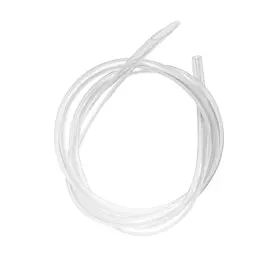
For the Craftsman 358791072 gas line trimmer, the fuel line size depends on which section of the fuel system you’re replacing (tank pickup line vs. purge/return line). The most reliable way to match the correct inside diameter and outside diameter is to follow the routing and parts callouts in the 358791072 owner's manual and replace the line as a matched kit.
Fuel systems on 2-cycle trimmers commonly use two different line sizes:
- Fuel pickup (supply) line: runs from the fuel tank (with the fuel filter/pickup) to the carburetor
- Purge/return line: runs from the primer bulb back to the tank
- Tank grommet pass-through: the line section that seals where the line enters the tank
- Primer bulb connections: short runs that must fit tightly to prevent air leaks
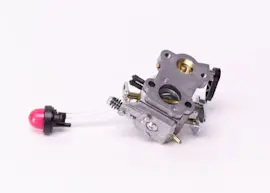
On this model, the parts list in the manual shows a fuel line kit and a purge bulb, which is the typical setup for supply and purge/return lines.
If the line feels loose on fittings, kinks, or collapses, it is usually the wrong diameter or the line material is too soft.
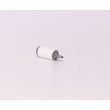
- Replace the supply/return line using the model-matched fuel line 530069247
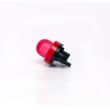
- If the primer bulb is cracked or won’t draw fuel, replace the ayp lawn & garden equipment engine carburetor primer bulb 530047721
- Inspect the tank for leaks or a damaged fitting area; replace the line trimmer fuel tank 545103602 if needed
Use this checklist after installing new line:
- Line pushes onto fittings firmly and does not spin freely
- No wet fuel smell or seepage at the tank grommet area
- Primer bulb fills with fuel after several presses (not mostly air)
- Engine accelerates without bogging (air leak symptoms)
| Symptom | Most likely fuel line issue | What to do |
|---|---|---|
| Primer bulb won’t fill | Return line swapped or leaking | Re-check routing in the manual |
| Starts then dies | Supply line cracked or loose | Replace line with correct kit |
| Runs lean or surges | Air leak at line connection | Re-seat or replace line |
Using the correct fuel line size on a Craftsman trimmer prevents air leaks that cause hard starting, stalling, and poor throttle response. Correct line sizing also helps the primer bulb purge air so the carburetor gets steady fuel.
Last updated: February 2026