 Owner’s manual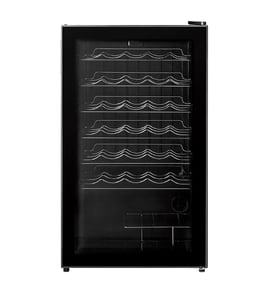



Is there a difference between a wine fridge and a wine cooler?
Yes. A “wine fridge” usually means a temperature-stable cabinet designed for wine storage (often with tighter temperature control and lower vibration), while a “wine cooler” is often used as a broader term for beverage chilling. Your Frigidaire FGWC52L3TS is a wine and beverage cooler built for controlled cooling in a dedicated cabinet.
How the terms are commonly used
In everyday shopping and repair conversations, people use these terms interchangeably, but the intent is often different:
- Wine fridge: focused on wine storage conditions and stability
- Wine cooler: often includes mixed beverages (wine, cans, bottles) and serving-ready temps
- Cellar cabinet/wine cellar: emphasizes longer-term storage conditions
- Beverage center: emphasizes cans and assorted drinks, frequent door openings
Practical differences that matter for owners
Here are the features that typically separate “wine fridge” vs “wine cooler” in real use:
| Feature | Wine fridge (typical) | Wine & beverage cooler (typical) |
|---|---|---|
| Primary goal | Stable wine storage | Flexible drink chilling |
| Door openings | Less frequent | More frequent |
| Temperature stability | Higher priority | High, but more impacted by use |
| Shelving | Wine-bottle focused | Mixed bottle and can storage |
What matters most for FGWC52L3TS performance
Even if you call it a wine fridge or wine cooler, performance depends on setup and habits. For best results, we follow the same fundamentals the manufacturer calls out:
- Install near a grounded outlet; do not use an extension cord or adapter plug
- Keep ambient temperature around 70 to 78°F for optimal cooling
- Leave about 2 inches of clearance at the back for airflow
- Minimize long door openings to reduce warm air entering the cabinet
- If temperatures drift, adjust the control and allow time to stabilize (cooldown can take hours)
For model-specific operating guidance (including placement and temperature control basics), use the FGWC52L3TS use & care guide.
Why it matters
Using the right expectations helps prevent common complaints like “runs too long” or “too warm.” A unit used like a beverage center (frequent openings, warm room) will cycle more and recover slower than one used for steady wine storage.
Last updated: February 2026
What is the most common problem with wine coolers?
The most common wine cooler problem is temperature control trouble: the unit runs too long, does not cool enough, or gets too cold. On the Frigidaire FGWC52L3TS, this is most often tied to control settings, frequent door openings, or a door seal or alignment issue that lets warm air leak in (see the FGWC52L3TS owner’s manual).
Most common causes (and what to check first)
- Temperature control set incorrectly: adjust slightly warmer or colder, then wait several hours for temperatures to stabilize.
- Door opened too often or left ajar: warm air forces longer run times and uneven cooling.
- Door not sealing or aligned: a misaligned door or dirty, worn gasket causes temperature swings and moisture.
- Hot room conditions: it is normal for the compressor to run longer in warm spaces.
- Recently unplugged or moved: allow about 4 hours for the cooler to pull down to temperature.
Quick troubleshooting steps for FGWC52L3TS
- Confirm the control is not set to OFF, then set it to a mid-range temperature.
- Keep the door closed and limit openings for the next few hours.
- Inspect the gasket for dirt, gaps, cracks, or areas not contacting the cabinet.
- Check that the cabinet is level so the door closes squarely.
- If it will not run at all, verify the plug is fully seated and check the home breaker or fuse.
Symptom-to-cause guide
| Symptom | Most likely cause | Best first action |
|---|---|---|
| Too warm | Door leaks, frequent openings, control set too warm | Reduce openings; adjust colder; check door alignment/gasket |
| Too cold | Control set too low | Adjust warmer; allow several hours |
| Runs too long | Hot room, door leaks, control set too cold | Improve airflow around unit; confirm door seal; adjust warmer |
| Will not run | Control OFF, loose plug, tripped breaker | Set control ON; reseat plug; reset breaker |
Why it matters
Wine and beverages store best at stable temperatures. Small air leaks at the door gasket or frequent door openings can make the compressor run longer, create moisture, and cause noticeable temperature swings.
Last updated: February 2026
Does anybody make wine coolers anymore?
Yes. Manufacturers still make wine coolers, and they are more common now as dedicated wine and beverage refrigerators like the Frigidaire FGWC52L3TS. If you mean the old “wine cooler” drink, those still exist too, but they are a different product than a wine cellar appliance.
Wine cooler drink vs. wine cooler appliance
These terms get mixed up, so here is the quick distinction:
- Wine cooler (appliance): A temperature-controlled cabinet for storing wine and canned beverages.
- Wine cooler (drink): A ready-to-drink beverage (wine-based or malt-based, depending on brand).
- Wine cellar / wine refrigerator: Common names for the appliance category.
- Dual-zone vs. single-zone: Some coolers hold two temperature ranges; many are single-zone.
| What you mean | Still made? | What to shop for | Typical use |
|---|---|---|---|
| Wine cooler appliance | Yes | Wine & beverage cooler, wine cellar | Protect flavor by steady temps |
| Wine cooler drink | Yes | RTD wine cooler, spritzer, flavored cooler | Ready-to-drink beverage |
What “modern” wine coolers (appliances) focus on
Most current wine and beverage coolers emphasize consistent temperature and efficient operation.
- Digital temperature controls and display
- Interior LED lighting (often with an on/off touch control)
- Ventilation and placement requirements (built-in vs. freestanding varies)
- Door sealing and leveling so the door closes tightly
- Airflow management (not overcrowding or blocking vents)
For model-specific operating features and control steps, use the FGWC52L3TS owner’s manual.
Why it matters
Wine and beverage coolers are designed to reduce temperature swings and limit warm air exposure from frequent door openings. That helps preserve taste and carbonation, and it can reduce run time and energy use when the unit is installed and loaded correctly.
Last updated: February 2026
What is the life expectancy of a wine cooler?
A wine cooler like the Frigidaire FGWC52L3TS typically lasts 10 to 15 years. Consistent ventilation, correct ambient temperature, clean door gaskets, and avoiding frequent long door openings help the compressor and controls run less and extend overall life.
What affects lifespan the most
- Heat and poor ventilation: Leave about 2 inches of space behind the cabinet for airflow.
- Room temperature: For best performance, keep the cooler where ambient temperature is 70 to 78°F.
- Door use and sealing: Frequent door openings and a dirty or misaligned gasket make the unit run longer.
- Cleaning habits: Annual cleaning helps prevent odors, corrosion, and gasket wear.
- Power quality: Plug into a grounded outlet; avoid extension cords and adapter plugs.
Maintenance checklist (simple, high impact)
Use the steps in the FGWC52L3TS owner’s manual as your baseline.
- Turn the temperature control OFF, unplug, and remove bottles before cleaning
- Clean interior with baking soda and warm water, then rinse and dry
- Wipe the exterior with mild detergent and a soft cloth
- Keep the door gasket clean so it seals tightly
- If storing unused for months, leave the door slightly open to prevent odor and mold
Quick guide: what “normal aging” looks like
| What you notice | Common cause | What to do first |
|---|---|---|
| Runs longer than it used to | Warm room, poor airflow, frequent door opening | Improve ventilation, reduce door time, confirm 70 to 78°F room temp |
| Interior too warm | Control set too warm, door not sealing | Set colder, check gasket alignment, allow several hours to stabilize |
| Louder compressor sound | High-efficiency compressor operation | Confirm airflow clearance; some compressor noise is normal |
Why it matters
Wine and beverage coolers depend on stable temperatures. When airflow is restricted or the door seal leaks, the compressor runs more often and at higher load, which shortens the service life and can lead to temperature swings.
Last updated: February 2026
Is a Frigidaire a good wine cooler?
Yes. Frigidaire wine coolers like model FGWC52L3TS are a solid choice for everyday wine storage because they are designed to hold a steady set temperature, run on a dedicated 115V outlet, and work best when installed in the right room conditions for consistent cooling. See the FGWC52L3TS use and care manual.
What “good” means for a wine cooler
A wine cooler performs well when it can maintain temperature consistently and avoid excess moisture or heat load.
Key things we look for:
- Stable temperature control for wine storage
- Proper ventilation (so the compressor does not overwork)
- Correct ambient room temperature (so cooling performance stays consistent)
- Tight door seal and level installation
- Practical capacity and shelf layout for your bottle types
Setup tips that make a big difference
For FGWC52L3TS, installation conditions directly affect performance.
- Place it near a properly grounded outlet; avoid extension cords and adapter plugs
- Install it where ambient temperature is 70°F to 78°F
- Leave about 2 inches of space behind the unit for airflow
- Keep it out of direct sunlight and away from heat sources (ovens, dishwashers, heating vents)
- Level the cabinet so the door closes tightly
Quick checklist: FGWC52L3TS operating requirements
| Item | What to use | Why it matters |
|---|---|---|
| Power | Dedicated 115V, 60 Hz, 15A outlet | Reduces nuisance power issues and protects components |
| Room temp | 70°F to 78°F | Helps the unit hold set temperature reliably |
| Venting | 2 in. clearance at back | Prevents long run times and poor cooling |
Why it matters
Wine quality depends on consistent storage conditions. When a wine cellar is installed in the recommended temperature range and has proper airflow, it cycles normally, holds temperature better, and helps prevent issues like weak cooling or condensation on the glass.
Last updated: February 2026
Why is my Frigidaire wine cooler not cooling?
If your Frigidaire FGWC52L3TS wine and beverage cooler runs but is not cooling, the most common causes are a warm temperature control setting, frequent door openings, or a door that is not sealing. Set the control colder and allow several hours (up to about 4 hours) for temperatures to stabilize; see the FGWC52L3TS owner’s manual.
Quick checks that fix most “not cooling” complaints
- Turn the temperature control to a colder setting; wait several hours for stabilization.
- Confirm the door closes fully and the gasket seals all the way around.
- Reduce door openings; warm air entering makes the cabinet temperature rise.
- If the unit was recently unplugged or moved, allow time for a full cool-down.
- Make sure the cooler is level so the door aligns and seals correctly.
Door seal and leveling (very important)
A slightly open door or misaligned gasket can make the interior too warm and can also cause moisture or frost issues.
Use this checklist:
- Check for gaps at the top and bottom corners of the door.
- Clean the gasket and the cabinet sealing surface with mild detergent and warm water; dry fully.
- Level the cabinet front-to-back; many units seal best when the front leveling legs are adjusted so the door closes easily when left halfway open.
| What you notice | Likely cause | What to do |
|---|---|---|
| Interior is warm, unit seems to run a lot | Door opened too often or not fully closed | Open less often; verify door closes and seals |
| Interior is warm after unplugging | Normal recovery time | Allow up to about 4 hours to cool completely |
| Moisture on outside of cabinet | Door not seating properly | Check alignment; clean and inspect gasket |
When it points to an electrical or cooling-system issue
If the temperature control is set correctly and the door seals well, focus on basic power and component checks:
- Verify the outlet and power cord connection is tight.
- Check the house breaker or fuse.
- Listen for normal compressor operation; louder sound levels can be normal on modern units.
For safe electrical testing steps and tool use, follow how to use a multimeter to test electrical parts video.
Why it matters
Wine and beverage coolers depend on a tight door seal and stable run time. A small air leak or frequent openings can keep the FGWC52L3TS from ever reaching set temperature, even though it appears to be running normally.
Last updated: February 2026