Installation guide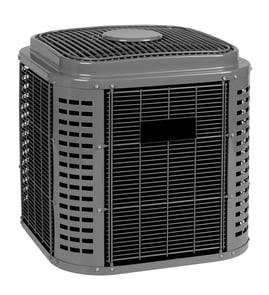




How many square feet does a 24000 BTU AC unit cover?
A 24,000 BTU (about 2-ton) central AC like the Carrier 24ACC624A0030010 typically cools about 1,000 to 1,500 sq ft. The exact coverage depends on insulation, ceiling height, sun exposure, duct condition, and your local climate; use the sizing guidance in the installation guide to confirm what fits your home.
Use these as practical planning numbers for a 24,000 BTU system:
- Mild climates, good insulation: ~1,300 to 1,500 sq ft
- Average conditions: ~1,100 to 1,300 sq ft
- Hot climates, lots of sun, older insulation: ~900 to 1,100 sq ft
- High ceilings (9 ft+): subtract 10% to 20% from the estimate
- Leaky ducts or poor airflow: coverage drops until duct issues are corrected
These factors usually matter more than the BTU rating alone:
- Insulation and air sealing (attic, walls, windows, doors)
- Window area and shading (west-facing glass adds load)
- Ceiling height and open floor plans (more air volume to cool)
- Duct sizing and leakage (lost cooling equals less effective capacity)
- Indoor heat sources (kitchens, electronics, occupancy)
| Home condition | What you’ll notice | What to do |
|---|---|---|
| Oversized system | Short cycles, clammy air | Reduce capacity or improve humidity control |
| Undersized system | Runs constantly, can’t reach set temp | Improve envelope or increase capacity |
| Airflow problems | Uneven temps, icing risk | Check filter, blower, ducts |
Correct sizing protects comfort and efficiency. An oversized 24,000 BTU unit can cool too fast and leave humidity behind; an undersized unit can run nonstop and still struggle on the hottest days.
Last updated: February 2026
How to buy Carrier parts?
For your Carrier 24ACC624A0030010 central air conditioner, buy parts by confirming the model number on the unit nameplate, then matching the exact part number listed for that model. Use the model parts list and follow safety and setup requirements in the installation guide.
- Confirm the outdoor unit model number is 24ACC624A0030010 on the nameplate.
- Identify the failed component (electrical control, fan, wiring pass-through, plug).
- Match the part number exactly; this is especially important for electrical parts.
- Compare physical details (mounting points, terminals, connector style) before ordering.
- If you are replacing multiple items, group them by repair area (electrical compartment, fan section, wiring).
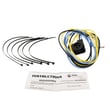
These are examples of parts shown for Carrier 24ACC624A0030010 that customers commonly replace during outdoor-unit repairs:
| Part (example) | What it does | When you might replace it |
|---|---|---|
| Contactor HN51KC024 | Switches high-voltage power to the compressor and condenser fan circuit | Outdoor unit will not start, contacts look burnt or pitted |
| Fan LA01RA349 | Moves air across the condenser coil | Fan blade damaged, airflow problems, noisy operation |
| Grommet KA56GR140 | Protects wiring where it passes through metal panels | Wires rubbing on sheet metal, vibration wear |
Central air conditioner parts tie into high voltage wiring and refrigerant system components. The installation guide covers key requirements like securing wiring away from sharp edges, fastening panels before operation, and system setup checks.
Last updated: February 2026
How to find AC tonnage with model number?
For Carrier model 24ACC624A0030010, the “24” in the model number indicates 24,000 BTU/hr, which equals 2 tons (24 ÷ 12 = 2). You can also confirm the exact nominal tonnage on the unit rating plate referenced in the installation guide.
Use the two-digit capacity code in the model number (often 18, 24, 30, 36, 42, 48, 60):
- Find the capacity code in the model number string
- Treat it as “thousands of BTU/hr” (24 = 24,000 BTU/hr)
- Divide by 12 to convert BTU/hr (in thousands) to tons
- Round to the nearest nominal size (1.5, 2, 2.5, 3, 3.5, 4, 5 tons)
Here is the common interpretation for this Carrier outdoor unit series:
| Model number snippet | Approx. capacity | Nominal tonnage |
|---|---|---|
| 18 | 18,000 BTU/hr | 1.5 tons |
| 24 | 24,000 BTU/hr | 2 tons |
| 30 | 30,000 BTU/hr | 2.5 tons |
| 36 | 36,000 BTU/hr | 3 tons |
| 42 | 42,000 BTU/hr | 3.5 tons |
| 48 | 48,000 BTU/hr | 4 tons |
| 60 | 60,000 BTU/hr | 5 tons |
We recommend verifying the nominal size using the outdoor unit’s rating plate (usually on a corner panel). This is especially helpful if the condenser, coil, or compressor has been replaced.
- Turn off power at the disconnect before opening panels
- Locate the rating plate on the outdoor unit cabinet
- Match the model number and serial number to your records
- Use the listed capacity information to confirm nominal tons
Correct tonnage affects comfort and efficiency. A mismatch between the outdoor condenser and the indoor coil can cause poor cooling, higher energy use, and charging or airflow problems.
Last updated: February 2026
What is the average cost to replace a central air conditioner?
The average cost to replace a central air conditioner is typically $6,000 to $12,000 installed, with many homeowners landing near the middle of that range. For a Carrier 24ACC624A0030010-type outdoor condenser replacement, your final price mainly depends on tonnage, efficiency level, and whether line-set or electrical work is needed.
Replacement cost is a bundle of equipment, labor, and job-site upgrades. These are the biggest variables:
- System size (tons): larger capacity usually costs more
- Efficiency rating: higher efficiency equipment and required matching components raise cost
- Ductwork condition: repairs, sealing, or resizing can add significant labor
- Refrigerant line set: replacement or long-line routing increases materials and time
- Electrical and pad work: disconnect, whip, breaker, and condenser pad may need updates
- Permits and code compliance: varies by region and scope
| Replacement scope | What it usually includes | Typical range |
|---|---|---|
| Outdoor unit only (condenser swap) | Condenser, basic startup, minor materials | $4,000 to $8,000 |
| Full split system | Condenser + indoor coil (and sometimes furnace/air handler changes) | $6,000 to $12,000 |
| Complex install | Ductwork, major electrical, long line set, access challenges | $10,000 to $18,000+ |
Your installation guide for the 24ACC6 family calls out items that commonly influence labor and materials, including:
- Liquid-line sizing limits (important for long runs)
- Factory-supplied liquid-line filter drier installation
- Charging procedures (subcooling/superheat targets and conditions)
Use the installation guide to confirm what your installer should follow for piping, charging, and safety steps.
A low bid can look attractive, but central AC replacement is as much about correct refrigerant piping, airflow, and charging as it is about the condenser itself. Getting those details right protects efficiency, comfort, and compressor life.
Last updated: February 2026