Owner’s manual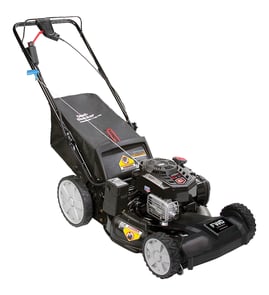


What is the cheapest time of year to buy a lawn mower?
The cheapest time to buy a lawn mower is typically the off-season, especially fall through winter (about September through February). That timing applies well to an MTD walk-behind mower like model 11A-546B729, because demand drops after mowing season and leftover inventory is often discounted.
Best times to shop (and why)
- Late fall (September to November): end-of-season clearouts on remaining gas walk-behind mowers.
- Mid-winter (January to February): post-holiday markdowns and final closeouts.
- Holiday sale windows (May to June): good deals with more selection, but usually not the lowest prices.
- Black Friday and Cyber Monday: can be strong for electric models; gas mower deals vary by inventory.
Months at a glance
| Time of year | Typical price trend | Selection | Best for | |---|---|---| | Sep to Nov | Lowest to low | Medium | Clearance pricing on gas mowers | | Dec to Feb | Low | Low | Deep discounts if stock remains | | Mar to Jun | Highest to medium | Highest | Best selection, some promo sales | | Jul to Aug | Medium to high | Medium | Occasional promos, fewer closeouts |
How to save even more (without guessing)
- Compare the mower’s total cost (price plus any needed parts like a blade or adapter).
- If your mower is running well, consider maintaining it instead of replacing it; a sharpened blade and clean deck often restore cut quality.
- Use the parts list for model 11A-546B729 to price common wear items before deciding to replace the whole mower.
- Keep your documentation handy for correct maintenance intervals and specs in the owner's manual.
Why it matters
Buying off-season can save money, but keeping a mower like the MTD 11A-546B729 maintained can deliver the same result: better performance for less cost. Routine blade care and proper storage reduce vibration, rust, and starting problems over time.
Last updated: February 2026
How many acres can a 72 inch mower cut?
A 72-inch deck can cut about 4 to 8 acres per hour in typical conditions (open terrain, steady pace, minimal obstacles). Your MTD 11A-546B729 is a walk-behind mower, so it does not use a 72-inch deck; check the cutting-width spec in the owner's manual.
Quick rule of thumb (acres per hour)
We estimate mowing capacity using deck width, ground speed, and efficiency (turns, trees, slopes, bagging).
- More open space equals higher acres per hour
- Wet or tall grass slows you down (and mulching performance drops)
- Bagging usually reduces speed versus side discharge or mulching
- Slopes reduce safe speed; avoid mowing slopes steeper than 15 degrees
- Obstacles (trees, beds, fences) can cut productivity in half
Typical productivity ranges for a 72-inch mower
| Conditions | Typical speed | Typical output |
|---|---|---|
| Open, flat, dry grass | 6 to 10 mph | 6 to 10 acres/hour |
| Mixed yard, some turns/trees | 5 to 8 mph | 4 to 7 acres/hour |
| Heavy grass, slopes, lots of trimming | 3 to 6 mph | 2.5 to 5 acres/hour |
Why it matters
Sizing a mower by deck width alone can lead to disappointment. Real-world acres per hour depends on how often you stop, how thick the grass is, and whether you mulch or bag. For best results, we follow the common guideline to avoid cutting more than one-third of the grass height at a time.
If you are asking because your mower is cutting poorly
On the MTD 11A-546B729, uneven cut and poor mulching are often tied to blade condition and cutting-height setup.
- Set all wheels to the same height
- Avoid mowing wet grass
- Sharpen or replace a dull blade (a dull edge tears grass)
- Check for vibration; a loose or bent blade needs attention
- If you are servicing the blade area, shut the engine off and wait for the blade to fully stop
Helpful DIY guidance: how to sharpen a lawn mower blade
Last updated: February 2026
How do I find MTD replacement parts?
For your MTD walk-behind mower model 11A-546B729, the fastest way to find the right replacement parts is to match the exact model number from the mower’s model plate, then use the parts diagrams and parts list for that model. Our owner's manual shows where to locate and record the model and serial number.
Where to find the model number (so parts match)
The model plate is on the mower deck; stand in the operating position and look down at the rear of the deck.
Use these tips to avoid ordering the wrong blade, adapter, or hardware:
- Copy the model number and serial number exactly (including hyphens).
- Match the model number to the parts list for 11A-546B729.
- Use the diagram callouts to confirm the part’s location and quantity.
- Compare the part name and part number before ordering.
- Replace worn fasteners (nuts, bolts, cotter pins) when you remove them if they are damaged or corroded.
Common parts people replace on this model
If you are servicing the cutting system or height adjustment, these are commonly needed items shown for this model:
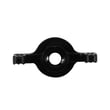
- Blade adapter 748-0377C
- Lawn mower blade adapter 748-04082
- Lawn mower blade support 736-0524B
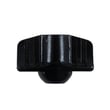
- Lawn mower height adjuster lever 94832
Quick guide: which part helps with what?
| Symptom or task | Parts to check first | What it affects |
|---|---|---|
| Vibration after hitting something | Blade adapter, blade support | Blade alignment and crankshaft protection |
| Uneven cut height | Height adjuster lever, adjustment assemblies | Wheel height setting consistency |
| Blade removal or service | Blade adapter, blade support, fasteners | Safe blade mounting and torque retention |
Why it matters
MTD walk-behind mowers often share similar-looking components across different model families; using the exact 11A-546B729 model number keeps your blade, blade adapter, and deck hardware matched to the correct shaft style and mounting pattern.
Last updated: February 2026
What are the common lawn mower problems?
Common problems on the MTD 11A-546B729 walk-behind mower include no-start conditions (fuel or ignition), rough running or overheating (oil level or airflow), excessive vibration (loose or bent blade), and poor cut or mulching (wet grass, wrong height setting, dull blade). See the owner's manual for model-specific safety and maintenance steps.
Most common symptoms and what usually causes them
- Won’t start: stale/dirty fuel, clogged vent, fouled spark plug, or fuel system issues
- Overheats: low engine oil level or restricted airflow around the engine
- Idles poorly or hesitates: spark plug gap out of spec (commonly set to 0.030 in.) or carburetor mixture issues
- Excessive vibration: loose/unbalanced cutting blade, damaged blade adapter, or bent blade
- Uneven cut or won’t mulch: wheels set at different heights, wet grass, grass too tall, or a dull blade
Quick checks we recommend (safe, fast, and effective)
- Shut the engine off and disconnect the spark plug wire before any inspection.
- Check engine oil level and top off with the proper oil.
- Inspect the underside of the deck for packed grass; clean it after each use (avoid using a garden hose or pressure washer).
- Check the blade area for looseness, damage, or imbalance.
- Confirm all four wheels are set to the same cutting height.
Parts that commonly relate to these problems
If you find wear or damage, these model-matched parts are often involved:
| Problem you notice | Parts to inspect first | What the part affects |
|---|---|---|
| Vibration, rattling, poor cut | Blade adapter 748-0377C | Centers and drives the blade on the crankshaft |
| Vibration, blade feels loose | Lawn mower blade support 736-0524B | Supports blade mounting stack-up and alignment |
| Uneven cut (height won’t hold) | Lawn mower height adjuster lever 94832 | Helps lock and control deck height position |
Why it matters
Most “common mower problems” trace back to basic maintenance and blade-deck condition. Keeping oil at the correct level, keeping fasteners tight, and maintaining a sharp, balanced blade improves cut quality and reduces vibration that can damage spindles, pulleys, bearings, and the engine.
Last updated: February 2026
How to know if mower blade is upside down John?
On your MTD 11A-546B729 walk-behind mower, the blade is upside down when the side stamped “Bottom” (or the side showing the blade part number) is facing up toward the deck. Install the blade so that “Bottom” (or the part number side) faces the ground; see the owner's manual.
Quick ways to confirm blade orientation
- Find the word “Bottom” on the blade; that side faces the ground.
- If there is no “Bottom” stamp, the side with the blade part number faces the ground.
- The blade must sit flat and fully seated on the blade adapter flanges.
- The blade bell support notches align with the small holes in the blade.
- The cutting edges should be positioned to cut as the blade spins (not trailing backward).
Safe removal and reinstall steps (MTD 11A-546B729)
- Disconnect the spark plug wire.
- Tip the mower on its side with the air filter and carburetor facing up.
- Remove the blade bolt, blade bell support, blade, and adapter.
- Lightly oil the crankshaft and the inside surface of the blade adapter; reinstall the adapter.
- Reinstall the blade with “Bottom” (or part number side) facing the ground, then reinstall the blade bell support.
Tightening the blade bolt
The MTD 11A-546B729 manual specifies tightening the blade bolt to 450 in-lbs minimum and 600 in-lbs maximum.
| Item | Specification |
|---|---|
| Blade bolt torque | 450 in-lbs min to 600 in-lbs max |
Why it matters
Correct blade orientation and proper seating on the adapter prevent poor cut quality and reduce vibration. The manual also warns that an unbalanced blade can cause excessive vibration and damage.
Last updated: February 2026