Owner’s manual
 Error Codes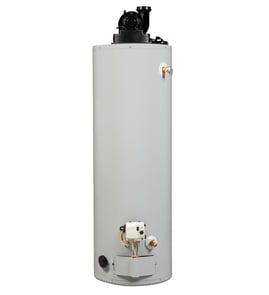

How do I read my water heater model number?
For Kenmore gas water heater model 153339460, read the model number directly from the rating plate (the sticker on the tank). The rating plate lists the MODEL NO. and serial number; those are the key identifiers you need for parts and service. See the 153339460 owner's manual.
Where to find the model number on this water heater
On this Kenmore unit, the model number is printed on the rating plate. In the manual’s “Get to know your water heater” diagram, the rating plate is called out as a labeled component.
- Look on the outside of the tank for a rectangular sticker or metal label
- Find the line that says MODEL NO.
- Write down the serial number too (it helps match production details)
- If the label is dirty, wipe it gently so the characters are readable
- Use the full model number exactly as printed (example: 153.339460)
What the rating plate information means (quick guide)
Use this as a simple checklist when you are copying the label.
| Rating plate item | What it’s used for | Keep it? |
|---|---|---|
| Model number | Correct parts lookup and diagrams | Yes |
| Serial number | Production details and service reference | Yes |
| Gas type (natural or LP) | Correct burner and orifice selection | Yes |
| Input rate (BTU) | Sizing and troubleshooting reference | Helpful |
Why it matters
Parts for gas water heaters are model-specific. For example, ignition and burner components can vary by model and gas type, so using the exact model number helps you avoid ordering the wrong pilot assembly, burner tube, or air intake screen.
Last updated: January 2026
What is the most common problem with a gas hot water heater?
The most common problem on a gas water heater like Kenmore model 153339460 is ignition failure, meaning the pilot will not stay lit or the burner will not fire, so you get little or no hot water. Sediment buildup and temperature setting issues are also frequent causes of poor heating.
Most common causes (and what you’ll notice)
- Pilot will not stay lit: no hot water, burner never starts
- Dirty or restricted air intake: weak flame, sooting, shutdowns
- Sediment in the tank: popping or rumbling noises, slow recovery, reduced hot water
- Gas control/thermostat issues: water temperature swings (hot then cool)
- Vent/combustion problems: condensation or moisture around the draft hood area
Quick checks we recommend first
Before replacing parts, use these safe, high-value checks:
- Confirm the gas control knob is set correctly and follow the lighting steps in the 153339460 owner’s manual.
- Verify the tank is completely full of water before turning gas on (a dry-fired tank can be damaged).
- If hot water temperature seems inconsistent, remember temperature at the faucet can vary; test at the tap before changing settings.
- If the heater has been unused for 2 weeks or more, run hot water at the farthest faucet for several minutes before using appliances.
- Look for obvious air restriction at the base and keep the area around the heater clear.
Parts that commonly solve “no hot water” on this model
| Symptom | Common fix | Example part for model 153339460 |
|---|---|---|
| Pilot will not light or won’t stay lit | Replace pilot components | Pilot assembly 100109290 |
| Burner won’t ignite or flame is poor | Service burner/orifice, replace if needed | Water heater burner assembly 100109202 |
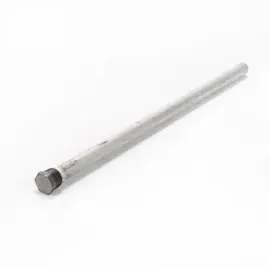
| Odor or accelerated tank corrosion | Replace anode rod (do not remove permanently) | Anode rod 100109434 |
Why it matters
Ignition and combustion problems stop heating completely, while sediment and temperature regulation issues reduce capacity and can create scald risk if settings are raised too high. Keeping the burner area clean and following the manual’s lighting and safety steps prevents repeat failures.
Last updated: January 2026
What is the life expectancy of a 50 gallon gas water heater?
A 50-gallon gas water heater typically lasts 10 to 15 years. For Kenmore model 153339460, regular tank flushing and timely anode rod checks help you reach the upper end of that range by reducing sediment buildup and slowing tank corrosion (see the maintenance guidance in the 153339460 owner's manual).
Typical lifespan and what changes it
Most 50-gallon gas water heaters fall into a predictable lifespan range, but water conditions and maintenance make the biggest difference.
- Hard water and heavy use shorten life by increasing scale and sediment.
- Sediment buildup can overheat the tank bottom and reduce efficiency.
- Anode rod condition is a major factor; replacing a depleted anode can extend tank life.
- Higher temperature settings increase stress on the tank and raise scald risk.
- Poor combustion air flow (lint, dust) can cause burner performance issues.
Maintenance that most directly extends tank life
The Kenmore manual calls out periodic draining/cleaning of sediment and explains that an anode rod is a sacrificial part that should be checked and replaced as needed.
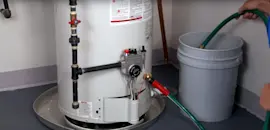
- Drain and flush the tank periodically to remove sediment.
- Inspect the anode rod after the warranty period and then check it annually.
- Keep the burner area and air intake path clean.
- Watch for slow recovery, rumbling, or popping, which often points to sediment.
- Set a safe, practical temperature; the manual warns that water over 125°F can scald.
Quick guide: what to do and how often
| Task | Typical interval | What it helps prevent |
|---|---|---|
| Tank flush/drain | 6 to 12 months | Sediment, noise, reduced efficiency |
| Anode rod inspection | Yearly (after warranty period) | Premature tank corrosion |
| Air intake/burner area cleaning | As needed (dusty areas more often) | Poor combustion, nuisance shutdowns |
Why it matters
A water heater usually fails from tank corrosion or sediment-related overheating. Spending a little time on flushing and anode rod maintenance can add years of service and helps keep hot water output consistent.
Last updated: January 2026
How long should a thermocouple last on a water heater?
On a Kenmore 153339460 gas water heater, a thermocouple commonly lasts 10 to 15 years, which is often close to the typical service life of the water heater. Heat exposure, combustion air quality, and burner maintenance can shorten that lifespan.
Typical thermocouple lifespan and what affects it
A thermocouple is a safety sensor that helps keep the gas valve open only when a pilot flame is proven. Its life depends heavily on operating conditions.
- Normal range: 10 to 15 years
- Shorter life is common if the pilot flame is weak, the burner area is dirty, or combustion air is restricted
- Condensation events (especially during cold starts) can contribute to pilot outages and stress the pilot system
Signs the thermocouple is failing
If the thermocouple is getting weak, the pilot may not stay lit even after proper lighting.
- Pilot lights but goes out when you release the control knob
- Pilot stays lit sometimes, then drops out randomly
- You need multiple attempts to keep the pilot burning
- Burner operation is inconsistent even though gas supply is steady
Maintenance that helps the pilot system last longer
Your manual calls out routine housekeeping that directly supports stable combustion and pilot operation.
- Vacuum dust and lint around the base regularly
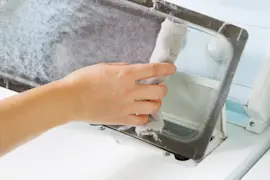
- Inspect and clean the air intake screen at least every 6 months
- Keep combustion air openings unobstructed
- Keep flammables and stored items away from the heater
For the model-specific maintenance schedule and safety notes, follow the 153339460 owner's manual.
Quick reference: thermocouple life vs. other common wear items
| Item | Typical service interval | Why it matters |
|---|---|---|
| Thermocouple | 10 to 15 years | Proves pilot flame so gas can flow safely |
| Air intake screen cleaning | Every 6 months | Prevents restricted combustion air and pilot issues |
| Anode rod inspection | Annually after warranty period | Helps protect the tank from corrosion |
Why it matters
A weak thermocouple can cause nuisance pilot outages and no hot water. Keeping airflow clean and the burner area free of lint helps the pilot flame burn correctly, which reduces stress on the thermocouple and related ignition components.
Last updated: January 2026