Installation guide
 Owner’s manual
 Error Codes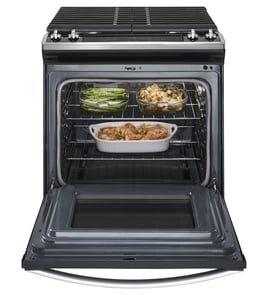




How long should a Kenmore gas stove last?
A Kenmore gas range like model 79074132311 typically lasts 15 years with normal household use. Keeping burners clean, confirming proper ignition, and maintaining safe gas and electrical connections helps you get the full service life from the range.
Typical lifespan and what affects it
Most ranges reach their expected lifespan when heat, ignition, and gas flow stay consistent.
- Heavy daily cooking shortens lifespan; light use extends it
- Spills and boilovers that clog burner ports cause ignition stress
- Weak igniters can delay lighting and overwork the gas valve
- Poor ventilation can leave grease and heat buildup around controls
- Improper installation or grounding can lead to repeated failures
Quick checks that protect performance
Use these checks to reduce wear on ignition parts and burners.
- Surface burners: turn the knob to LITE and listen for sparking; the burner should light within about 4 seconds after air is purged from the gas line (common after installation or service)
- Oven bake: expect a 30 to 60 second warm-up before the burner lights because the igniter must glow hot enough to open the oven valve
- Broil (if equipped): ignition should also occur within about 60 seconds
- Keep burner caps seated correctly and clean burner heads so flame stays even
- Follow the safety and setup steps in the 79074132311 installation guide
Common wear items (plan-ahead parts)
These parts are frequent causes of “won’t light” or inconsistent heating as the range ages.
| Symptom | Most likely area | Example part for this model |
|---|---|---|
| Oven won’t ignite or takes too long | Bake igniter | Tappan range oven burner igniter 316489403 |
| Oven temperature swings | Temperature sensing | Frigidaire range oven temperature sensor 316490000 |
| Clicking but no surface ignition | Spark/ignition circuit | Range spark module 5304508269 |
Why it matters
A range that lights quickly and burns with a steady flame runs cooler at the controls, avoids repeated ignition cycling, and reduces stress on the gas valve and igniters. That directly supports reaching the typical 15-year lifespan.
Last updated: February 2026
Where to find model number on Kenmore gas range?
On Kenmore gas range model 79074132311, the model and serial number identification plate is located on the right-hand surface of the oven front frame. To see it, open the storage drawer, warmer drawer, or broiler drawer as shown in the 79074132311 installation guide.
Exact location on model 79074132311
Use this quick checklist to find the plate fast:
- Open the storage drawer (common on many ranges) and look at the right-hand oven front frame
- If your range has a warmer drawer, open it and check the same right-hand front frame area
- If your range has a broiler drawer, open it and look on the right-hand oven front frame
- Use a flashlight; the plate can be easier to read from a low angle
- Write the numbers down before you start any repair or parts search
What to record from the identification plate
We recommend copying every line so you get the correct diagrams and replacement parts.
| Plate item | Why we use it |
|---|---|
| Model number | Matches the correct parts list for your exact range |
| Serial number | Identifies the production run for service and parts compatibility |
| Lot number or letter | Helps narrow down version changes within the same model |
Why it matters
Kenmore ranges can have multiple versions that look alike. Using the exact model and serial information prevents ordering the wrong igniter, temperature sensor, control, or burner components.
Last updated: February 2026
What are the most common issues with 79074132311?
The most common problems we see on the Kenmore 79074132311 gas range are ignition failures (surface or oven), oven temperature that is off, and gas or electrical supply issues after installation or moving the range. Many of these are resolved by basic cleaning, correct leveling, and checking connections per the installation guide.
Common symptoms and what they usually point to
- Oven will not light or takes a long time to ignite: weak/hot-surface igniter, wiring issue, or gas valve problem.
- Surface burners click but won’t light: dirty burner head/cap, wet igniter area, or spark module issue.
- Oven temperature seems inaccurate: temperature sensor drift, control calibration, or airflow/door seal issues.
- Smell of gas: loose connection or regulator/supply issue; shut off gas and have the connection leak-tested.
- No power or intermittent display: branch circuit problem, loose cord/terminal connection, or control issue.
Parts that commonly fix these issues
If troubleshooting points to a failed component, these are frequent replacements for this model:
- Range oven igniter 5304506545 (oven ignition and heat-up problems)
- Frigidaire range oven temperature sensor 316490000 (temperature accuracy issues)
- Range spark module 5304508269 (multiple burners not sparking)
- Range pressure regulator 316091711 (fuel pressure and conversion related issues)
Quick checks we recommend first
- Confirm the range is on a dedicated, properly grounded circuit (typical guidance is a 15-amp branch circuit).
- Make sure burner caps and heads are seated correctly and ports are clear.
- If the range was moved, re-check leveling and verify the anti-tip installation.
- For ignition issues, listen for clicking (spark) and watch for glow (oven igniter).
- If you suspect a fuel setup issue, verify the range is adjusted for the correct gas type and pressure.
Key specs mentioned in the installation information
| Item | Natural gas | LP/Propane |
|---|---|---|
| Typical manifold pressure (when properly adjusted) | 4" water column | 10" water column |
Why it matters
Ignition and temperature problems are often caused by a single failing part (igniter, sensor, spark module), but gas ranges also depend on correct installation details like grounding, fuel pressure, and leak-free connections. Getting those basics right prevents repeat failures and unsafe operation.
Last updated: March 2026