View engine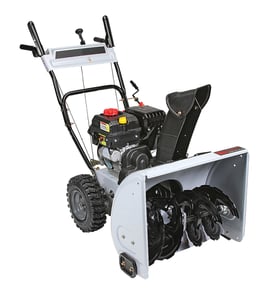



Where can I find my snowblower model number?
On a Craftsman snow thrower like model 536884252, the model number is printed on a model and serial tag (a sticker or metal plate) attached to the machine. It’s most often on the rear of the unit between the wheels, or on the side of the frame near the auger housing.
- Rear of the snowblower between the wheels (most common)
- Side of the frame near the auger housing
- Near the engine mounting area on the frame
- Under or behind a protective cover panel
- On the handle support or control panel area
The tag usually includes a model number and a serial number. For parts lookup and diagrams, we use the model number.
| Item on tag | What it’s used for | Example for this unit |
|---|---|---|
| Model number | Matching the correct parts diagrams and parts list | 536884252 |
| Serial number | Identifying production run details | Varies by unit |
- Wipe off snow, salt, and grime; the label can be hard to read when dirty.
- Use a flashlight and look along the frame rails.
- Take a photo and zoom in; faded printing is often easier to read on a phone.
Using the exact model number helps us match the correct Craftsman snowblower parts (for example, the right belt, chute parts, or hardware) so you do not end up with a similar-looking part that does not fit.
If you’re already on the parts list for this model, you can jump straight to common replacements like the gas line 791766 when you’re troubleshooting fuel delivery issues.
Last updated: February 2026
How to tell year of Craftsman snowblower by serial number?
For Craftsman snow thrower model 536884252, the most reliable way to determine the year is to decode the serial number on the unit’s ID label; many Craftsman-built formats embed a date (year, month, day) or a year code in the first characters. If the unit label is unreadable, the engine date code can confirm the engine’s build year.
Check these common locations on Craftsman snowblowers:
- On the frame near the engine (often on the rear or side panel)
- Near the auger housing on the main chassis
- Under or behind the belt/engine cover area
- On the handle support or control panel area
- On a metal tag riveted to the frame (older units)
Craftsman serial formats vary by manufacturer and production era, but these patterns are common:
- Date-coded numeric format: the first digits may represent year, month, day (or a close variation)
- Month/day/year format: some labels place MMDDYY early in the serial
- Letter year code format: a letter may represent the year, followed by numbers for month/day or sequence
- Write the serial number exactly as shown (include letters)
- Look for a 6-digit “date-looking” block near the start
- If there is a leading letter, treat it as a possible year code
- Compare the decoded date to the machine’s overall condition and features (controls, chute style, etc.)
Many Craftsman snowblowers use Briggs & Stratton engines; the engine typically has its own ID label with a manufacture date code. That engine date is a strong confirmation point when the snowblower serial format is unclear.
| What you’re decoding | What it tells you | Best use |
|---|---|---|
| Snowblower serial number | Approximate build date of the machine | Primary method |
| Engine date code | Engine build year (sometimes exact date) | Verification |
Knowing the year helps us match the correct parts and diagrams for your Craftsman 536884252, especially for wear items like belts, chute components, and hardware that can change across production runs.
- Drive/auger belt (by size and routing)
- Chute parts (deflector, control linkage)
- Fuel system parts (fuel line, clamps)
If you’re replacing a cracked or leaking fuel hose while you’re identifying the unit, the gas line 791766 is a common fuel-line replacement style used on small engines.
Last updated: February 2026
What should the gap be on a snowblower spark plug?
For a Craftsman snow thrower like model 536884252, the spark plug gap is typically 0.030 in. (0.76 mm). Many small snowblower engines run best in the 0.028 to 0.031 in. range; set the gap accurately to help prevent hard starting, misfiring, and rough running.
- Turn the engine off and let it cool completely.
- Pull the spark plug wire boot straight off the plug.
- Remove the plug with a spark plug socket.
- Measure the gap with a wire-style gap gauge or feeler gauge.
- Adjust by bending only the side electrode (never pry on the center electrode/porcelain).
- Recheck the gap after every adjustment until the gauge drags slightly.
| Engine type (typical) | Common gap range | Most common target |
|---|---|---|
| 4-cycle snowblower engines | 0.028 to 0.031 in. | 0.030 in. |
| Some older/specific engines | 0.020 to 0.030 in. | 0.030 in. |
A gap that is too wide can cause weak spark and hard starting (especially in cold weather). A gap that is too tight can reduce ignition efficiency and lead to incomplete combustion, which shows up as rough running and poor power under load.
Check these common causes before replacing parts:
- Fouled plug tip (dry black soot or wet fuel)
- Loose plug wire connection or damaged boot
- Old fuel or water in fuel
- Restricted airflow (dirty intake area)
- Fuel delivery issues (cracked or leaking fuel line)
If you find fuel line damage while inspecting, replace it with the correct part for this model, such as the gas line 791766. For step-by-step plug inspection and replacement basics, use our how to check a snowblower spark plug video.
Last updated: February 2026
Should I spray my snowblower with WD-40?
Yes, we use a light spray on the snow-contact areas of a Craftsman 536884252 snow thrower to help reduce snow sticking and to add short-term rust protection. Keep WD-40 off belts, friction-drive parts, and hot engine surfaces; apply it only to clean, cool metal.
Good places (non-stick and corrosion protection):
- Inside the discharge chute
- Chute deflector and chute interior surfaces
- Auger housing interior (light coat)
- Impeller surfaces (light coat)
- Exterior bare metal areas after cleaning and drying
Avoid these areas (can cause slipping, smoke, or damage):
- Drive and auger belts, pulleys, and idlers (including the idler pulley 48924MA)
- Friction disc and drive plate area (if equipped)
- Engine muffler, cylinder, and any hot surfaces
- Electrical switch contacts and wiring connectors
- Shut the snowblower off and let it cool completely.
- Brush or wipe out packed snow, salt, and grit; dry the surfaces.
- Spray a thin, even coat; do not soak.
- Let it sit a few minutes, then wipe off excess so it does not attract dirt.
| Option | Best use | Watch-outs |
|---|---|---|
| WD-40 | Short-term water displacement and light rust protection | Can attract grime; keep off belts and friction-drive parts |
| Silicone spray | Better long-lasting slick surface for snow shedding | Still keep off belts and friction-drive parts |
A slick chute and housing help prevent clogging and reduce strain on the auger and impeller. Keeping sprays away from drive components prevents slipping, poor traction, and premature belt wear.
If you are doing seasonal maintenance, we also recommend following a lubrication routine like how to lubricate a snowblower auger shaft video.
Last updated: February 2026
Is it cheaper to repair or replace a snowblower?
For a Craftsman snow thrower like model 536884252, repairing is usually cheaper when the problem is a normal wear item or a simple fuel/drive issue. Replacing the snowblower makes more sense when the repair total approaches about half the cost of a comparable new machine, or when the engine has repeated major failures.
- Repair when it needs routine parts (belt, pulley, scraper, fasteners) or basic fuel-line service.
- Replace when the engine has low compression, severe internal damage, or the machine has extensive rust or structural damage.
- Repair when you can do the work yourself and the parts are readily available.
- Replace when multiple systems are failing (drive plus auger plus engine) and downtime matters.
- Repair when the frame and auger housing are solid and you just need to restore performance.
These are the kinds of repairs that typically cost far less than replacement and often restore reliable operation:
| Symptom | Often the fix | Example part on this model page |
|---|---|---|
| Fuel smell, wet line, hard starting after storage | Replace cracked fuel line, refresh fuel | Gas line 791766 |
| Drive slips or won’t pull | Replace worn belt, check idler movement | V-belt 319596MA and idler pulley 48924MA |
| Poor scraping, leaves snow behind | Replace worn scraper/shave plate area parts | Scraper 55323MA |
| Chute won’t hold position or is damaged | Repair/replace chute components | Chute deflector 762222MA |
Use this quick math before you buy parts:
- Add parts + any shop labor + your time value.
- If the total is under ~50% of the price of a comparable new snowblower, repair is the better value.
- If it is over ~50%, replacement is usually the smarter long-term move.
A snowblower is only “worth repairing” if it will be dependable in the next storm. Fixing a single wear item (like a belt or fuel line) usually restores reliability; chasing repeated engine or drivetrain failures often costs more than the machine is worth.
If you are weighing a belt or drive-related repair, our video guide can help you estimate effort and tools before you decide: how to replace a snowblower belt video.
Last updated: February 2026