Owner’s manual




How long do LG AC units last?
Most LG air conditioners last 10 to 20 years with normal use and consistent maintenance. For an LG packaged terminal unit like model LP153HDUC, keeping airflow clear, cleaning the filter regularly, and cleaning the chassis/coils on schedule are the biggest factors in reaching the high end of that range (see the LP153HDUC owner's manual).
Typical lifespan by AC type
These are the most common real-world ranges we see when the unit is correctly installed and maintained.
- PTAC / packaged terminal (like LP153HDUC): 10 to 15 years
- Central split systems: 15 to 20 years
- Ductless mini-splits: 12 to 20 years
- Portable AC units: 5 to 10 years
| AC type | Typical lifespan | What shortens life fastest |
|---|---|---|
| PTAC (packaged terminal) | 10 to 15 years | Dirty coils, blocked discharge, poor sleeve fit |
| Central split | 15 to 20 years | Low airflow, refrigerant issues, neglected service |
| Portable | 5 to 10 years | Dust buildup, poor drainage, heavy seasonal use |
Maintenance that extends life on LP153HDUC
The owner’s manual calls out several habits that directly prevent premature failure.
- Clean and reinstall the air filter securely every two weeks (running without filters can cause failure).
- Keep inlet and outlet airflow unblocked (curtains, bedding, furniture, or outdoor obstructions can overheat the unit).
- Clean the chassis and coils about every four months (more often in dusty or coastal environments).
- Use gentle cleaning methods; avoid harsh cleaners and avoid high-pressure washing on fins/coils.
- Use the ventilation lever correctly; leaving it OPEN reduces heating and cooling efficiency.
Why it matters
A PTAC that is starved for airflow or packed with dirt runs hotter and longer to do the same job. That extra heat and runtime accelerates wear on high-value components like the fan motor and compressor.
When “end of life” is near
If you see these symptoms repeatedly, it often signals a major component is wearing out:
- Compressor struggles to start, trips breakers, or runs but does not cool/heat well
- Fan noise, wobble, or weak airflow
- Frequent icing, water overflow issues, or recurring shutdowns
- Cooling or heating performance drops even after filter and coil cleaning
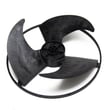
If troubleshooting points to a failed fan motor, a common replacement for this model is the room air conditioner outdoor fan motor EAU57945705.
Last updated: February 2026
Is 18 seer or 20 seer better?
For central air conditioners, 20 SEER is better than 18 SEER because it uses less electricity for the same cooling. For LG model LP153HDUC (a packaged terminal unit), SEER is not the rating you use; compare efficiency using EER (cooling) and, if applicable, heat pump ratings listed in the LP153HDUC owner's manual.
SEER vs EER: what applies to LP153HDUC
SEER is used for many split-system central air conditioners and heat pumps. Packaged terminal air conditioners and heat pumps (PTAC/PTHP) are typically rated with EER for cooling.
- SEER: seasonal efficiency across a cooling season (mostly central systems)
- EER: efficiency at a specific test condition (common for PTAC/PTHP)
- Higher number: lower operating cost for the same cooling output
- Real-world results: depend on run time, electricity rates, and installation
If you are shopping: how to compare “18 vs 20” correctly
If you are comparing two central AC options:
| Comparison point | 18 SEER | 20 SEER |
|---|---|---|
| Energy use | Lower than older units | Lowest of the two |
| Best fit | Mixed or moderate cooling seasons | Long, hot cooling seasons |
| Upfront cost trend | Lower | Higher |
| Payback | Strong | Strongest with heavy use |
If you are comparing PTAC/PTHP units like LP153HDUC, compare EER (and heating performance) instead of SEER.
What we recommend for LP153HDUC owners
Use these checkpoints to make an apples-to-apples decision:
- Find the unit’s EER and electrical requirements on the rating label and in the LP153HDUC owner's manual
- Compare same capacity class (BTU) and same voltage (often 208/230V or 265V for PTAC)
- Factor in maintenance; a weak fan motor or airflow issue can raise energy use
- If the outdoor fan is noisy or not running, check the room air conditioner outdoor fan motor EAU57945705
Why it matters
Using the correct efficiency metric prevents bad comparisons. SEER helps you choose between central systems; EER helps you compare PTAC/PTHP units like the LG LP153HDUC so you can estimate operating cost and performance accurately.
Last updated: February 2026
What is the major disadvantage of a heat pump system?
The major disadvantage of a heat pump system is that heating performance drops as outdoor temperatures get very cold, so the system may need supplemental heat and can cost more to run in those conditions. Upfront equipment and installation cost is also typically higher than conventional heating.
What this means for your LG LP153HDUC heat pump unit
A packaged terminal air conditioner/heat pump like the LG LP153HDUC is designed to provide both cooling and heating, but it still follows the same heat pump rule: the colder it gets outside, the harder it is to pull heat from the outdoor air. For operating details and control settings, use the LP153HDUC owner's manual.
Common drawbacks customers notice
- Reduced heating capacity in very cold weather (may feel like it is “running but not warming”)
- Higher total installed cost versus straight electric heat or some gas systems
- More complex system (more components to diagnose)
- Outdoor fan and compressor noise during heating operation
- Efficiency depends heavily on airflow and clean coils/filters
Quick comparison: heat pump vs electric resistance heat
| Feature | Heat pump heating | Electric resistance heating |
|---|---|---|
| Cold-weather performance | Drops as outdoor temp falls | Stays consistent |
| Efficiency | Usually higher in mild weather | Lower (uses more electricity per heat) |
| Complexity | Higher (compressor, valves, sensors) | Lower |
| Typical comfort complaint | Longer run times, cooler supply air | Hotter supply air feel |
Why it matters
Knowing this limitation helps you set expectations and troubleshoot correctly. For example, if heating feels weak, it can be normal in low outdoor temperatures, but restricted airflow (dirty filter, blocked discharge) can make it much worse and can shorten component life.
Helpful operating tips (to reduce complaints and improve performance)
- Keep the ventilation lever in CLOSE for best heating and cooling efficiency
- Avoid blocking indoor discharge air (curtains, bedding, furniture)
- Wait at least 3 minutes before switching back into cooling or heating after turning the unit off
- Turn power off before cleaning or inspecting internal areas
- If you suspect an electrical issue, use safe testing practices from how to use a multimeter to test electrical parts video
Last updated: February 2026