 Owner’s manual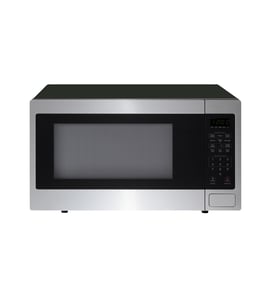



How many watts is a GE peb7226sf1ss?
The GE PEB7226SF1SS countertop microwave is rated at 1100 watts of cooking power. You can confirm the wattage and other operating details in the PEB7226SF1SS owner’s manual.
What “1100 watts” means in daily use
Higher wattage generally heats food faster and more evenly, but cook times can still vary based on dish size, food temperature, and the power level you select.
- Use Power Level 10 for fastest heating (full power)
- Use Power Level 7 for gentler cooking and reheating
- Use Power Level 3 for defrosting and simmering
- Stir, rotate, or turn food for more even results
- Let food stand after cooking so heat can equalize
Quick reference: power and settings
| Item | GE PEB7226SF1SS | Notes |
|---|---|---|
| Rated cooking power | 1100 W | Output power used for cooking performance |
| Power levels | 10 levels | Lets you reduce power for better control |
| Common high-power use | Reheating, boiling liquids | May need more stirring/rotation |
Why it matters
Knowing the wattage helps us choose the right cook times for packaged foods and recipes. If you are converting cook times from another microwave, 1100 watts is a good baseline for adjusting up or down.
Last updated: January 2026
What replaced peb7226sf1ss?
GE does not publish a single, official “replacement model” mapping for the GE PEB7226SF1SS in the model-specific information we use for parts and manuals. In practice, the best replacement is the unit that matches your installation type and cutout (if built-in) or footprint (if countertop); confirm fit using the PEB7226SF1SS owner’s manual.
How to choose the right replacement for PEB7226SF1SS
If you are replacing the whole microwave (not repairing it), focus on fit and electrical compatibility first.
- Match installation type: countertop vs built-in kit application
- Verify cabinet cutout and trim kit requirements (if installed as built-in)
- Confirm power supply requirements (grounded outlet, dedicated circuit recommended)
- Compare control features you use most (sensor cooking, express cook, turntable)
- Check door swing/clearance and ventilation needs
Repair vs replace: quick decision guide
If your GE PEB7226SF1SS is otherwise in good shape, repairing common wear items can be more straightforward than changing cabinetry or trim.
| Situation | Usually best next step | Why |
|---|---|---|
| Door not sealing well, heat escaping, or visible wear | Inspect door sealing components | Fit and safety depend on a proper seal |
| Unit is noisy or has electrical interference symptoms | Inspect electrical noise suppression and airflow parts | Can affect performance and nearby electronics |
| You want a newer look/features but same opening | Replace with a model that matches cutout/trim kit | Avoids cabinet modifications |
If you are troubleshooting a door-seal issue on this model, the door gasket WB02X10896 is one of the model-specific parts commonly associated with sealing around the door.
Why it matters
Microwaves that are installed with the wrong cutout or incorrect clearances can be hard to secure properly and may not vent correctly. Matching the installation requirements helps prevent fit problems and repeat work.
Helpful related DIY reading
Last updated: January 2026
What is the average lifespan of a GE microwave?
A GE microwave typically lasts 7 to 10 years with normal household use. For the GE PEB7226SF1SS countertop microwave, lifespan is strongly affected by how it’s used and cared for, especially avoiding no-load operation and keeping the door sealing surfaces clean as described in the PEB7226SF1SS owner’s manual.
What affects lifespan the most
- How often it runs (more heat cycles generally means faster wear)
- Running it empty: operating with no food inside for more than a minute or two can damage the oven and could start a fire
- Door handling: slamming can stress hinges, latches, and alignment
- Cleanliness: grease and food buildup can lead to arcing and overheating
- Electrical supply: a properly grounded outlet helps prevent nuisance power issues
Habits that help a PEB7226SF1SS last longer
- Keep the cavity, door, and sealing surfaces clean; use mild, nonabrasive cleaners.
- Never run the microwave empty; always have food or a microwave-safe liquid load inside.
- Avoid metal, foil touching the side walls, and twist ties to reduce arcing.
- Let the oven cool 5 to 10 minutes between back-to-back sensor cycles.
- If you must use an extension cord, use a grounded 3-wire cord rated at least as high as the microwave.
Lifespan expectations at a glance
| Usage pattern | Typical lifespan | Common early symptoms |
|---|---|---|
| Light (reheat/defrost) | 9 to 10 years | turntable support wear, keypad wear |
| Moderate (daily use) | 7 to 9 years | louder fan, inconsistent results |
| Heavy (multiple long cycles daily) | 5 to 7 years | reduced heating performance |
Why it matters
Knowing the typical 7 to 10 year lifespan helps you decide when maintenance and small repairs are worthwhile versus planning for replacement, especially if heating performance drops or arcing starts.
Last updated: January 2026


