Owner’s manual
 View engine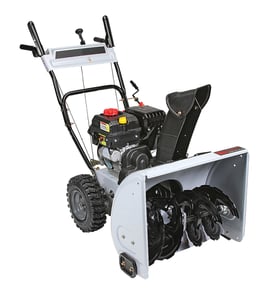


How to tell year of Craftsman snowblower by serial number?
For Craftsman snow thrower model 917881064, you determine the year by finding the serial number on the rear housing decal and decoding the date code pattern used on your unit. The serial format varies by manufacturer, so match your serial’s pattern to the correct decode method in the 917881064 owner's manual.
The serial number and model number are on a decal attached to the rear of the snow thrower housing.
- Look on the back side of the housing (rear panel area)
- Clean the decal so every character is readable
- Write down the full serial number exactly (letters and numbers)
- Record the model number 917881064 with it for parts lookup
Use the pattern that matches what you see on your decal.
- Position-based code (common on many Craftsman units): the 5th character is the year within a decade
- Month-letter code (often seen on MTD-built units): a month letter (A = Jan through L = Dec) followed by digits for day and year within the decade
- If your serial begins with a clear month letter (A through L), use the month-letter method
| Serial number clue | Decode method | Year information you get |
|---|---|---|
| Month letter A to L near the start | Month-letter date code | Exact month/day plus year-in-decade |
| Single digit in a consistent position | Position-based code | Year-in-decade |
The build year helps us match the right diagrams and replacement parts for wear items like belts and shear bolts.
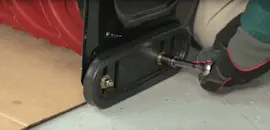
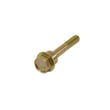
If you find damaged shear hardware while checking the decal area, a common wear item is the snowblower shear bolt 588077502. You can order parts from the model parts list, or search by model number on Sears PartsDirect.
Last updated: February 2026
Is it worth fixing a snowblower?
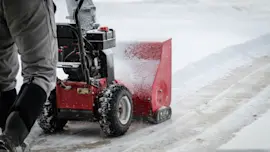
Yes, it’s worth fixing a Craftsman snow thrower like model 917881064 when the problem is a normal wear item (belts, shear bolts, skid shoes) or a simple adjustment; those repairs restore performance at a predictable cost and help you avoid replacing the whole machine.
- Fix it if the engine starts and runs smoothly, and the issue is drive, auger, chute, or wear parts.
- Fix it if the machine only needs routine maintenance (oil change, spark plug, belt inspection).
- Fix it if the unit recently hit a foreign object and you can repair the damage before using it again.
- Replace it if the machine has repeated major failures season after season.
- Replace it if the repair requires extensive internal drivetrain work and the rest of the unit is heavily worn.
Many snowblower problems come down to traction or auger engagement. For model 917881064, these are typical high-value fixes:
| Symptom | Likely area | Example part on this page | Typical outcome |
|---|---|---|---|
| Auger won’t spin or slips | Auger belt, shear bolts | Snowblower auger drive belt 532408007, snowblower shear bolt 588077502 | Restores throwing power |
| Unit won’t drive or slips | Ground drive belt, friction/drive setup | Snowblower ground drive belt 532419744 | Restores forward/reverse drive |
| Poor scraping, rides too low/high | Skid shoes adjustment or replacement | Snowblower skid shoe, left 532174762 | Better clearing, less surface damage |
A snowblower that is maintained and repaired promptly is safer and more reliable. Your manual calls out stopping the engine and disconnecting the spark plug wire before clearing clogs or making adjustments, and repairing damage after striking an object before operating again; those steps prevent injury and stop small issues from becoming expensive failures. Use the owner's manual for the maintenance schedule (belts, lubrication, spark plug, oil).
- Start with the lowest-cost wear items (shear bolts, belts, skid shoes) before assuming bigger failures.
- If the machine vibrates abnormally, stop and inspect immediately; vibration is a warning sign that a simple fix now can prevent major damage later.
- When you’re ready to buy, order model 917881064 replacement parts from the parts list for this model, or search by model number on Sears PartsDirect.
Last updated: February 2026
Should I spray my snowblower with WD-40?
Yes, you can lightly spray a water-displacing product like WD-40 on the Craftsman 917881064 snow thrower’s chute and other bare metal surfaces to help reduce snow sticking and surface rust; keep it off belts, friction-drive parts, and hot engine/exhaust areas. For model-specific cleaning and storage steps, follow the 917881064 owner's manual.
Used correctly, a light spray is a convenience coating, not a substitute for proper lubrication.
Good places to apply a light coat
- Inside the discharge chute and chute base (helps reduce clogging)
- Auger housing interior surfaces (helps reduce snow buildup)
- Exposed fasteners and linkages after cleaning and drying
- Painted surfaces only as a wipe-on protectant (spray on a rag first)
Places to avoid
- Drive belts and pulleys (slip and loss of drive)
- Friction disc and drive plate areas (slip and no forward/reverse)
- Rubber tires and grips (can swell or get slick)
- Muffler, carburetor area, and any hot surfaces (fire risk)
Our manual guidance for the 917881064 is to keep the housing clean after each use and run the machine a few minutes after throwing snow to help prevent freeze-up of the collector/impeller.
- Shut the unit off, remove the ignition key, and let moving parts stop
- Brush off packed snow and wipe down wet areas
- Run the snowblower a few minutes to clear remaining snow and reduce freeze-up
- After it cools, apply a light coat to the chute and housing, then wipe off excess
| Option | Best use on a snowblower | What to watch for |
|---|---|---|
| WD-40 type water-displacing spray | Short-term moisture displacement and light rust prevention | Can attract dirt; avoid belts and friction-drive parts |
| Silicone spray | Chute slickness to reduce snow sticking | Overspray can still cause belt slip |
| Dry PTFE spray | Low-residue slick coating for chute | Needs clean, dry surface to work well |
Overspray on the drive system is one of the fastest ways to create “won’t move” or “weak drive” symptoms. Keeping coatings limited to the chute and non-drive metal surfaces helps performance without causing slippage.
If you need replacement wear items while you’re doing seasonal maintenance, common snow-contact parts for this model include the snowblower skid shoe, left 532174762 and the snowblower shear bolt 588077502. You can order parts from the list for your model or search by model number on Sears PartsDirect.
Last updated: February 2026
What is the typical lifespan of a gas snowblower?
A typical gas snowblower lasts 10 to 20 years when it’s maintained and stored correctly. For the Craftsman 917881064 snow thrower, routine oil changes, belt inspections, and proper end-of-season storage are the biggest factors that keep the engine, auger, and drive system running for the long haul (see the 917881064 owner's manual).
Most gas snowblowers fall into these practical ranges:
- 10 to 20 years with consistent seasonal maintenance
- 8 to 12 years if maintenance is occasional and storage is inconsistent
- 20+ years when wear items (belts, shear bolts, skid shoes) are replaced before they cause secondary damage
| Usage and care level | Typical lifespan | What usually ends the machine’s life |
|---|---|---|
| Light use, well maintained | 15 to 20 years | Corrosion, age-related engine wear |
| Moderate use, average care | 10 to 15 years | Belts, friction drive wear, carburetor issues |
| Heavy use, minimal care | 8 to 12 years | Engine wear, drivetrain damage from neglected wear parts |
The manual emphasizes regular maintenance and safe storage practices. These steps make the biggest difference:
- Change engine oil on schedule; use the correct viscosity for your temperatures.
- Replace the spark plug at the start of each season or about every 100 hours.
- After throwing snow, run the machine a few minutes to help prevent freeze-up.
- Keep the housing clean; avoid spraying water into the engine area.
- Inspect and tighten fasteners; check shear bolts often.
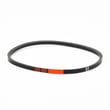
- Inspect belts and replace worn belts before they slip or shred (for example, the snowblower auger drive belt 532408007 and snowblower ground drive belt 532419744).
We typically recommend considering replacement when the snowblower:
- Struggles to move or throw snow even after basic tune-up work
- Needs repeated belt or drive repairs in the same season
- Has major drivetrain wear (auger gearbox, impeller shaft) plus other age-related issues
- Has repair costs that approach the value of a comparable working unit
A gas snowblower’s lifespan is mostly about preventing avoidable wear: clean fuel practices, correct oil, and replacing wear items (belts, shear bolts, skid shoes) before they overload the auger, impeller, or drive system. That protects the expensive assemblies and keeps performance consistent.
You can order replacement parts for Craftsman 917881064 from the parts list for this model, or search by model number on Sears PartsDirect.
Last updated: February 2026