
What company makes Evcon furnaces?
Evcon furnaces were marketed under the Coleman-Evcon name after Evcon Industries was acquired by York’s Unitary Products Group (UPG), which operated under Johnson Controls. For your Coleman Evcon model EB15A, you’ll typically see the Coleman-Evcon branding tied to York/UPG manufacturing.
Quick brand history (what you’ll see on the nameplate)
- Evcon was the original furnace brand name.
- Coleman-Evcon became a common branding after the acquisition.
- York / Unitary Products Group (UPG) is the manufacturing organization most often associated with Coleman-Evcon units.
- Johnson Controls was the parent company for York/UPG during that era.
How to confirm what you have on an EB15A
Use the furnace rating plate and any wiring diagram label on the cabinet to match the exact branding and identifiers.
- Look for manufacturer/brand (Coleman, Evcon, Coleman-Evcon, York)
- Record the model number (EB15A) and any serial number
- Note the electrical specs (voltage, phase, kW) since EB-series units are often electric furnaces
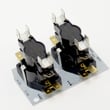
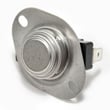
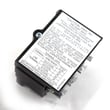
- Match those identifiers when searching parts to avoid ordering the wrong control, sequencer, or limit switch
Common identifiers you may see
| Where you look | What it may say | Why it matters |
|---|---|---|
| Rating plate (inside panel) | Coleman, Evcon, Coleman-Evcon, York/UPG | Confirms brand family for parts lookup |
| Serial number format | Letters and numbers in a specific pattern | Helps narrow production era |
| Wiring diagram label | Component names and circuit layout | Helps identify controls and safety devices |
Why it matters
Evcon and Coleman-Evcon branding can point to the same manufacturing family, but parts can still vary by exact model and electrical configuration. Using the EB15A identifiers helps ensure the correct fit for critical items like sequencers, relays, and high-limit safety switches.
For help searching by the exact model and identifiers, use how to find your appliance model number (and what it means for parts).
Last updated: February 2026
What is the most reliable furnace brand?
No single furnace brand is “most reliable” for every home; reliability depends most on correct sizing, quality installation, and ongoing maintenance. That said, brands with strong long-term track records include Trane, American Standard, Carrier, Lennox, and Rheem, and a properly maintained Coleman furnace like model EB15A can also deliver dependable service.
What “reliable” means for a furnace
We look at reliability as fewer breakdowns over time, consistent heat, and easy serviceability.
- Correct furnace size for the home (avoids short-cycling and overheating)
- Proper ductwork and airflow (protects the heat exchanger and limit switches)
- Quality electrical connections and grounding (reduces nuisance failures)
- Regular filter changes and burner cleaning (improves combustion and airflow)
- Easy access to common service parts (controls, igniter, flame sensor, blower components)
Brand comparison (practical, homeowner-focused)
Use this as a quick way to think about “reliability” beyond the logo on the cabinet.
| What you care about | What usually delivers it | What to watch for |
|---|---|---|
| Fewer repairs | Proven designs, solid install | Poor setup can make any brand fail early |
| Lower operating cost | Higher AFUE, good airflow | Dirty filters and duct restrictions erase savings |
| Easier service | Common parts, clear wiring | Nonstandard retrofits and messy wiring slow repairs |
| Long lifespan | Maintenance + correct sizing | Oversizing is a top cause of premature wear |
How to choose the most reliable option for your home
When you are comparing brands, we recommend focusing on the install and the support plan as much as the equipment.
- Choose a contractor who performs a load calculation (not “same size as before”)
- Confirm the venting and combustion air setup matches the furnace type
- Ask what maintenance is included (filter schedule, combustion check, safety inspection)
- Keep a record of model and serial information for parts matching
- Use our model number search to match the exact furnace; start at how to find your appliance model number (and what it means for parts)
Why it matters
Most “brand reliability” complaints trace back to airflow problems, incorrect sizing, or skipped maintenance. Getting those fundamentals right typically prevents the most common furnace failures (overheating trips, ignition issues, and blower stress).
Last updated: February 2026
What does the number 15 signify?
On the Coleman EVCON furnace model EB15A, the “15” is part of the model identifier and typically points to the unit’s size or capacity class (commonly a 15 kW electric heat package on electric furnaces). Use the rating label on your furnace to confirm the exact kW and electrical specs for your specific EB15A.
Where to confirm what “15” means on your EB15A
Check the furnace data plate (rating label). On most Coleman Evcon furnaces, it’s located inside the front access panel.
- Turn off power at the breaker before opening panels
- Look for fields like kW, volts, amps, and heater kit
- Match the full model number exactly: EB15A
- Record the serial number too; it helps identify the correct configuration
- If the label is missing or unreadable, stop and have a technician verify the electrical heat package
Common interpretations of “15” on furnaces
Because EB-series model naming is used across multiple configurations, “15” is most often tied to electric heat output, not a random number.
| What “15” usually refers to | What it affects | What you’ll see on the label |
|---|---|---|
| 15 kW heat package class | Heat output and staging | kW rating, heater kit info |
| Model family sizing code | Parts compatibility | Full model and kit numbers |
| Electrical load category | Breaker/wire sizing | MCA/amps, volts, phase |
Why it matters
The “15” impacts electrical requirements and replacement-part matching (especially for heater components, sequencers/relays, fuses, and wiring). Confirming the exact kW and voltage prevents wrong parts and unsafe breaker or wire sizing.
Helpful DIY reference
If you’re checking electrical components while troubleshooting, use how to use a multimeter to test electrical parts video for safe, basic testing steps.
Last updated: February 2026
Why is my furnace running but not producing heat?
If your Coleman Evcon furnace model EB15A is running (you hear the blower) but not producing heat, the most common causes are a thermostat setting issue, a safety limit opening from restricted airflow (dirty filter or blocked vents), or an ignition/heating circuit problem that prevents the burners or heat strips from turning on.
Quick checks to do first (safe, no tools)
- Confirm the thermostat is set to Heat and the setpoint is 5°F or more above room temperature.
- Replace or clean the air filter; restricted airflow can trip a high-limit safety and stop heat.
- Make sure all supply registers and return grilles are open and not blocked by rugs or furniture.
- Check your electrical panel for a tripped breaker (furnaces often have more than one).
- If you have a gas furnace, confirm the gas shutoff valve is open (handle parallel to the pipe).
What “blower runs but no heat” usually means
In many furnaces, the blower can run even when the heating source is locked out. Here are the most common scenarios:
| What you notice | Likely cause | What to do next |
|---|---|---|
| Blower runs constantly, air feels cool | Thermostat fan set to ON | Set fan to AUTO and retry heat call |
| Heat starts then shuts off quickly | Overheating from low airflow | Replace filter, open vents, check for blocked return |
| Blower runs, no flame (gas) or no warm-up | Ignition/flame-sensing issue | Power-cycle once; if it repeats, schedule service |
| No heat after power event | Control lockout or tripped breaker | Reset breaker(s); turn furnace power off 60 seconds, then on |
If you’re comfortable using a multimeter
Turn off power before opening panels.
- Verify 24 VAC at the thermostat call for heat (R to W) when heat is requested.
- Check for a blown fuse on the control board (common after a short).
- Inspect for loose or burned wiring at the blower door switch, control board, and limit switches.
Helpful DIY references:
- How to tell if a fuse is blown
- How to use a multimeter to test electrical parts video
- How to repair broken or damaged wires video
Why it matters
Running the blower without heat wastes energy and can point to a safety shutdown. Fixing airflow issues early (filter, vents, returns) prevents repeated overheating and protects the heat exchanger or electric heat components.
Last updated: February 2026
What size electric furnace for a 2000 sq ft house?
For a 2,000 sq ft home, most electric furnaces land around 15 to 25 kW (about 51,000 to 85,000 BTU/hr equivalent), but the right size depends on your climate zone, insulation, windows, and ductwork. For a Coleman Evcon furnace like model EB15A, we recommend sizing by a load calculation, not square footage alone.
Quick sizing ranges (what most homes end up needing)
A common rule of thumb is 20 to 40 BTU per sq ft, then convert to kW.
- Mild climates, tight/updated home: 40,000 to 60,000 BTU/hr (about 12 to 18 kW)
- Moderate climates, average insulation: 60,000 to 80,000 BTU/hr (about 18 to 24 kW)
- Colder climates, older/leakier home: 80,000 to 100,000+ BTU/hr (about 24 to 30+ kW)
BTU to kW conversion (electric furnace math)
Electric heat is typically rated in kilowatts (kW).
| Electric heat size | Approx. BTU/hr equivalent | Typical fit for 2,000 sq ft |
|---|---|---|
| 15 kW | ~51,000 BTU/hr | Mild climates, efficient home |
| 20 kW | ~68,000 BTU/hr | Many average homes |
| 25 kW | ~85,000 BTU/hr | Colder climates or draftier homes |
How to choose the right size (what we check)
To avoid oversizing or undersizing, we size electric furnaces using a heat-load calculation (often called Manual J). Key inputs include:
- Your winter design temperature (local climate)
- Insulation levels in attic, walls, and floors
- Window type, size, and air leakage
- Duct condition and whether ducts run through unconditioned spaces
- Ceiling height and open floor plan vs. closed rooms
- Whether you plan to use a heat pump with electric backup heat
Why it matters
An oversized electric furnace can short-cycle, feel less comfortable, and cost more to run. An undersized unit can run nonstop and still leave rooms cold. Correct kW sizing improves comfort, efficiency, and component life.
Helpful DIY check before you buy
If you are troubleshooting power or heat staging issues (which can look like “wrong size”), start with basic electrical checks:
- Confirm breaker size and wiring match the heater kit requirements
- Check for a blown fuse (if equipped)
- Verify sequencers/relays are energizing heat strips in stages
- Inspect for loose or overheated wire connections
For safe testing steps, use our guide: how to use a multimeter to test electrical parts video.
Last updated: February 2026