Error Codes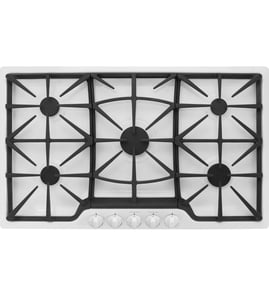


What is the difference between a gas range and a gas cooktop?
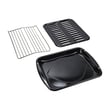
A gas range is a single appliance that combines a cooktop and an oven in one unit, while a gas cooktop (like model JGCP436HM00) is a built-in, standalone cooking surface that installs into a countertop and does not include an oven.
Quick comparison
| Feature | Gas cooktop (JGCP436HM00) | Gas range |
|---|---|---|
| Includes an oven | No | Yes |
| Typical installation | Built into countertop cutout | Freestanding or slide-in cabinet opening |
| Best for | Pairing with a wall oven, flexible kitchen layouts | One-piece cooking and baking setup |
| Service focus | Burners, igniters, valves, knobs | Cooktop plus oven bake/broil, controls, door parts |
How to choose what fits your kitchen
- Choose a gas cooktop if you want a separate wall oven, a custom layout, or a cleaner built-in look.
- Choose a gas range if you want the simplest all-in-one replacement and you bake often.
- If you are remodeling, confirm cabinet and countertop cutouts before deciding.
- If you already own a wall oven, a cooktop is usually the most direct match.
- If you need to convert fuel type (natural gas to LP), plan that during installation, not after.
Parts and service differences (what you will replace most often)
Cooktops and ranges share many burner-related parts, but ranges add oven-specific components.
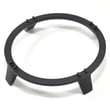
- Cooktop common replacements: burner knobs, igniters, burner caps, grates, gas valves
- Range additional replacements: bake element or igniter (gas ovens), oven controls, door hinges, temperature sensor
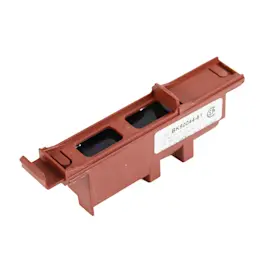
If you are maintaining your JGCP436HM00 cooktop, common cooktop-specific items include the igniter-int W11238756 and the knob, burner (for 6 cooktop burners) (stainless) W11317537.
Why it matters
The difference affects your installation (countertop vs. floor space), your kitchen design (wall oven pairing vs. all-in-one), and the parts you will service over time (burner system only vs. burner system plus oven components).
Last updated: February 2026
How do I find the model number on my JGCP436HM00?
On the Jenn-Air JGCP436HM00 gas cooktop, the model number is printed on the appliance rating label. We use that exact model number to match burner knobs, igniters, grates, and gas conversion parts to your cooktop.
Where to look on a gas cooktop
Check these common rating-label locations (in order):
- Underside of the cooktop base (visible from inside the cabinet below)
- Along the side of the cooktop chassis, near the gas inlet/regulator area
- On the bottom lip or frame under the burner box (sometimes visible after removing a grate and lifting a burner cap)
What the label looks like
The rating label typically includes:
- Model (example: JGCP436HM00)
- Serial number
- Gas type and pressure information
- Electrical rating (spark ignition power)
Tips to avoid mix-ups
- Write the model number exactly as shown, including all letters and digits.
- If the label is greasy, wipe it gently and take a photo before ordering.
- Use the model number to confirm cosmetic parts match finish and fit.
| If you need | Example model-matched part to compare | Why it helps |
|---|---|---|
| A missing or damaged knob | Knob, burner (for 6 cooktop burners) (stainless) W11317537 | Confirms you are shopping the correct cooktop series |
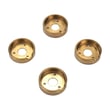
| Burner caps | Cooktop burner cap set (brass) W11323012 | Ensures the caps match burner size and style |
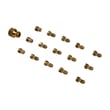
| LP conversion parts | Range lp conversion kit W11428599 | Prevents flame and ignition problems after conversion |
Why it matters
Using the exact model number prevents ordering the wrong grate, burner cap, igniter, or valve; even small model changes can affect fit, finish, and burner output.
Last updated: March 2026
How do I troubleshoot my JGCP436HM00?
For the Jenn-Air JGCP436HM00 gas cooktop, most problems come from burner parts being dirty or misaligned, weak ignition, or a gas supply issue. We troubleshoot by checking flame quality, ignition spark, and burner cap and grate fit, then moving to switches and valves if needed.
Quick safety first
- Turn all knobs to OFF and let the cooktop cool.
- If you smell gas: do not ignite; ventilate the area and shut off the gas supply.
- Unplug power (or switch off the circuit) before checking igniters, wiring, or switches.
Most common symptoms and what to check
- Clicks but won’t light: clean and dry burner cap and ports; confirm cap is seated flat.
- Lights but flame is uneven or yellow: clean burner ports; verify correct cap for that burner.
- Constant clicking: moisture or spillover around the igniter; a stuck switch in the knob harness.
- One burner dead, others OK: swap caps/grates to confirm fit; then suspect igniter or switch.
- Low flame on all burners: gas supply valve not fully open, regulator issue, or wrong fuel setup.
Parts that commonly solve ignition and control issues
If cleaning and reseating does not fix it, these model-matched parts are common next steps:
- Igniter-int W11238756 (no spark or weak spark on a burner)
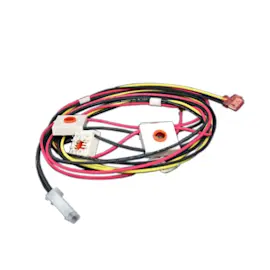
- Switch, harness W11320016 (burner keeps clicking or won’t spark when knob is turned)
- Assembly, valve manifold (left front and left rear) W11338090 (knob turns but gas flow is inconsistent on those positions)
Fuel type check (natural gas vs LP)
If the cooktop was converted to LP, incorrect or missing conversion parts can cause poor flame and hard lighting.
| What you see | Most likely cause | What to do |
|---|---|---|
| Tall yellow flames | wrong orifice/regulator setting | verify conversion setup |
| Very small flames | restricted gas flow | check shutoff valve and regulator |
| Sooting cookware | incorrect air-gas mix | confirm correct orifices |
For LP conversion-related issues, use the model-matched range lp conversion kit W11428599.
Why it matters
A clean, correctly seated burner cap and a healthy igniter give reliable lighting and stable flames; that protects cookware, improves cooking performance, and reduces nuisance clicking.
Last updated: March 2026