Error Codes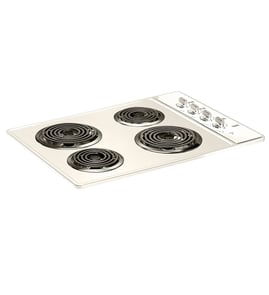





Do I need a downdraft on my electric cooktop?
You only need a downdraft on your GE JXDV6601 cooktop if you do not have effective overhead ventilation (like a hood) or your kitchen layout makes a hood impractical. Downdraft ventilation is mainly a space-saving choice; it is not required for the cooktop to operate.
When a downdraft makes sense
A downdraft system is a good fit when you want ventilation without a large hood or you cannot vent from above.
- Your cooktop is on an island or peninsula with no easy place for a hood
- You have limited wall space, cabinets, or sightlines you want to keep open
- You want a low-profile look and are willing to trade some capture performance
- You mostly do light cooking (simmering, low smoke, low grease)
- You already have ducting routed under the floor or through a cabinet base
When you can skip a downdraft
If you already have good ventilation, adding downdraft is usually unnecessary.
- You have a properly sized, working range hood that vents outdoors
- You frequently use high heat (searing, stir-fry) and need stronger smoke capture
- Your cookware is tall (stockpots) and you want better plume capture from above
Performance expectations (quick comparison)
| Ventilation type | Best at | Typical tradeoff |
|---|---|---|
| Overhead hood | Capturing heat, smoke, and steam rising up | More visual bulk above the cooktop |
| Downdraft | Preserving open sightlines | Often weaker capture for smoke/steam that rises |
| Recirculating hood | Basic odor reduction | Does not remove heat and moisture like outdoor venting |
Why it matters
Ventilation affects indoor air quality, cabinet cleanliness, and how comfortable your kitchen feels during high-heat cooking. Choosing the right setup helps reduce lingering odors, grease film, and excess humidity.
Parts and installation notes
Downdraft setups often involve mechanical and mounting components that must fit your cabinet and duct path. If you are repairing or reassembling the cooktop area, using the correct fasteners and hardware helps prevent vibration and alignment issues.
- For hardware used in mounting and securing assemblies, match the original part exactly
- If you are replacing missing fasteners, use the parts list for your model to avoid thread or length mismatches
- For general DIY readiness and safe work habits, review are diy appliance repairs safe
Last updated: February 2026
How to order GE appliance parts?
To order replacement parts for your GE JXDV6601 cooktop, we recommend matching the exact model number and then selecting the part you need from the parts list for JXDV6601. Ordering the correct part ID helps ensure proper fit and safe operation.
How to order the right part (fast and accurate)
- Confirm the appliance model number is JXDV6601 (use the rating label on the unit).
- Identify the failed part by symptom (won’t heat, loose hardware, damaged cover, etc.).
- Match the part by part ID and description, not just by appearance.
- Add the part to your cart and complete checkout.
- If you are unsure between similar hardware pieces, compare where it installs and what it secures.
Common parts you may see for this model
These are examples of parts listed for GE JXDV6601 that customers often replace when hardware is missing or components are damaged:
| Part type | Example part on this model | What it’s typically used for |
|---|---|---|
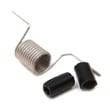
| Fastener/hardware | Washer WB1X1392 | Spacing, securing brackets, reducing vibration |
| Fastener/hardware | Screw WB1X5765 | Mounting panels, brackets, or assemblies |
| Cover/shield | Cover WB2X7810 | Protecting internal components from heat or contact |
Why it matters
Cooktops use model-specific mounting, electrical, and heat-shielding designs. Ordering by the exact JXDV6601 model and the exact GE part ID prevents fit issues and helps avoid repeat repairs.
Helpful tip before you buy
If you are not 100% sure you have the correct model number, use our guide: how to find your appliance model number (and what it means for parts).
Last updated: February 2026
How do I find the right GE part number?
For your GE JXDV6601 cooktop, the right part number comes from matching the exact model number (JXDV6601) to the correct parts diagram, then selecting the part by name and location so you get the correct GE part ID and manufacturer part number for your specific build.
Step-by-step: the fastest way to match the correct part
- Confirm the model number is JXDV6601 on the appliance rating label.
- Use the parts list and diagrams for GE JXDV6601 to identify the exact component.
- Match by part name + where it sits (for example, a cover vs. a guide vs. a screw).
- Compare any markings on the old part (stamped numbers, size, shape) to the diagram listing.
- Order using the part ID/part number shown for JXDV6601, not a “looks similar” substitute.
Common part-number mix-ups (and how to avoid them)
Many GE cooktop parts look alike, so we recommend verifying these details before ordering:
| What you see | What to verify | Example from this model’s parts list |
|---|---|---|
| Same part name appears more than once | Confirm the diagram callout and quantity | Two different “Washer” listings: washer WB1X1392 vs. Washer WB1X5767 |
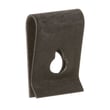
| Hardware looks universal | Confirm thread size, length, and application | Screw WB1X5765 and speed nut WB1K2 are not interchangeable |
| Trim or internal pieces | Confirm exact location and orientation | Cover WB2X7810 vs. Guide tra WB2X9812 |
Why it matters
Using the correct GE part number for JXDV6601 prevents fit issues, electrical connection problems, and repeat repairs. It also saves time because you avoid ordering a part that matches the appliance type but not the exact model configuration.
Helpful tip for identifying the model number
If the rating label is hard to find or read, use our guide: how to find your appliance model number (and what it means for parts).
Last updated: February 2026
How to lift the top of a GE electric stove?
GE model JXDV6601 is a built-in cooktop, not a freestanding electric range with a hinged, lift-up top. To access internal components on this cooktop, we remove the cooktop from the counter and then remove the underside cover or mounting hardware rather than lifting a top panel.
Safe way to access the inside (cooktop method)
- Turn off power at the breaker (and shut off the gas supply valve if your installation has one).
- Let the cooktop cool completely.
- Protect the countertop with towels or cardboard.
- Take photos of wire routing and screw locations before disassembly.
Typical access steps for a built-in GE cooktop
- Shut off power at the breaker.
- Remove grates, burner caps, and knobs (as applicable).
- From below the counter, remove the mounting brackets or fasteners holding the cooktop to the countertop.
- Lift the cooktop straight up out of the cutout with help (avoid pulling on wiring).
- Set it upside down on a protected surface.
- Remove the bottom cover to reach switches, wiring, and components (hardware like a screw WB1X5765 is commonly used on GE assemblies).
If it will not come free
- Check for screws at the front corners or side brackets.
- Cut through any old sealant carefully; a cooktop can be lightly adhered to the counter.
- Confirm the power cord or conduit has enough slack before lifting.
Why it matters
Using the correct built-in cooktop removal method prevents cracked countertops, bent frames, and pinched wiring, and it gives you safe access for cleaning, inspection, or electrical troubleshooting.
| Appliance type | “Lift the top” method? | Correct access approach |
|---|---|---|
| Freestanding electric range | Yes, on some models | Remove front fasteners, hinge up |
| Built-in cooktop (JXDV6601) | No | Unmount from counter, remove bottom cover |
Last updated: February 2026