Installation guide
 Owner’s manual
 Error Codes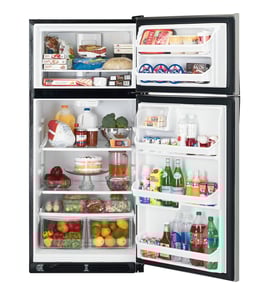



What is the disadvantage of a side-by-side fridge?
A side-by-side refrigerator’s biggest drawback is usable space: the split design creates narrower shelves in both the fresh food and freezer sections, so wide items (pizza boxes, party platters, sheet pans) fit poorly compared to a top-mount like the Frigidaire FFTR1821TS8. For layout and clearance details, use the FFTR1821TS8 owner's manual.
Common disadvantages (what we see most often)
- Narrow compartments limit wide or bulky groceries.
- Less flexible shelf layout for large trays and big produce bins.
- Freezer space can feel tight for large frozen boxes.
- Door storage can be narrower; tall bottles may not fit as easily.
- More door openings to access both sides can increase temperature swings.
Side-by-side vs top-mount: quick comparison
| Feature | Side-by-side | Top-mount (FFTR1821TS8 style) |
|---|---|---|
| Fits wide items | Often difficult | Usually easier in fresh food section |
| Freezer access | Eye-level, convenient | Higher reach, but wider shelves |
| Shelf width | Narrower | Wider |
| Typical “feel” of capacity | Can feel smaller than rated | Often feels roomier for groceries |
Why it matters for everyday use
If you regularly store wide leftovers, meal-prep containers, pizza boxes, or large produce trays, shelf width matters more than total cubic feet. A top-mount layout typically keeps the refrigerator section wide and simple, which is why many shoppers prefer it for weekly grocery loads.
Related setup tip (applies to any refrigerator style)
Good airflow and leveling help any refrigerator cool consistently and keep doors sealing correctly. For the FFTR1821TS8, we follow the clearances and leveling guidance in the FFTR1821TS8 installation guide (including allowing space around the cabinet and leveling so doors close freely).
Last updated: February 2026
Why is my Frigidaire refrigerator flashing H and beeping?
A flashing H with beeping on a Frigidaire refrigerator is a high-temperature alarm; on model FFTR1821TS8, it means the freezer or fresh food section is not reaching a safe set temperature fast enough, most often from a door not sealing, warm air leaks, or a cooling/defrost airflow problem. Use the alarm as a prompt to confirm temperatures and restore proper airflow per the FFTR1821TS8 owner's manual.
Quick checks that fix most “H” alarms
- Make sure both doors fully close and the gasket is making full contact all the way around.
- Confirm the refrigerator is not overpacked; blocked vents reduce cold-air circulation.
- Let the unit stabilize after loading groceries or after a power outage (temps can take hours to recover).
- Verify the controls were not accidentally set warmer.
- Listen for the evaporator fan running; poor airflow can trigger warm temps.
- Check for heavy frost on the freezer back wall (a defrost problem can choke airflow).
What to check next (in order)
- Actual temperatures: Use a thermometer.
- Freezer target: 0°F
- Refrigerator target: 37°F
- Airflow and frost pattern:
- If the freezer back wall is frosted over, suspect a defrost issue (heater, thermostat, or airflow restriction).
- Door seal condition:
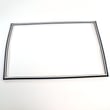
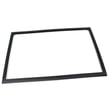
- If the gasket is torn, hardened, or not sealing at corners, replace it (color-specific options exist, such as Frigidaire refrigerator door gasket (white) 242193206 or Frigidaire refrigerator door gasket (black) 242193212).
Symptom guide
| What you notice | Most likely cause | What we recommend |
|---|---|---|
| H alarm after door left ajar | Warm air intrusion | Close door, reduce loading, allow recovery time |
| H alarm plus heavy frost | Defrost system issue | Inspect defrost components and airflow |
| H alarm with weak cooling, no frost | Cooling system or fan issue | Check fan operation and condenser airflow |
Why it matters
When temperatures run high, food can thaw or spoil and the compressor may run longer than normal. Clearing the cause quickly protects food quality and helps the refrigerator run efficiently.
For model-specific control behavior, alarm reset steps, and operating guidance, follow the FFTR1821TS8 owner's manual.
Last updated: February 2026
What are signs of a failing refrigerator?
Common signs your Frigidaire FFTR1821TS8 refrigerator is failing include warming temperatures, heavy frost, water leaks, unusual noises or vibration, and the unit not running consistently. Before replacing the refrigerator, we recommend checking power, control settings, and basic airflow and door-seal issues.
Quick signs to watch for
- Food spoils faster than normal (fresh food section not staying cold)
- Freezer frost or ice buildup that keeps returning after defrosting
- Water leaking under or inside the refrigerator
- Loud buzzing, clicking, grinding, or increased vibration (cabinet not level can cause this)
- Refrigerator runs constantly or cycles oddly (short cycling)
- Excess condensation on shelves, walls, or packaged food
- Interior light issues (often a bulb or switch problem, not a cooling failure)
Rule out common “not a failure” causes first
The FFTR1821TS8 manual calls out several common occurrences that can look like a major problem but are often fixable with basic checks. Use the FFTR1821TS8 owner's manual for control locations and troubleshooting steps.
- Make sure the plug is fully seated in the outlet
- Check the breaker or a 15-amp time-delay fuse
- Confirm the refrigerator/freezer control is not set to “0” (cooling off)
- If it just stopped, allow about 20 minutes in case it is in a defrost cycle
- If it is noisy or vibrating, level the cabinet and confirm the floor is solid
What the symptoms usually point to
| Symptom | Most common cause | What to do next |
|---|---|---|
| Fresh food warm, freezer OK | Airflow or control setting issue | Adjust controls; allow 24 hours to stabilize |
| Freezer warm, fresh food OK | Freezer control setting issue | Adjust auxiliary freezer control; allow 24 hours |
| Frost buildup, poor cooling | Defrost system or door seal issue | Inspect gasket; consider defrost components |
| Leaks/puddles | Drain or condensation issue | Check drain path and door closure |
Parts that are often involved (when symptoms match)
- If you have heavy frost and warming, the defrost system is a common suspect; the refrigerator defrost heater 242044008 is one of the related components for this model.
- If you see gaps, tearing, or a loose seal, a door gasket can cause warm temps and condensation; this model lists Frigidaire refrigerator door gasket (white) 242193206 and Frigidaire refrigerator door gasket (black) 242193212.
Why it matters
Catching early symptoms helps prevent food loss, compressor strain, and repeat icing or leaking. Many “failing refrigerator” complaints are actually control settings, leveling, or door-seal problems that are faster and cheaper to correct.
Last updated: February 2026
What is the most common problem with a Frigidaire refrigerator?
The most common problem we see with Frigidaire refrigerators like model FFTR1821TS8 is a cooling complaint: the refrigerator section gets warm, temperatures swing, or frost builds up and restricts airflow. These symptoms usually trace back to airflow, dirty condenser coils, or a defrost-related issue; use the FFTR1821TS8 owner's manual “Before You Call” section to narrow it down fast.
Most common symptoms customers report
- Refrigerator section warm but freezer still cold
- Frost or ice buildup on the freezer back wall
- Food freezing in the fresh-food section
- Unusual running sounds (fan noise, buzzing, clicking)
- Ice maker not producing ice (on models equipped with ice service)
Quick checks that solve many “not cooling” calls
- Give it time after setup: We recommend running with doors closed for at least 8 hours before loading food.
- Confirm control settings: If temperatures are off, adjust the refrigerator and freezer controls and allow 24 hours to stabilize.
- Check the room temperature: This style of refrigerator is designed to operate where ambient temps stay roughly 55°F to 110°F; colder garages can cause winter cooling problems.
- Look for airflow blockages: Avoid packing items tight against vents and the freezer back panel.
- Inspect door sealing: A poor seal causes warm temps and frost; if the gasket is torn or deformed, replacing it is a common fix (for example, Frigidaire refrigerator door gasket (white) 242193206 if your unit uses the white gasket).
Common causes and what they look like
| What you notice | Most likely area | Typical next step |
|---|---|---|
| Freezer cold, fridge warm | Airflow from freezer to fridge | Check vents, look for frost buildup, listen for fan |
| Frost/ice on freezer back wall | Defrost system | Manually defrost to restore airflow, then diagnose heater/thermostat |
| Temps swing up and down | Controls or sensing/airflow | Verify settings, door sealing, loading, and airflow |
| Ice maker not working | Water supply or freezer temp | Confirm water on, arm down, freezer cold enough |
Why it matters
Cooling and frost issues usually get worse over time. Catching them early helps protect food, reduces compressor run time, and prevents heavy ice buildup that can block airflow.
Helpful reference
Last updated: February 2026