


How do I know if my air handler blower motor is bad?
If your Goodman A60-20 air handler has weak or no airflow, intermittent fan operation, overheating shutdowns, or repeated breaker trips, the blower motor (or its start/run components) is failing. We confirm the cause by checking airflow, motor amperage, and the run capacitor.
Common symptoms of a failing blower motor
- Little to no air coming from supply vents even when the thermostat calls for fan
- Blower starts slowly, hums, or needs a “push” to get moving
- Burning smell or motor housing that feels excessively hot
- Fan runs for a short time, then stops (thermal overload behavior)
- Breaker trips or fuse blows when the blower tries to start
- Unusual vibration or rattling (sometimes caused by a damaged wheel, not the motor)
Quick checks we recommend (safe, practical steps)
- Confirm the thermostat setting: set fan to ON and call for cooling or heat.
- Check the filter and return grille: a clogged filter can mimic a bad motor by choking airflow.
- Listen at startup: a steady hum with no spin often points to a weak capacitor or seized motor.
- Inspect the blower wheel: a loose, dirty, or broken wheel can cause poor airflow and noise.
- Electrical testing (power off): test the capacitor and inspect wiring connections for heat damage.
If you suspect an electrical issue, use a meter and follow safe practices; our how to use a multimeter to test electrical parts video walks through the basics.
Blower motor vs. capacitor vs. blower wheel (what the symptoms usually mean)
| What you notice | Most common cause | What to check next |
|---|---|---|
| Hums but will not spin | Weak run capacitor or seized motor | Test/replace capacitor 15 12910 first |
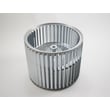
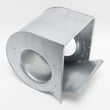
| Runs but airflow is low | Dirty filter, dirty coil, slipping wheel | Inspect/clean wheel; check blower wheel B1368036S |
| Loud rattling or wobble | Damaged or unbalanced wheel | Inspect wheel and housing clearance |
| Trips breaker at startup | Motor shorting, locked rotor, wiring issue | Check wiring, motor resistance, amperage draw |
Why it matters
A struggling blower motor can overheat, trip safety devices, and reduce heating and cooling performance. Catching a weak capacitor or damaged blower wheel early often prevents bigger electrical damage and restores normal airflow.
Last updated: February 2026
How much should a new air handler cost?
A new air handler (including installation) typically costs about $1,500 to $3,400, depending on capacity (tonnage), efficiency features, and how much ductwork, electrical, and refrigerant-line work is needed. For a Goodman A60-20 air handler with coil, the installed price usually lands in that same range.
Typical cost breakdown (unit vs. labor)
Most replacement quotes include both the equipment and the labor to remove the old air handler, set the new one, reconnect wiring and ductwork, and verify airflow.
- Air handler unit only: about $700 to $1,600
- Installation labor: about $800 to $1,800
- Common add-ons that raise cost: new thermostat wiring, duct transitions, drain pan/line work, electrical disconnect, or correcting airflow issues
| What you’re paying for | Typical range | What changes the price most |
|---|---|---|
| Air handler equipment | $700 to $1,600 | Size (tonnage), brand, coil configuration |
| Labor and setup | $800 to $1,800 | Accessibility, code upgrades, duct/electrical changes |
| Total installed | $1,500 to $3,400 | Scope of modifications and time on site |
What can make your quote higher or lower
These are the biggest real-world factors we see with air handler replacements:
- Capacity match: larger systems and higher airflow requirements cost more
- Electric heat kit needs: if you use electric heat, heat strip sizing and wiring can add cost
- Access and location: attic and tight-closet installs take longer
- Drain and condensate work: re-routing or adding safety switches can add labor
- Blower condition and airflow fixes: correcting vibration or airflow restrictions can add parts and time
When repairing makes more sense than replacing
If the cabinet and coil are in good shape, a repair can be a smart first step, especially for common wear items.
- If the blower motor is running but weak or noisy, a run capacitor like the capacitor 15 12910 is a common, lower-cost fix.
- If airflow is poor and the wheel is damaged or packed with debris, replacing the blower wheel B1368036S can restore performance.
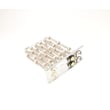
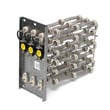
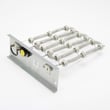
- If you have no heat in electric-heat mode, a failed heat strip can point to a heating elem B1037485S or heating elem B1037488S depending on your configuration.
Why it matters
An air handler price is mostly about labor scope and system matching, not just the box itself. Getting the right size and restoring proper airflow helps comfort, humidity control, and prevents repeat failures of electrical parts like capacitors and sequencers.
Last updated: February 2026
How tall is a 2 ton Goodman air handler?
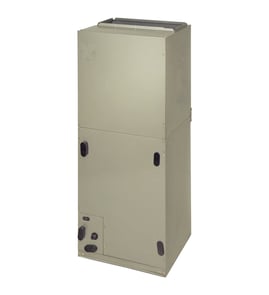
A 2-ton Goodman air handler height depends on the exact model series and cabinet width, but most 2-ton vertical air handlers are roughly 40 to 55 inches tall. For your Goodman A60-20, use the model’s data label measurements and match parts by model to avoid fit issues.
Typical height ranges (what you’ll usually see)
Most 2-ton air handlers fall into one of these common configurations:
- Upflow or downflow (vertical): about 40 to 55 in. tall
- Horizontal installations: overall “height” is often 18 to 25 in. (because the unit is on its side)
- Cabinet width commonly 17.5 to 21 in. for many 2-ton platforms
- Depth often 18 to 24 in.
- Electric heat kit installed can change clearance needs even if cabinet height stays similar
How to get the right measurement for your A60-20
Because “2 ton” is a capacity rating, not a size standard, we recommend measuring your installed unit:
- Measure cabinet height only (not including duct transitions or field-built platforms)
- Confirm whether it’s installed vertical or horizontal
- Check for a secondary drain pan or return plenum that adds height
- Note if an electric heat kit is installed (sequencers and elements can affect service clearance)
Quick comparison table
| Installation style | What to measure | Typical 2-ton height |
|---|---|---|
| Upflow/downflow | Floor to top of cabinet | 40 to 55 in. |
| Horizontal | Cabinet “thickness” | 18 to 25 in. |
Why it matters
Height affects more than fit in a closet or attic; it also impacts duct alignment, condensate drainage slope, filter access, and service clearance. Getting the correct cabinet size helps prevent airflow restrictions and installation rework.
Parts note for this model
If you are confirming size because you are replacing internal components, match parts to Goodman A60-20. Common service parts for air handlers include blower and electric heat components such as the blower wheel B1368036S and heating elem B1037485S.
Last updated: February 2026
How to read Goodman AC model numbers?
Goodman model numbers identify the equipment series, capacity, and configuration for parts matching; the serial number is what you use to determine the manufacture date. For a Goodman air handler with coil like A60-20, start with the full model number to select the correct parts, then use the serial number on the data plate to confirm age.
What the model number tells you (using A60-20 as the example)
- Brand and product type: Goodman air handler with coil
- Series identifier: the leading letters/numbers (such as A) identify the product family
- Capacity/size code: the remaining characters (such as 60-20) indicate size and configuration used for parts selection
- Best practice: match parts by the exact model number on the unit data plate
What the serial number tells you (manufacture date)
Goodman serial numbers commonly encode the month and year in the first several characters. The exact pattern varies by production era, so use these steps to read it correctly:
- Find the serial number on the unit data plate (usually on the cabinet).
- Write down the first 4 characters.
- Interpret them as year and month in the order shown on the label.
- If the month value is 01 to 12, it represents January through December.
Quick check table
| Serial starts with | Interpreting the first 4 characters | What you get |
|---|---|---|
| YYMM | Year then month | Build year and month |
| MMYY | Month then year | Build month and year |
Why it matters
Goodman air handlers can look similar across series; using A60-20 for parts matching prevents fit and wiring issues, especially on airflow and electric-heat components.
Parts commonly matched by model on A60-20
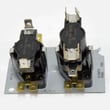
- Capacitor 15 12910 (motor run capacitor)
- Blower wheel B1368036S (air movement)
- Heating elem B1037485S (electric heat component)
Last updated: February 2026
How long do Goodman air handlers last?
Most Goodman air handlers (including model A60-20) last 12 to 15 years with normal use and regular maintenance. In many homes, the blower section and electrical heat components are the first items to need service before the cabinet or coil.
Typical lifespan by component
These ranges help set expectations for what usually wears out first in an air handler with coil:
- Air handler cabinet and coil: often 12 to 15 years
- Blower motor and blower wheel: commonly 10 to 15 years (earlier if airflow is restricted)
- Run capacitor: commonly 5 to 10 years
- Electric heat kit elements and sequencer: commonly 8 to 15 years (depends on how often heat strips run)
What shortens (or extends) air handler life
A few conditions make a big difference in how long an A60-20 air handler runs reliably:
- Dirty or restrictive filters that reduce airflow
- Dust buildup on the blower wheel that lowers CFM and overheats the motor
- Loose electrical connections causing heat damage at terminals
- High static pressure from undersized ductwork or closed registers
- Moisture issues around the coil and drain that lead to corrosion
Parts that commonly get replaced as the unit ages
If your air handler is running but struggling (slow start, humming, weak airflow, heat not staging correctly), these model-related parts are common suspects:
| Symptom | Common part to check | Example part for A60-20 |
|---|---|---|
| Motor hums, hard starts, trips breaker | Run capacitor | Capacitor 15 12910 |
| Weak airflow, noisy blower | Blower wheel | Blower wheel B1368036S |
| No electric heat or uneven heat | Heating element | Heating elem B1037485S or heating elem B1037488S |
Why it matters
Once an air handler reaches the 12 to 15 year range, small airflow or electrical issues can cascade into bigger failures (overheated motors, burned terminals, repeated breaker trips). Replacing a low-cost wear item like a capacitor early often prevents more expensive damage.
Last updated: February 2026