 Owner’s manual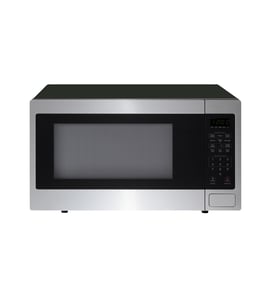




Do all GE microwaves use the same mounting bracket?
No. GE microwaves do not all use the same mounting bracket because bracket hole patterns and cabinet or wall attachment points vary by model and installation type. For the GE JES2051SN4SS countertop microwave, a mounting bracket is not part of normal setup; follow the placement and safety guidance in the JES2051SN4SS owner’s manual.
What to know about brackets (countertop vs over-the-range)
A “mounting bracket” question usually applies to over-the-range (OTR) microwaves. Countertop models like GE JES2051SN4SS are designed to sit on a counter, not hang from a wall or cabinet.
- Countertop microwaves typically do not use a wall mounting bracket.
- OTR microwaves use a rear wall plate and top cabinet bolts; these are model-specific.
- Even within GE, bracket designs change across series and generations.
- Reusing an old bracket can cause misalignment, vibration, or an insecure install.
- If you are replacing an OTR unit, use the bracket supplied with that exact replacement model.
Quick compatibility check
Use this checklist before assuming a bracket will swap between GE models:
| What you have | Likely bracket reuse? | What we recommend |
|---|---|---|
| GE countertop microwave (like JES2051SN4SS) | No bracket used | Verify clearances and stable placement |
| GE OTR microwave, same exact model number | Sometimes | Match the model number and hardware |
| GE OTR microwave, different model number | Unlikely | Install the new bracket kit for that model |
Safe placement tips for JES2051SN4SS
Proper placement prevents tipping and helps the door operate safely.
- Place the microwave on a stable, level countertop.
- Keep the front of the door at least a few inches back from the counter edge (the manual calls out 3 inches or more).
- Plug into a properly grounded outlet.
- Do not store items on top of the microwave while it is operating.
- If you must use an extension cord, use a grounding-type 3-wire cord and route it to prevent trips.
Why it matters
A bracket that does not match the microwave can lead to an unsafe installation. For countertop models, the bigger risk is poor placement (tipping, cord hazards, and door clearance), so following the manual is the safest path.
Last updated: February 2026
Is it worth repairing a GE microwave?
Yes, repairing a GE microwave is worth it when the fix is a low-cost, non-high-voltage issue (like a turntable problem, door-related issue, or a blown fuse) and the unit is in otherwise good condition; for major no-heat failures, replacement is usually the better value for a countertop model like GE JES2051SN4SS.
Quick decision checklist (what we use)
- Age and condition: If the cabinet, door, and keypad are in good shape, repair makes more sense.
- Symptom type: Turntable and power issues are often straightforward; no-heat problems are typically more involved.
- Part availability: If the needed part is in stock, downtime is shorter.
- DIY comfort level: Some repairs are safe DIY; others require a technician.
- Total cost: Compare parts plus labor to the cost of a comparable new countertop microwave.
Common repairs that are usually worth it on JES2051SN4SS
These are the most common “good bet” repairs because they are typically lower cost and faster to complete.
| Problem | What it often points to | Typical effort | Worth it? |
|---|---|---|---|
| Turntable not rotating | Tray support or tray issue | Low | Yes |
| Microwave dead, no display | Fuse or power supply issue | Medium | Often |
| Runs but does not heat | High-voltage circuit (magnetron/diode/capacitor) | High | Usually no |
| Sparks or burn marks | Waveguide cover or cavity damage | Medium to high | Depends |
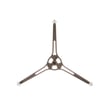
If your turntable is the issue, start with the microwave turntable tray support WB06X10633 and the microwave glass turntable tray WB49X10189. For operating checks and troubleshooting tips specific to this model family, use the JES2051SN4SS owner’s manual.
When replacement is usually the smarter move
- The microwave runs but does not heat (often a high-voltage failure)
- You smell burning or see repeated arcing inside the cavity
- The door is damaged or does not close and latch consistently
- The repair requires extensive disassembly and paid labor approaches the cost of a new unit
Why it matters
Countertop microwaves are relatively quick to replace, so we focus repairs on problems that restore safe, reliable operation without investing heavily in high-voltage components.
Last updated: February 2026
What's the average lifespan of a GE microwave?
Most GE countertop microwaves, including model JES2051SN4SS, typically last about 8 years. A normal real-world range is 5 to 10 years, and good care (especially avoiding no-load operation and keeping it clean) helps you reach the high end of that range.
What affects microwave lifespan the most
- Run time and power level: frequent long cook cycles wear components faster
- Operating empty: running with no food overheats internal components and shortens life
- Ventilation and placement: blocked airflow increases heat stress
- Door use and slamming: can affect door switches and latch alignment
- Cleanliness: grease and food buildup can lead to arcing and overheating
Care tips that extend the life of JES2051SN4SS
The GE manual warns that operating the microwave with no food inside for more than a minute or two can damage the oven and shorten its life. Use these habits as your baseline maintenance routine (see the JES2051SN4SS owner’s manual).
- Always heat something (even a cup of water) when testing
- Keep the cavity and waveguide area clean to reduce arcing risk
- Use microwave-safe containers (avoid metal, twist ties, gold-rimmed dishes)
- Do not block side or rear airflow; leave a little clearance around the unit
- Stop using the microwave if you see repeated sparking; inspect for burn marks
Quick lifespan expectations
| Usage pattern | Typical lifespan | What it looks like |
|---|---|---|
| Light (reheat only) | 9 to 10 years | occasional daily use, short cycles |
| Average household | about 8 years | daily use, mixed cooking and reheating |
| Heavy (multiple long cycles/day) | 5 to 7 years | frequent high-power cooking |
Why it matters
Microwaves age mostly from heat and electrical stress. Avoiding empty operation and preventing arcing reduces stress on key components like the magnetron, door switches, and internal wiring, which helps your GE microwave run longer and more consistently.
Last updated: February 2026


