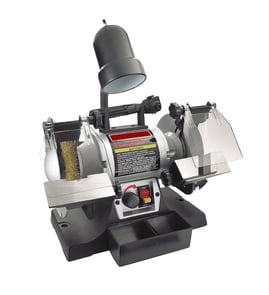

What are the 4 important rules for a bench grinder?
For the Craftsman bench grinder model 319190400, the four most important rules are: wear proper eye and face protection, keep guards and tool rests correctly adjusted, use the correct grinding wheel (including RPM rating), and keep hands, clothing, and hair safely clear of the wheel.
The 4 rules (with the key details that make them work)
- Protect your eyes and face every time: safety glasses plus a face shield; grinding throws sparks and grit.
- Set up the grinder before you start: keep the tool rest close to the wheel (commonly about 1/8 inch) and keep the spark guard close (commonly about 1/4 inch). Tighten all hardware.
- Use the right wheel and inspect it: the wheel’s maximum RPM rating must be higher than the grinder’s RPM; never use a cracked, chipped, or dropped wheel.
- Operate safely at the wheel: let the grinder reach full speed, keep a firm grip, and grind only on the face of the wheel (not the side) unless the wheel is specifically rated for side grinding.
Quick setup checklist before grinding
- Unplug the grinder while adjusting guards, tool rests, or wheels.
- Confirm the wheel is seated correctly and the flanges are secure.
- Rotate the wheel by hand to ensure it clears guards and doesn’t rub.
- Stand slightly to one side at startup; then let it run up to full speed.
- Use light pressure; forcing the work overheats the wheel and the metal.
Common safe clearances (typical bench grinder guidance)
| Item to adjust | Typical target gap | Why it matters |
|---|---|---|
| Tool rest to wheel | ~1/8 inch | Helps prevent the workpiece from getting pulled into the gap |
| Spark guard to wheel | ~1/4 inch | Helps contain sparks and debris near the wheel |
| Wheel RPM rating | Higher than grinder RPM | Prevents wheel overspeed and failure |
Why it matters
Most bench grinder injuries happen from flying debris, wheel damage, or a workpiece getting caught between the wheel and rest. Correct guard/rest adjustment and wheel selection reduce those risks and improve grinding control.
For more DIY safety guidance and best practices, see are diy appliance repairs safe.
Last updated: February 2026
What is a Craftsman bench grinder?
A Craftsman bench grinder (including model 319190400) is a stationary power tool that mounts to a workbench and spins abrasive wheels to grind, sharpen, shape, and clean up metal. It is commonly used for tool sharpening, deburring, and light metal finishing.
What it’s used for
A bench grinder is built for controlled, repeatable grinding tasks where you bring the workpiece to the wheel.
- Sharpening chisels, lawn mower blades, and other edged tools
- Removing burrs and rough edges after cutting or drilling
- Shaping small metal parts (bolts, brackets, weld touch-ups)
- Cleaning rust or paint with a wire wheel attachment (when equipped)
- Smoothing and blending edges before polishing
Key parts and features you’ll typically see
Most Craftsman bench grinders in this class share a similar layout.
| Feature | What it does | Why you care |
|---|---|---|
| Grinding wheels | Remove material and shape metal | Wheel grit affects speed vs. finish quality |
| Tool rests | Support the workpiece at a steady angle | Helps prevent gouging and uneven grinding |
| Eye shields/spark guards | Deflect debris and sparks | Improves visibility and reduces mess |
| On/off switch | Controls power to the motor | A worn switch can cause no-start issues |
Safe, effective basics (quick checklist)
These habits help the grinder cut better and reduce wheel wear.
- Securely bolt the grinder to a stable bench before use
- Let the wheel reach full speed before contacting the workpiece
- Use light pressure; forcing the grind overheats metal and loads the wheel
- Keep tool rests close to the wheel (small gap) to reduce snagging
- Dress the wheel when it becomes glazed or out-of-round
Why it matters
Using the right grinder setup (wheel type, rest position, and light pressure) improves sharpening results, reduces overheating, and helps the motor and wheels last longer.
For help identifying the exact model number on your Craftsman bench grinder before ordering parts, use how to find your appliance model number (and what it means for parts).
Last updated: February 2026
How to restore a bench grinder?
Restoring a Craftsman bench grinder like model 319190400 usually means fully cleaning it, correcting any electrical or bearing issues, and then reassembling and tuning it so it runs smoothly and safely. The goal is reliable operation with minimal vibration and properly adjusted guards and tool rests.
Safety first (before you touch anything)
- Unplug the grinder and remove the wheels before deep disassembly.
- Wear eye protection and a dust mask when stripping paint or cleaning rust.
- Take photos as you go so wiring and spacers go back in the same order.
- Replace any cracked grinding wheel immediately; never “test” a questionable wheel at speed.
- If the cord insulation is brittle or cut, repair it before powering up.
Step-by-step restoration checklist
- Initial inspection: Check the base, guards, tool rests, spark shields, and wheel flanges for cracks or missing hardware.
- Disassemble: Remove guards, tool rests, wheels, and flanges; then open the motor housing if needed.
- Clean and de-rust: Degrease the housing and hardware; remove rust from the base and guards.
- Bearings and shaft: Spin the shaft by hand. Grinding noise, wobble, or roughness points to worn bearings.
- Electrical check: Inspect the power cord, switch, and internal connections; repair damaged wires using how to repair broken or damaged wires video.
- Refinish (optional): Strip loose paint, prime bare metal, and repaint.
- Reassemble and tune: Reinstall wheels and guards; adjust tool rests close to the wheel; then test-run and check vibration.
Quick diagnostics: what you find and what it usually means
| Symptom | Most common cause | What to do next |
|---|---|---|
| Loud rumble or growl | Worn motor bearings | Replace bearings; verify shaft spins freely |
| Excess vibration | Out-of-round wheel, dirty flanges, bent shaft | Dress/replace wheel; clean flanges; check shaft |
| Won’t start | Bad switch, broken wire, blown fuse | Test continuity; inspect wiring and switch |
| Runs but weak power | Binding bearings, electrical issue | Check bearing drag; test voltage and connections |
Why it matters
A restored grinder that is clean, properly wired, and correctly adjusted runs cooler, vibrates less, and is safer to use. Most grinder “problems” after restoration come from wheel mounting, bearing wear, or damaged wiring.
Last updated: February 2026
What are the parts of a grinder?
On a Craftsman bench grinder model 319190400, the main parts are the motor and shaft (spindle), grinding wheels, wheel guards, tool rests, spark shields, and the on/off switch. These parts work together to spin the wheels safely and support the workpiece during sharpening and shaping.
Main parts you will typically see on a bench grinder
- Motor: provides the power to spin the wheels
- Spindle/arbor: the shaft the wheels mount to
- Grinding wheels: abrasive wheels for grinding, shaping, and sharpening
- Wheel guards: cover the wheels to help contain debris and reduce exposure
- Tool rests: adjustable supports that hold the workpiece at the correct angle
- Spark shields/eye shields: help deflect sparks and small debris
- On/off switch (sometimes with a safety key): controls power to the grinder
Common “extra” components (varies by setup)
Bench grinders often also include or use these items:
- Flanges and arbor nuts: clamp the wheel to the spindle
- Bushings/adapters: help fit different wheel arbor sizes
- Base and mounting holes: secure the grinder to a bench or stand
- Power cord and strain relief: supplies power and protects the cord at the housing
Quick reference: what each part does
| Part | What it does | What problems it can cause when worn or misadjusted |
|---|---|---|
| Tool rest | Supports the workpiece | Chatter, grabbing, poor control |
| Wheel guard/shield | Helps protect you from debris | Higher exposure to sparks and fragments |
| Spindle/arbor | Centers and drives the wheel | Vibration, wobble, uneven grinding |
| Switch | Turns grinder on/off | No-start, intermittent running |
Why it matters
Knowing the part names helps you troubleshoot issues like vibration, wheel wobble, or poor grinding results, and it makes it easier to match the correct replacement components when you service your Craftsman 319190400 bench grinder.
For help locating the correct model tag before ordering parts, use how to find your appliance model number (and what it means for parts).
Last updated: February 2026
What not to use on a bench grinder?
On a Craftsman bench grinder model 319190400, do not grind soft or gummy materials (wood, plastic, aluminum, copper, brass) because they can load the wheel, increase heat, and raise the risk of kickback or wheel damage. Also avoid unsafe setups like loose clothing, missing guards, or damaged wheels.
Materials and items to avoid
- Wood or plastic: can melt or burn and quickly clog the abrasive wheel.
- Aluminum, copper, brass: soft metals can smear into the wheel and cause overheating and vibration.
- Magnesium (and unknown alloys): fine dust can ignite; avoid grinding it on a standard bench grinder.
- Dropped, cracked, or chipped grinding wheels: they can fail at speed.
- Wire wheels used like grinding wheels: use wire wheels only for brushing and rust removal, not heavy stock removal.
Unsafe practices to avoid
- Grinding without eye protection (use safety glasses and a face shield for best protection).
- Wearing loose gloves, loose sleeves, jewelry, or leaving long hair unsecured (entanglement hazard).
- Adjusting the tool rest or spark guard while the grinder is running.
- Grinding on the side of a wheel unless the wheel is specifically rated for side grinding.
- Forcing the workpiece; let the abrasive do the cutting to prevent overheating and wheel damage.
Quick safety checklist (before you grind)
| Check | What “good” looks like | Why it matters |
|---|---|---|
| Wheel condition | No chips, cracks, or wobble | Reduces wheel-failure risk |
| Guards and shields | Installed and positioned correctly | Helps contain debris |
| Tool rest gap | Close to the wheel (small, even gap) | Helps prevent the workpiece from jamming |
| Workpiece control | Two hands, steady pressure | Reduces kickback and chatter |
Why it matters
A bench grinder spins the wheel at high speed; when a wheel is loaded with soft material or the work is poorly supported, heat and vibration rise fast. That combination can damage the wheel, reduce control, and increase the chance of injury.
For general DIY safety habits that apply to power tools, review are diy appliance repairs safe.
Last updated: February 2026