Owner’s manual
 View engine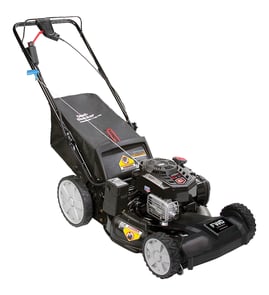

Why is my self-propelled lawn mower pulling to one side?
If your Craftsman 917388220 self-propelled mower pulls to one side, the most common causes are uneven wheel height settings, a dragging or damaged blade/blade adapter, or debris buildup under the deck that changes how the mower tracks. Start with quick checks, then inspect the cutting system safely.
Safety first
Before you inspect or repair anything, stop the engine, wait for all moving parts to stop, then disconnect the spark plug wire so the mower cannot start accidentally (steps are outlined in the owner's manual).
Quick checks that fix most “pulling” problems
- Set all wheels to the same cutting height; mismatched height adjusters make the mower “crab” sideways.
- Clean packed grass and debris from the underside of the deck; buildup can push the mower off-line.
- Check the blade condition; a bent, worn, or loose blade can steer the mower and cause vibration.
- Confirm the blade is mounted correctly and tight; a loose blade can shift and track unevenly.
- Inspect the blade adapter for damage; replace it if it is cracked or stripped.
Parts to inspect on model 917388220
If you find damage or looseness, these are common wear items for this model:
| What to check | What you may notice | Part on this page |
|---|---|---|
| Blade | Uneven cut, vibration, mower “pulls” | Lawn mower blade 532406713 |
| Blade adapter | Blade won’t stay tight, wobble | Lawn mower blade adapter 581547901 |
| Blade mounting hardware | Blade loosens repeatedly | Lock nut 532409149 |
Why it matters
A mower that pulls to one side often indicates a cutting deck or blade issue, not just a handling annoyance. Fixing it improves cut quality, reduces vibration, and helps prevent damage to the crankshaft and mounting hardware.
When to stop and inspect immediately
Stop using the mower and check it right away if you notice:
- Abnormal vibration
- You hit a foreign object
- The blade looks bent or the mower suddenly starts cutting unevenly
Last updated: February 2026
Is it cheaper to repair or replace a lawn mower?
For a Craftsman 917388220 4.5-hp 22-inch rotary lawn mower, it’s cheaper to repair when the problem is routine wear (blade, blade adapter, loose hardware, tune-up items). Replacement makes more sense when the engine has major internal damage or the mower has multiple costly issues at once; those repairs add up fast.
A practical repair vs. replace checklist
We use this quick checklist to decide:
- Repair if the mower starts and runs but cuts poorly, vibrates, or leaves uneven grass.
- Repair if the fix is a single wear item (blade, adapter, fastener) or basic maintenance.
- Replace if the engine has low compression, heavy smoking, or repeated no-start after proper tune-up.
- Replace if the deck is badly rusted/cracked or the crankshaft is bent (often caused by impacts).
- Replace if you need several major parts at the same time and reliability is already poor.
Common low-cost repairs for this model
These are frequent, straightforward fixes that usually beat buying a new mower:
- Replace a dull or bent blade with the correct 22-inch blade: lawn mower blade 532406713
- Replace a worn/damaged blade hub so the blade seats correctly: lawn mower blade adapter 581547901
- Tighten and re-check fasteners regularly (the manual recommends checking bolts, nuts, and screws often)
Blade service specs that affect cost
The manual calls out a specific blade bolt torque; using the right torque prevents repeat failures.
| Item | What we follow | Why it matters |
|---|---|---|
| Blade bolt torque | 35 to 40 ft. lbs. | Prevents blade loosening and vibration |
| Blade condition | Keep sharp; replace if bent | Improves cut quality and reduces strain |
For the full blade removal and installation steps, use the owner's manual.
Why it matters
Repairing a mower is usually the best value when you’re restoring safe cutting performance (sharp blade, correct torque, secure hardware). Replacing the mower is usually the best value when the engine or deck condition makes future breakdowns likely, even after you fix today’s problem.
Last updated: February 2026
How much does it cost to repair a hydrostatic transmission on a lawn mower?
Hydrostatic transmission repairs are typically a riding mower cost; your Craftsman 917388220 is a 4.5-hp 22-inch walk-behind mower and normally does not use a hydrostatic transmission. For riding mowers that do, repairs commonly run from a few hundred dollars for diagnostics and minor fixes to $1,300 or more for a transmission, with full replacement sometimes reaching $2,500 installed.
What you are likely dealing with on model 917388220
Most drive problems on a walk-behind mower come from the blade system, wheels, or basic engine maintenance, not a hydrostatic unit. Before pricing any major repair, we recommend checking the maintenance and adjustment steps in the owner's manual.
Common symptoms and more likely causes:
- Mower is hard to push: wheel height hardware binding, debris buildup, bent bracket
- Poor cut or stalling in thick grass: dull blade, clogged deck, low engine power
- Excessive vibration: damaged blade, loose fasteners, blade adapter wear
Quick cost guide (typical ranges)
These ranges help set expectations for lawn equipment service.
| Repair type | What it usually includes | Typical cost range (USD) |
|---|---|---|
| Basic tune-up | Oil change, spark plug, air filter, blade check | $100 to $250 |
| Drive/propel system service (non-hydro) | Cable/belt/adjustments (if equipped) | $150 to $400 |
| Hydrostatic transmission service (riding mower) | Diagnosis, fluid service (if serviceable) | $200 to $600 |
| Hydrostatic transmission replacement (riding mower) | Transmission unit plus labor | $1,300 to $2,500 |
What to check first (saves money)
Follow these steps before authorizing a major repair:
- Stop the engine, let all moving parts stop, then disconnect the spark plug wire before inspecting anything.
- Check for loose fasteners and obvious damage after any impact.
- Inspect the blade for bends, cracks, or severe wear; replace if needed.
- Check the blade mounting stack for wear or slippage; the blade adapter is a common failure point.
- Clean packed grass from under the deck to reduce drag and improve cut quality.
If you need blade-side parts for this model, common items include the lawn mower blade 532406713 and the lawn mower blade adapter 581547901.
Why it matters
Hydrostatic transmission replacement is one of the highest-cost mower repairs, so confirming whether your mower actually has a hydrostatic drive prevents unnecessary estimates and helps you focus on the parts that most often cause performance problems.
Last updated: February 2026
What kind of gas do you put in a Craftsman push mower?
For a Craftsman push mower like model 917388220, use fresh, clean unleaded gasoline and avoid high-ethanol fuels. Gasoline that is old, contaminated, or contains too much ethanol commonly causes hard starting, rough running, and fuel-system problems (especially after storage). See the fuel and operation guidance in the owner's manual.
Recommended fuel (what to use and what to avoid)
- Use fresh unleaded gasoline from a busy station (less likely to be stale).
- Choose low-ethanol fuel when possible; small engines run best on it.
- Do not use E85 (85% ethanol).
- Avoid E15 (15% ethanol) unless your fuel cap/manual specifically approves it.
- Never mix oil into the gas on this mower; it is a 4-cycle engine.
Quick fuel checklist for model 917388220
| Fuel situation | What we recommend | Why it matters |
|---|---|---|
| Buying gas today | Fresh unleaded, low ethanol | Helps prevent starting and carburetor issues |
| Gas is older than ~30 days | Replace with fresh fuel | Old fuel turns stale and can cause no-start |
| Mower was stored with gas | Drain old fuel, refill | Stale fuel is a common “does not start” cause |
| You suspect water/dirt in gas | Drain tank and carburetor, refill | Water or debris can block fuel flow |
If the mower will not start after refueling
The troubleshooting chart for this mower lists fuel-related causes such as out of fuel, stale fuel, and water in fuel. Use these steps:
- Drain the tank and refill with fresh gasoline.
- If you suspect water or stale fuel, drain the carburetor as well, then refill.
- Check the spark plug wire connection.
- Inspect the blade area for a loose blade or damaged blade adapter.
If you need common blade-hardware parts while servicing the deck, we stock items like the lawn mower blade 532406713 and lawn mower blade adapter 581547901 for this model.
Why it matters
Small-engine fuel systems have tiny passages; stale fuel, excess ethanol, or water contamination can quickly lead to hard starting and poor performance. Using the right gasoline and keeping it fresh reduces carburetor problems and downtime.
Last updated: February 2026
What are the common problems with Craftsman lawn mowers?
Common problems on the Craftsman 917388220 4.5-hp 22-inch rotary mower include no-start conditions (stale fuel, dirty air filter, spark plug issues), loss of power from grass buildup under the deck, and vibration or hard starting caused by a loose or damaged blade or blade adapter. Use the owner's manual troubleshooting chart to match symptoms to fixes.
Most common symptoms and what usually causes them
- Mower will not start: out of fuel, stale fuel, water in fuel, dirty air filter, spark plug wire disconnected, bad spark plug, control bar not held down
- Loss of power or bogging down: heavy grass, cutting too much at once, dirty air filter, grass and debris packed under the mower deck
- Poor or uneven cut: worn or bent blade, uneven wheel height settings, debris under the deck
- Excessive vibration: worn or bent blade, loose blade hardware, bent crankshaft (often follows a blade strike)
- Starter rope hard to pull: blade dragging in grass, blade adapter problems, brake engagement issues when the control bar is released
Quick checks we recommend (fast, high-impact)
- Confirm the control bar is held to the handle while starting (operator presence control must be engaged).
- Drain and replace old fuel with fresh gasoline if the mower sat for weeks or months.
- Inspect and clean the deck underside (grass buildup is a top cause of power loss and poor cutting).
- Check the blade and adapter for looseness or damage; replace worn parts as needed.
- Check the air filter and spark plug; replace if dirty, wet, or worn.
Parts that commonly solve cutting and vibration issues
If the mower shakes, cuts poorly, or the blade seems loose, these model-matched parts are often involved:
| Symptom | Common fix | Example part for this model |
|---|---|---|
| Vibration after hitting something | Replace damaged blade and inspect adapter | Lawn mower blade 532406713 |
| Blade feels loose or won’t stay tight | Replace worn adapter and secure hardware | Lawn mower blade adapter 581547901 |
| Blade hardware won’t hold torque | Replace locking fastener | Lock nut 532409149 |
Why it matters
Most “won’t start” and “loss of power” complaints trace back to fuel condition, airflow (air filter), or drag from debris under the deck. Catching those early prevents hard starting, poor cut quality, and avoidable wear on the engine and blade system.
Last updated: February 2026