Owner’s manual
 View engine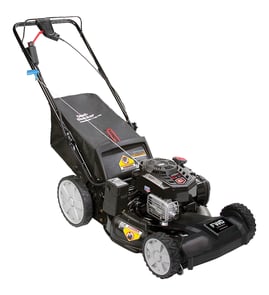



What is the spark plug gap on a Husqvarna HU775H-96145000700?
For the Husqvarna HU775H-96145000700 gas walk-behind mower, we set the spark plug gap to 0.5 mm (about 0.020 in). Using the correct gap helps the ignition system create a strong spark for easier starting and smoother running; see the HU775H-96145000700 owner's manual for the full tune-up specs.
How to check and set the gap
- Turn the engine off and let it cool completely.
- Pull the spark plug wire boot straight off the plug.
- Remove the plug with a spark plug socket.
- Measure the gap with a wire-style feeler gauge.
- Adjust carefully by bending only the ground electrode (never pry on the center electrode).
- Recheck the measurement, then reinstall and snug the plug.
Quick spec reference
| Item | Specification |
|---|---|
| Spark plug gap | 0.5 mm (0.020 in) |
| What it affects | Starting, idle quality, misfire under load |
Symptoms of an incorrect spark plug gap
| Gap condition | Common symptoms |
|---|---|
| Too wide | Hard starting, misfire, weak power |
| Too narrow | Rough idle, poor fuel burn, plug fouling |
Why it matters
A mower engine depends on consistent ignition under changing load (thick grass, mulching, bagging). Keeping the spark plug gap at 0.5 mm helps maintain reliable spark energy, which reduces misfires and improves overall cut performance.
Last updated: February 2026
What kind of oil does a Husqvarna HU775H-96145000700 take?
For the Husqvarna HU775H-96145000700 gas lawn mower, we recommend using a high-quality 4-cycle engine oil; in most climates, SAE 30 works well for warm-weather mowing, and synthetic 5W-30 is a strong all-season choice for easier starting in cooler temperatures. For the exact oil type and fill procedure, use the HU775H-96145000700 owner's manual.
Quick oil selection guide
- Warm weather (typical summer mowing): SAE 30
- Wide temperature range: synthetic 5W-30
- Cooler starts: synthetic 5W-30 helps reduce hard starting and sluggish cranking
- Avoid 2-cycle oil: this mower uses a 4-cycle engine oil system
- Check level often: small engines can consume oil during normal operation
How to check and fill oil (safe, reliable steps)
- Park the mower on a level surface and let the engine cool.
- Remove the dipstick, wipe it clean, then reinsert to read the level.
- Add oil slowly; recheck frequently to avoid overfilling.
- Tighten the dipstick securely before starting.
What to use as a baseline
| Typical mowing conditions | Common oil choice | Why it fits |
|---|---|---|
| Hot, steady summer temps | SAE 30 | Stable viscosity in heat |
| Mixed temps spring to fall | Synthetic 5W-30 | Better cold flow, broad protection |
| Early season, cooler mornings | Synthetic 5W-30 | Easier starting, faster lubrication |
Why it matters
Using the right viscosity helps protect the engine from wear, reduces smoking and oil consumption, and improves starting. Keeping the oil at the correct level is one of the most important maintenance steps for extending engine life on a walk-behind mower.
Last updated: February 2026
Why is my Husqvarna riding mower leaking gas from the carburetor?
Your HU775H-96145000700 is a Husqvarna walk-behind gas lawn mower (not a riding mower). Gas leaking from the carburetor is typically caused by a leaking bowl seal or a carburetor that is flooding because the float and needle are not shutting fuel off. Stop using the mower until the leak is fixed.
Safety steps before you inspect
- Move the mower outdoors, away from cigarettes, heaters, and other ignition sources.
- Let the engine cool completely.
- Turn the control to OFF.
- Disconnect the spark plug wire.
- Wipe up spilled fuel and let vapors clear before doing anything else.
Most common causes of carburetor fuel leaks
- Bowl gasket seepage: Fuel weeps from the seam where the bowl meets the carburetor body.
- Stuck float or needle valve: Debris or varnish holds the needle open and the carburetor overflows.
- Dirty carburetor from stale fuel: Old fuel leaves deposits that prevent proper sealing.
- Loose mounting or bowl fasteners: Vibration can loosen screws and allow seepage.
- Fuel line or clamp issue at the carb inlet: A cracked hose or loose clamp can look like a carb leak.
Quick symptom guide
| What you notice | Likely cause | What to do next |
|---|---|---|
| Drip at bowl seam | Bowl gasket or sealing surface | Remove bowl, clean mating surfaces, replace gasket if damaged |
| Gas in air filter area | Flooding (float/needle not sealing) | Clean carburetor, flush fuel line, service carburetor |
| Wet at hose connection | Hose/clamp leak | Replace hose or clamp, then recheck for seepage |
Model-specific note for HU775H-96145000700
Husqvarna specifies that the carburetor is not adjustable; carburetor problems are corrected through cleaning, repair, or replacement rather than tuning. Use the procedures and safety guidance in the HU775H-96145000700 owner's manual.
Why it matters
A carburetor fuel leak is a fire hazard and can also flood the engine, foul the spark plug, and dilute engine oil, leading to hard starting and engine damage.
Last updated: February 2026