Owner’s manual
 Error Codes


Does the RS25J500DSG have adjustable shelves?
Yes. The Samsung RS25J500DSG side-by-side refrigerator uses adjustable shelving so you can reposition shelves to fit taller items and improve airflow. For the exact shelf positions, removal steps, and any shelf-specific limits, follow the instructions in the RS25J500DSG owner's manual.
Most adjustable shelves in a side-by-side refrigerator use one of these designs:
- Rail-and-slot shelves: lift the front slightly, then pull out and move to a new slot
- Slide-out shelves: the shelf stays in place but the front section slides forward for access
- Spill-proof glass shelves: typically adjustable like standard shelves, but heavier and should be handled with two hands
- Fixed shelves: usually anchored or integrated; they do not move between positions
Before moving shelves in RS25J500DSG, we recommend these steps to prevent cracks and keep the liner from getting damaged:
- Remove heavy items and any bins sitting on the shelf
- Lift the shelf front edge slightly to disengage the rear supports
- Pull the shelf straight out (do not twist)
- Reinstall by seating the rear first, then lowering the front until it locks
- Confirm the shelf is level so doors close properly and items do not slide
| Goal | Recommended setup | Why it helps |
|---|---|---|
| Fit tall bottles or pitchers | Lower one shelf position | Creates vertical clearance |
| Improve cooling consistency | Keep shelves evenly spaced | Supports steady airflow |
| Make room for party trays | Remove one shelf temporarily | Adds wide open space |
Adjustable shelves help your Samsung refrigerator cool more evenly because you can avoid blocking air vents and reduce overcrowding. That improves temperature stability, helps food last longer, and can reduce frost or warm spots.
Last updated: January 2026
Why is my Samsung fridge flashing 25 E?
On Samsung model RS25J500DSG, a flashing 25E code points to a defrost-related cooling problem, most often tied to the evaporator area (ice buildup, a sensor issue, or a control not completing defrost). Start with a reset and a quick check for heavy frost and fan airflow per the RS25J500DSG user manual.
This code commonly shows up when the refrigerator detects abnormal conditions around defrost and evaporator temperature control.
Typical causes include:
- Heavy frost/ice restricting airflow through the evaporator cover
- A failed or out-of-range temperature sensor (thermistor)
- Evaporator fan not running or hitting ice
- Defrost circuit not heating properly (heater, wiring, or control)
- Main control logic issue after a power event
- Power reset: unplug for 2 to 5 minutes, then restore power.
- Listen for the evaporator fan: with doors closed, you should typically hear airflow from the freezer side.
- Look for frost symptoms: weak airflow, warmer temps, or a “snowy” back panel inside the freezer.
- Confirm doors seal: gaps or a torn gasket can drive excess frost.
- Verify temps: freezer near 0°F, fresh food near 37°F (typical targets).
If the code returns after a reset and you have frost or airflow problems, these model-matched parts are frequent fixes:
| Symptom you notice | Most likely area | Example part for RS25J500DSG |
|---|---|---|
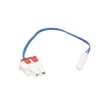
| Freezer back wall frosts over, airflow weak | Evaporator sensing/defrost | Refrigerator temperature sensor DA32-10109W |
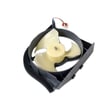
| Clicking, buzzing, or no airflow from freezer | Evaporator fan circuit | Refrigerator evaporator fan motor da31-00334c |
When defrost does not complete, ice buildup blocks airflow; the refrigerator can run longer, temperatures drift, and food quality suffers. Addressing 25E early helps prevent repeated warm-ups and strain on the cooling system.
Last updated: January 2026
What is the most common problem with Samsung refrigerators?
The most common issues we see on Samsung refrigerators like model RS25J500DSG are ice maker problems (no ice, clumping, freezing up) and cooling complaints (warm fresh food section, frost buildup, noisy fans). These symptoms usually trace back to airflow restrictions, icing, or a failing fan or sensor.
- Ice maker stops producing ice or makes small/hollow cubes
- Ice clumps in the bin or the ice chute freezes
- Refrigerator side warms up while freezer seems OK
- Frost or ice buildup on the back wall or in vents
- Buzzing, grinding, or rattling from the freezer area
- Water leaking inside the cabinet or under the unit
In a side-by-side design, ice production and cooling both depend on steady airflow and correct temperatures. When airflow is reduced by ice buildup or a fan is weak, temperatures drift and you can see ice maker failures and warm spots.
| Symptom | Common cause | What to check first |
|---|---|---|
| No ice | Water supply or valve issue | House shutoff open, line not kinked |
| Ice clumping/freezing | Temperature too low or air leaks | Freezer setpoint, door sealing |
| Warm refrigerator section | Poor airflow from freezer | Vents blocked, frost buildup |
| Noisy operation | Fan blade hitting ice or worn motor | Listen for fan noise changes |
- Confirm freezer is near 0°F and refrigerator is near 37°F (use a thermometer, not just the display).
- Make sure food packages are not blocking return vents between freezer and fresh food sections.
- Inspect door gaskets for gaps and clean the sealing surfaces.
- If the ice maker is not filling, check for slow water flow at the dispenser (if equipped).
- If you hear a repeating fan noise or grinding, suspect an evaporator fan issue.
If troubleshooting points to a failed component, these are common fixes for this model:
- Refrigerator ice maker assembly DA97-08059A
- Refrigerator evaporator fan motor DA31-00287B
- Refrigerator temperature sensor DA32-10109W
- Refrigerator water inlet valve DA62-02360B
Ice maker and cooling problems can raise cabinet temperatures, increase compressor run time, and lead to food spoilage. Catching airflow, icing, or water-supply issues early helps prevent bigger repairs.
For model-specific operating tips, temperature settings, and control features, follow the RS25J500DSG owner's manual. You can also use our troubleshooting steps in why your Samsung fridge stopped making ice and how to fix it.
Last updated: January 2026
Why does my Samsung refrigerator dispense water but not ice?
If your Samsung RS25J500DSG refrigerator dispenses water but won’t make or dispense ice, the water supply is working; the issue is usually inside the ice maker system (ice maker setting, freezer temperature, a frozen fill tube, or a weak inlet valve). Use the RS25J500DSG manual to confirm the exact control settings and ice maker test steps.
- Make sure the ice maker is turned ON (not off, locked, or in a disabled mode).
- Set the freezer to 0°F (-18°C) and allow 24 hours to stabilize.
- Empty old ice and reseat the ice bin fully; a mis-seated bin can stop dispensing.
- Clear any ice clump in the chute and around the auger area.
- Replace the water filter if it is overdue or water flow seems weak.
- Confirm the household shutoff valve is fully open and the supply line is not kinked.
A frozen fill tube prevents the ice maker from filling even though the door dispenser still gets water.
- Look for frost or a solid ice plug at the fill tube above the ice maker.
- Thaw carefully with a hair dryer on low; keep heat moving and avoid overheating plastic.
A valve can be strong enough for the dispenser but too weak to fill the ice maker during its timed fill.
- If the ice maker cycles but the mold stays dry, suspect the valve.
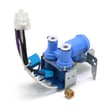
- For this model, the matching part is the refrigerator water inlet valve DA62-02360B.
| Symptom | Most likely area | First action |
|---|---|---|
| Water dispenses, ice bin stays empty | Fill tube, valve, freezer temp | Set 0°F, thaw fill tube |
| Ice in bin, no dispensing | Jam, bin seating, auger | Clear jam, reseat bin |
| Small or hollow cubes | Filter, low flow, valve | Replace filter, check supply |
Ice makers need colder temperatures and a dedicated fill cycle; a small restriction, freeze-up, or weak inlet valve can stop ice production while the water dispenser still seems normal.
Last updated: January 2026