




What is the life expectancy of a GE Profile washer?
A GE Profile washer like model PTW905BPT0RS typically lasts 10 to 14 years with normal household use. Consistent maintenance (cleaning, correct loading, and addressing small issues early) is what most often determines whether you land closer to 10 years or closer to 14.
Most washer lifespan differences come down to usage and care, not just the brand.
- Load size and frequency: frequent oversized loads shorten life
- Detergent habits: too much detergent can cause residue and odor issues
- Water quality: hard water can increase buildup on internal components
- Leveling and vibration: chronic shaking stresses the suspension and tub system
- Drain and fill health: slow draining or filling makes the washer work harder
These habits help protect key systems like the drain pump, inlet valve, and lid lock.
- Run a monthly cleaning cycle (or hottest empty cycle) to reduce residue
- Use HE detergent and measure carefully
- Leave the lid open between loads to dry the basket area
- Check pockets to prevent coins and debris from reaching the pump
- Keep the washer level to reduce wear on suspension parts
If the washer is within its expected life range, a targeted repair is often worthwhile, especially for common failures.
| Symptom | Common system involved | Example part for PTW905BPT0RS |
|---|---|---|
| Won’t drain or drains slowly | Drain pump or drain path | GE washer drain pump assembly WH23X28418 |
| Won’t fill or fills slowly | Water inlet valve or screens | Washer water inlet valve assembly WH13X26637 |
| Won’t start, lid won’t lock | Lid lock system | Washer lid lock assembly WH08X37859 |
Knowing the typical 10 to 14 year life expectancy helps you decide whether to maintain, repair, or replace. For a washer that is still within that window, fixing a single failed component (like a drain pump or inlet valve) can restore reliable performance without replacing the whole unit.
Last updated: February 2026
Is it worth fixing a GE washing machine?
Yes, it’s worth fixing a GE washer like model PTW905BPT0RS when the problem is a common, repairable failure (drain, fill, lid lock) and the total repair cost stays well below the price of a comparable new washer; for repeated breakdowns or major drive-system repairs, replacement is the better value.
A practical guideline is to repair when the all-in cost (parts plus labor) is under about 50% of replacement cost.
- Under 25% of replacement cost: repair is usually the clear choice
- 25% to 50%: repair if the washer is otherwise reliable
- Over 50%: replacement is usually the better long-term value
These are common fixes that often restore normal operation without turning into a major rebuild:
- Won’t drain or drains slowly: check the GE washer drain pump assembly WH23X28418 and the drain path
- Won’t fill or fills slowly: inspect screens and consider the washer water inlet valve assembly WH13X26637
- Lid won’t lock or won’t start: lid lock and striker issues are common wear items
- Excessive shaking or out-of-balance: suspension components and leveling are typical causes
- Intermittent operation or odd behavior: control or harness connections can be involved
We recommend leaning toward replacement when any of these are true:
- The washer has had multiple major repairs in a short period
- You’re facing a high-cost electronics repair (for example, a main control board) plus additional symptoms
- The tub, basket, or bearing area is noisy and worsening (often a larger teardown)
- You need the washer back quickly and parts plus labor approach replacement cost
| Situation | Typical best choice | Why |
|---|---|---|
| Drain or fill problem | Repair | Usually limited to a pump, hose, or valve |
| Lid lock issue | Repair | Common, contained repair |
| Repeated failures | Replace | Costs stack up fast |
| Major drive or bearing noise | Replace | Labor and complexity are high |
A washer repair is most “worth it” when it fixes a single root cause and restores reliability. Once you’re chasing multiple symptoms (drain, spin, control issues), the total cost and downtime usually outweigh the savings.
Last updated: February 2026
What is the most common problem with a washing machine top loader?
The most common problem we see with top-loading washers like the GE PTW905BPT0RS is an unbalanced load. It can make the washer bang, walk, or stop spinning; fixing it is usually as simple as redistributing the laundry and making sure the washer is level.
- Pause the cycle and redistribute items evenly around the wash basket.
- Wash bulky items (blankets, jackets) with a few smaller items to balance the load.
- Confirm the washer sits solidly on the floor; adjust leveling legs until it does not rock.
- Reduce load size; overloading makes balance problems much more likely.
- Run a spin-only cycle after rebalancing to confirm the vibration is gone.
Even when the load is balanced, these are frequent causes of “won’t drain,” “won’t spin,” or “won’t start” complaints:
| Symptom | Common cause | Model-relevant part to check |
|---|---|---|
| Won’t drain or drains slowly | Clog or failing pump | GE washer drain pump assembly WH23X28418 |
| Won’t start or stops mid-cycle | Lid not locking | Washer lid lock assembly WH08X37859 |
| Won’t fill or fills slowly | Water valve or screen restriction | Washer water inlet valve assembly WH13X26637 |
| Excessive shaking even with normal loads | Worn suspension | Rod and spring assembly 5.4 WH03X33961 |
Running a top-load washer while it is badly out of balance can strain the suspension, basket support, and drive components. Addressing vibration early helps prevent repeat shutdowns, noisy operation, and premature wear.
Use these checkpoints to decide when it is time to inspect parts:
- The washer repeatedly stops and tries to rebalance with normal-sized loads.
- You hear grinding, squealing, or a constant rattling that is not load-related.
- The tub is full of water after the cycle (drain issue) or the lid will not lock.
- You see an error code; our GE top load washer error codes guide helps narrow the cause.
Last updated: February 2026
How do I find the right GE part number?
For your GE washer model PTW905BPT0RS, the right part number comes from matching the exact model number to the correct parts diagram, then selecting the specific component you need (for example a drain pump, lid lock, or inlet valve) from the model’s parts list.
- Find the model tag on the washer (commonly under the lid, along the rim of the opening, or on the back panel).
- Confirm the model number is PTW905BPT0RS (match every letter and number).
- Identify the failed symptom (not draining, not filling, won’t start, lid won’t lock).
- Use the parts list for this model to locate the correct diagram section.
- Match the part by name and location in the diagram, then confirm the part number/ID.
- Order the exact replacement part for your model.
These are frequently replaced items for PTW905BPT0RS; use them as a reference point when diagnosing:
| Washer problem | Part type to look up | Example part on this model page |
|---|---|---|
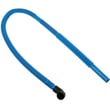
| Washer won’t drain | Drain pump or drain hose | GE washer drain pump assembly WH23X28418, washer pump drain hose WH41X24177 |
| Washer won’t fill or fills slowly | Water inlet valve | Washer water inlet valve assembly WH13X26637 |
| Lid won’t lock or won’t start | Lid lock or striker | Washer lid lock assembly WH08X37859, lid lock striker WH01X32866 |
GE often uses similar-looking parts across multiple washer lines, but connectors, mounting points, and software compatibility can differ by model. Using PTW905BPT0RS to select parts prevents ordering a look-alike part that does not fit or function correctly.
- If the washer won’t drain, check for a clog in the tub-to-pump path and the drain hose before replacing the pump.
- If it won’t fill, confirm both water supply valves are fully open and inlet screens are not blocked.
- If it won’t start, listen for the lid lock to click; a failed lock can stop the cycle.
- If you’re seeing a code, use GE top load washer error codes to narrow the failure to a specific circuit or component.
Last updated: February 2026
Is the GE stackable washer and dryer any good?
GE PTW905BPT0RS is a top-load washer model, not a stackable laundry center; for this washer, overall performance is typically very good when it fills, agitates, and spins correctly, and most “not good” experiences trace back to setup, load size, or a drain or lid-lock issue rather than basic wash ability.
A properly working top-load GE washer like PTW905BPT0RS should:
- Fill to the selected level without long pauses or error beeps
- Wash without excessive banging or walking
- Drain quickly and spin out water so loads come out damp, not dripping
- Lock the lid during spin for safety and consistent operation
- Finish cycles without leaving detergent residue
These steps fix the most common complaints (noise, poor cleaning, wet loads) without replacing parts:
- Use HE detergent and measure carefully; too much causes oversudsing and poor rinsing
- Avoid overloading; leave space at the top so items can circulate
- Distribute bulky items evenly (blankets, towels) to reduce out-of-balance spinning
- Confirm hot and cold supply valves are fully open and hoses are not kinked
- Make sure the drain hose is not shoved too far down the standpipe (helps prevent siphoning)
If PTW905BPT0RS is not draining, not spinning, or stopping mid-cycle, these parts are common fixes:
| Symptom | Common cause | Part to check for PTW905BPT0RS |
|---|---|---|
| Won’t drain or leaves water in tub | Failed or jammed pump | GE washer drain pump assembly WH23X28418 |
| Won’t start spin, lid won’t lock | Lid lock not engaging | Washer lid lock assembly WH08X37859 |
| Slow fill or no fill | Inlet valve or screens clogged | Washer water inlet valve assembly WH13X26637 |
| Loud banging, tub feels unstable | Worn suspension | Rod and spring assembly 5.4 WH03X33961 |
“Stackable” feedback usually applies to a washer-dryer combo or laundry center, but PTW905BPT0RS performance depends on core washer functions (fill, drain, spin, balance). When those are right, cleaning and cycle completion are consistently strong.
For fault codes that point you to the exact system (drain, lid lock, balance, etc.), use our GE top load washer error codes guide.
Last updated: February 2026


