 Owner’s manual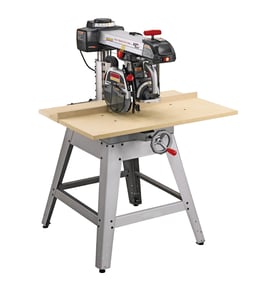

Are radial arm saws worth anything?
Yes. A Craftsman radial arm saw like model 113198411 can be worth real money and shop space when it is complete, tight, and properly tuned; these saws excel at accurate crosscuts and can handle dadoes and repetitive cuts well, but condition and safe setup drive value.
What determines value most
- Overall condition: smooth carriage travel, no excessive play in the arm or yoke, and a solid column lock
- Completeness: original guards, table/fence pieces, and hardware included
- Motor health: starts quickly, runs without burning smell, and does not bog down under load
- Accuracy potential: can be aligned to cut square and stay aligned
- Local demand: radial arm saws sell best to woodworkers who specifically want one (often for dedicated crosscut or dado work)
Quick worth-it checklist (before you buy or sell)
Use this as a fast pass/fail for a Craftsman 113198411 radial arm saw.
| Check | What you want to see | Why it matters |
|---|---|---|
| Arm and carriage | Minimal side-to-side slop | Slop shows up as wandering cuts |
| Locks and clamps | Locks hold firmly | Keeps settings from drifting |
| Guarding | Guard present and functional | Safer operation and better resale |
| Table/fence | Flat enough to tune, not rotted | A bad table makes alignment frustrating |
Why it matters
Radial arm saws are powerful and versatile, but they reward careful setup. A well-tuned saw can be a dependable crosscut station; a worn or incomplete saw often costs more time (and parts) than it is worth.
Best next step for this model
For Craftsman 113198411, use the alignment and adjustment procedures in the 113198411 owner's manual. Proper setup is the difference between a saw that feels “sketchy” and one that cuts predictably.
Last updated: February 2026
When did Craftsman stop making radial arm saws?
Craftsman radial arm saws like model 113198411 were largely discontinued in the early 1990s; most Craftsman-branded radial arm saw sales through Sears ended around 1992, with some smaller (commonly 8-inch) versions continuing into the mid-1990s. For model-specific details, we use the parts diagrams and safety information in the owner's manual.
What “stopped making” usually means for Craftsman radial arm saws
Craftsman was a brand sold through Sears, and many radial arm saws were built by outside manufacturers. So, “stopped making” typically refers to when new units stopped being sold broadly, not when every last unit left inventory.
Common timeline you will see for Craftsman radial arm saws:
- 1958 to 1992: Many Craftsman radial arm saws were produced and sold during this span.
- Around 1992: New radial arm saw sales through Sears largely ended for most models.
- Mid-1990s: Some smaller versions continued a bit longer.
Why radial arm saws faded out
Several factors pushed the market away from radial arm saws and toward miter saws and table saws:
- Guarding and kickback-control expectations increased over time
- More compact tools (especially miter saws) became the go-to for crosscuts
- Many owners used radial arm saws for tasks they were not set up for (ripping without proper setup)
- Shops shifted toward tools with simpler, more consistent alignment
Why it matters
If you own a Craftsman 113198411 radial arm saw, the “end of production” date matters less than having the correct guarding, alignment, and electrical condition today. Safe setup and maintenance determine how well the saw performs and how safely it operates.
Quick checks we recommend for an older radial arm saw
Before you tune or repair the saw, we recommend these basics:
- Unplug the saw and inspect the power cord for cracks or repairs
- Confirm the blade is sharp, correct for the task, and installed properly
- Check that the arm and carriage lock securely (no slipping)
- Verify the fence is straight and firmly mounted
- Make sure the guard and anti-kickback components are present and functional
At-a-glance: what to use for dating and identifying your saw
| What you’re checking | Where to look | What it tells you |
|---|---|---|
| Model number | Data plate/tag | Confirms you have 113198411 |
| Manual diagrams | Owner's manual | Helps identify assemblies and adjustments |
| Motor and switch condition | Visual inspection | Indicates likely maintenance needs |
Last updated: February 2026
What is the best brand of radial arm saw?
There is no single “best” brand for every shop, but for a Craftsman 113198411 radial arm saw owner, the best choice is the brand that delivers solid arm and carriage rigidity, accurate repeatable alignment, and dependable parts support for the way you cut (crosscuts, dados, or light ripping). Use the owner's manual to compare your saw’s intended uses and adjustment features.
What to look for in a “best” radial arm saw
A radial arm saw is only as good as its ability to stay aligned and cut consistently. We recommend prioritizing:
- Rigid arm and column with minimal flex
- Smooth carriage travel with no side-to-side play
- Easy, repeatable 90-degree crosscut and bevel detents
- Fence and table system that’s easy to replace or rebuild
- Clear guarding and a working return mechanism
- Availability of wear parts (bearings, switches, cords, yokes)
Brand and use-case comparison
Different brands tend to shine in different situations. Here’s a practical way to think about it:
| If you want... | Brands commonly favored | Why it fits |
|---|---|---|
| New, industrial-grade machine | Original Saw Company | Built for production use and long-term serviceability |
| Heavy, proven vintage performance | DeWalt (older, cast/industrial era) | Strong reputation for rigidity and repeatable cuts |
| Classic turret-style versatility | Delta (older turret models) | Robust build and flexible arm geometry |
| A budget-friendly used saw | Craftsman (like 113198411) | Good capability when tuned and used within its limits |
Why it matters
Radial arm saws can do extremely accurate crosscuts and dados, but only when the arm, yoke, and table stay square. Choosing “the best” brand is really choosing the platform that holds alignment, matches your workload, and can be maintained safely over time.
How to decide quickly (using your Craftsman as the baseline)
Use this checklist to judge any candidate saw, including your Craftsman 113198411:
- Does it lock solidly at 90 degrees without drifting during a cut?
- Can you eliminate carriage play with adjustment and lubrication?
- Is the table flat and the fence straight and secure?
- Does the motor start smoothly without excessive sparking or burning smell?
- Are the guard and return action intact and working correctly?
Last updated: February 2026
What has replaced the radial arm saw?
For most homeowners, the compound miter saw largely replaced the radial arm saw for crosscuts and miter cuts. For a Craftsman 113198411 radial arm saw, the closest modern “replacement” is usually a miter saw for trim work plus a table saw (or track saw) when you need accurate rip cuts.
What tool replaces it for each job?
Radial arm saws were popular because one machine could do several operations. Today, most people use specialized tools instead.
- Crosscuts (cutting boards to length): compound miter saw
- Miter and bevel cuts (trim, frames): compound miter saw
- Rip cuts (cutting along the grain): table saw or track saw
- Dados/rabbets (joinery): table saw with dado setup or a router
- Sheet goods breakdown: track saw or circular saw with a straightedge
Quick comparison
| Task | Radial arm saw (like Craftsman 113198411) | Common modern choice |
|---|---|---|
| Crosscutting | Very capable | Compound miter saw |
| Miter/bevel | Capable with setup | Sliding compound miter saw |
| Rip cutting | Possible but less common today | Table saw or track saw |
| Space efficiency | Needs depth behind the fence | Miter saw station or portable tools |
Why many users moved away from radial arm saws
The shift was mostly about convenience and repeatability for trim work, not because the radial arm saw cannot do the job.
- Miter saws are faster to set up for common angles
- Modern miter saws are compact and portable
- Table saws generally provide more controlled ripping with dedicated fences and guards
- Many shops prefer one tool per operation for consistency
Safety and setup reminders (if you still use your 113198411)
A radial arm saw is safe when it is aligned correctly and used with the right technique.
- Keep the blade sharp and correct for the material
- Verify arm and fence alignment before precision work
- Use the right direction of feed for the operation
- Support long stock; avoid twisting or lifting during the cut
- Use guards and anti-kickback features as designed
For model-specific adjustments, alignment steps, and operating guidance, follow the 113198411 owner's manual.
Why it matters
Choosing the right “replacement” depends on what you cut most. If your work is mostly trim and crosscuts, a compound miter saw is the direct successor. If you also rip lumber or break down plywood, pairing a miter saw with a table saw or track saw usually covers everything a radial arm saw used to do.
Last updated: February 2026
What happened to radial arm saws?
Radial arm saws like the Craftsman 113198411 became far less common as sliding compound miter saws and table saws took over everyday crosscutting and ripping. Most shops moved on because newer saws deliver repeatable accuracy with less setup and feel more controlled for typical cuts.
Why radial arm saws declined
These practical issues pushed many users toward other saw types:
- Higher kickback and climb-cut risk if feed direction, blade choice, or setup is off
- More frequent calibration (arm, yoke, fence, and carriage alignment)
- Larger footprint; many need a dedicated wall station
- Modern miter saws handle most crosscuts and angles faster
- Table saws handle ripping more predictably with common jigs
What a radial arm saw still does well
When it is aligned and guarded correctly, a radial arm saw remains useful for:
- Fast, repeatable 90-degree crosscuts on long stock
- Wide crosscuts (based on arm travel)
- Dadoes, rabbets, and trenching with proper setup and guarding
- Half-lap style joinery using depth control
Safety and setup essentials
Before regular use, we follow these basics:
- Unplug the saw before adjustments; lock the arm and carriage when setting stops
- Use a sharp blade intended for radial arm saw crosscuts; install it in the correct rotation
- Square the arm and yoke to the fence; keep the fence straight and firmly mounted
- Set the guard and anti-kickback features as designed; replace missing guards before use
- Use a controlled feed rate; do not let the carriage self-feed through the cut
Quick comparison
| Common shop task | Radial arm saw | Sliding miter saw | Table saw |
|---|---|---|---|
| Crosscuts | Strong after calibration | Strong and convenient | Strong with sled |
| Ripping | Possible, higher risk | Not intended | Best fit |
| Dados/rabbets | Capable with setup | Limited | Strong with dado stack |
Why it matters
If you keep a Craftsman 113198411 in service, accuracy and safety depend heavily on alignment, guarding, and technique. Use the procedures and adjustment steps in the 113198411 owner's manual to keep cuts square and operation controlled.
Last updated: February 2026