Owner’s manual
 Error Codes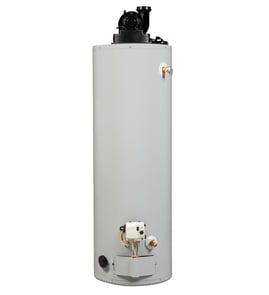




How to check a water heater model?
On the Kenmore gas water heater model 153339262, the model number is printed on the rating plate (rating label) on the front of the tank. Use that rating plate to record the model number and serial number before ordering parts or looking up service information in the owner's manual.
- Look on the front of the water heater for the rating plate
- Write down the model number and serial number exactly as shown
- Note the gas type listed (natural gas or propane)
- If the label is dirty, wipe it gently so the characters are readable
- Keep a photo of the label on your phone for future parts lookups
Your 153339262 is a gas water heater. Common gas-model identifiers include:
- A vent pipe and draft hood at the top
- A manual gas shut-off valve and gas supply line
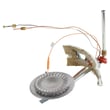
- A pilot and main burner area behind the lower access doors
- A piezo igniter on many models
- A temperature-pressure (T&P) relief valve on the tank
| Rating plate item | Why it matters | When you need it |
|---|---|---|
| Model number | Matches the correct parts list | Ordering parts, manual lookup |
| Serial number | Identifies production run details | Service history, age checks |
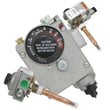
| Gas type (NG/LP) | Ensures correct burner and pilot parts | Pilot, burner, gas valve work |
| Input rate | Helps match T&P relief valve capacity | Safety parts replacement |
Using the exact model number from the rating plate prevents ordering the wrong Kenmore water heater parts, especially for gas-specific components like the pilot assembly, burner assembly, and igniter.
Last updated: February 2026
What is the average cost of a 50 gallon gas water heater?
A typical 50-gallon gas water heater averages about $600 to $1,300 for the unit, with many installed replacements landing around $1,000 to $3,100+ once labor, venting, gas line work, and code-required upgrades are included. For Kenmore model 153339262, use the owner's manual to confirm your exact capacity and venting type before pricing.
- Venting type: atmospheric vent is usually less than power-vent or direct-vent
- Efficiency level: higher efficiency usually costs more up front
- Warranty length: longer warranty tiers typically raise the unit price
- Gas type and piping: natural gas vs. LP conversions and gas line sizing work
- Installation scope: shutoff valve, drip leg (sediment trap), connectors, and vent pipe updates
- Local labor rates and permits: big driver of total installed cost
| What you’re paying for | Common range | Notes |
|---|---|---|
| 50-gallon gas unit only | $600 to $1,300 | Basic to higher-efficiency models |
| Installation labor and materials | $400 to $1,800+ | Depends on venting, gas line, and plumbing |
| Total installed replacement | $1,000 to $3,100+ | Can be higher with major upgrades |
- Match the tank size (50-gallon tall vs. short) to your space and demand
- Check whether your setup needs venting changes (often the biggest add-on)
- Confirm the installer will include a manual gas shutoff valve and drip leg (common requirements)
- Plan for small but real add-ons like a drain pan, flexible connectors, and disposal
- If your current heater is older, budget for valve and piping updates
A “50-gallon gas water heater cost” number is only half the story; the installed price is driven by safety-related gas and venting details, plus any plumbing updates needed to meet current installation practices.
Last updated: February 2026
What is the life expectancy of a Kenmore water heater?
A Kenmore gas water heater like model 153339262 typically lasts 8 to 12 years. Regular maintenance (especially flushing sediment and checking corrosion protection) helps you reach the high end of that range and reduces the chance of early tank failure.
Most tank-style gas water heaters fall into a predictable lifespan range, but these factors make the biggest difference:
- Water quality and sediment: hard water accelerates scale buildup and overheating.
- Anode rod condition: a depleted anode rod allows the tank to corrode faster.
- Operating temperature: higher setpoints increase stress on the tank and components.
- Combustion air and venting: poor airflow or improper venting can cause performance problems and unsafe operation.
- Maintenance consistency: small issues left unresolved shorten service life.
Use your owner's manual for the exact maintenance schedule and safety steps for your Kenmore 153339262.
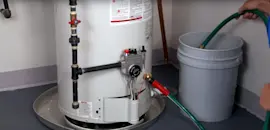
- Flush a few gallons from the tank periodically to reduce sediment.
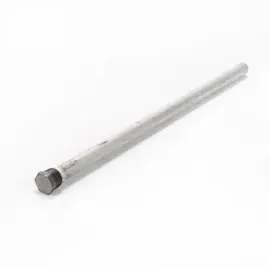
- Inspect and replace the anode rod when it is heavily worn.
- Test the temperature and pressure relief valve for proper operation.
- Keep the air intake area clear so the burner gets proper combustion air.
- Watch for early warning signs: rumbling, rusty water, slow recovery, or small leaks.
| Maintenance item | What it protects | Example part for model 153339262 |
|---|---|---|
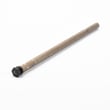
| Anode rod | Tank from internal corrosion | Water heater anode rod 100108660 |
| T and P relief valve | Prevents dangerous overpressure | Relief valve 100108279 |
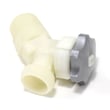
| Drain valve | Makes flushing and draining easier | Valve 100108269 |
Once a tank begins leaking, replacement is the practical fix. Staying ahead of corrosion (anode rod) and sediment (flushing) is the most effective way to keep your Kenmore 153339262 running reliably for its full expected lifespan.
Last updated: February 2026
What is the most common problem with gas water heaters?
The most common gas water heater problem is the pilot not staying lit or the burner not staying lit, which leads to little or no hot water. On Kenmore model 153339262, this is often tied to ignition or combustion-air issues, or a failing pilot/ignition component (see the troubleshooting charts in the owner's manual).
- Pilot will not light: gas supply off, igniter gap issue, or ignition component problem
- Burner will not stay lit: dirty pilot burner, restricted air intake, or gas control issue
- Not enough hot water: thermostat set too low, heater undersized, unusually cold incoming water, or a leak in hot water plumbing
- Sizzling or rumbling sounds: sediment or calcium buildup in the bottom of the tank
- Water on the floor: often condensation at startup or a leaking valve/connection (not always a tank leak)
- Confirm the tank is completely full of water before operating gas (hot faucet should run steadily).
- Look for condensation: after a cold start, dripping can be normal and should fade after about 1 to 2 hours as the tank warms.
- Inspect the air intake area for lint and dust buildup.
- Check for slow leaks at common points: hot/cold connections, drain valve, and the temperature and pressure relief valve.
- If the pilot repeatedly goes out, inspect and clean the intake screen; restricted combustion air is a frequent cause.
| Symptom | Common cause | Part to consider for 153339262 |
|---|---|---|
| Pilot will not light | Ignition failure | Water heater igniter 100109221 |
| Pilot lights then goes out | Pilot assembly issue | Water heater pilot assembly 100109290 |
| Burner issues, poor combustion | Burner assembly problem | Water heater burner assembly 100109200 |
| Pilot outage, sooting | Restricted combustion air | Water heater air intake screen 100109216 |
Pilot and burner problems are more than an inconvenience; they stop hot water production and can point to combustion-air or venting conditions that also create condensation, odors, or soot. Addressing the root cause helps restore reliable hot water and protects key components like the gas control and burner.
Last updated: February 2026