Installation guide
 Owner’s manual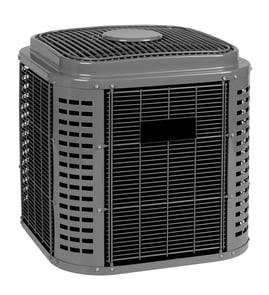





How long is the warranty on a Carrier AC unit?
For a Carrier central air conditioner like model 24ACC642A0030010, warranty length depends on the specific warranty coverage selected and whether the unit is registered on time; common Carrier options include 10-year parts-only coverage or 5-year parts plus 3-year labor coverage on eligible equipment. Check your paperwork and the 24ACC642A0030010 owner's manual for the model and serial details you will need.
- Whether the unit was registered within the required time window
- The unit’s model and serial number from the rating plate
- Whether coverage is parts-only or parts plus labor
- The installation date (often used as the warranty start reference)
- Whether you are the original homeowner (some warranties vary by ownership)
Carrier split systems have a rating plate on the outdoor unit (and often the indoor unit). We recommend recording these numbers before you call for service or check coverage.
| Item to record | Where it’s typically found | Why it matters |
|---|---|---|
| Model number | Outdoor unit rating plate | Confirms the exact equipment family |
| Serial number | Outdoor unit rating plate | Used to validate warranty status |
| Install date | Installer invoice or service record | Helps confirm coverage start |
The manual’s troubleshooting guidance is a good first step before scheduling a visit:
- Check the indoor and outdoor disconnect switches
- Check the main electrical panel breakers or fuses
- Confirm the thermostat is set to Cool (or Auto) and set below room temperature
- Make sure airflow is not restricted (clean filter, open vents)
Warranty terms affect whether you should expect to pay for a compressor, contactor, condenser fan blade, or labor during a repair. Having the correct model and serial number ready can also speed up troubleshooting and parts identification.
Last updated: January 2026
What is the life expectancy of a Carrier air conditioner?
A Carrier central air conditioner like model 24ACC642A0030010 typically lasts 15 to 20 years with proper installation, correct sizing, and regular maintenance. Consistent airflow (clean filters, open vents) and annual professional inspections are the biggest factors that help you reach the upper end of that range.
Most central air conditioners fall into a similar lifespan range, but real-world life depends on run time, climate, and upkeep.
- 15 to 20 years is the normal expectation for a central AC system
- Hot climates and long cooling seasons can shorten life due to higher run hours
- Poor airflow (dirty filter, blocked returns) increases stress on the blower and coils
- Dirty indoor or outdoor coils reduce efficiency and can lead to compressor strain
- Loose electrical connections can cause intermittent failures and component damage
Your Carrier documentation emphasizes routine maintenance and recommends regular dealer maintenance, including inspections of filters, coils, drain system, and electrical connections. Use the 24ACC642A0030010 owner's manual as your baseline checklist.
Homeowner basics (monthly in peak season):
- Replace or clean the air filter as needed
- Keep supply vents open and unobstructed
- Keep the outdoor unit clear of leaves, grass, and debris
- Confirm thermostat settings are correct for cooling
Annual professional inspection (once per year):
- Clean and inspect indoor and outdoor coils
- Inspect blower wheel, housing, and motor
- Inspect drain pan and primary/secondary drain lines
- Check electrical wiring and connections
Use this as a practical decision tool when you are weighing repairs.
| System age | What we usually recommend | Why |
|---|---|---|
| 0 to 10 years | Repair is usually worthwhile | Most major components still have strong remaining life |
| 10 to 15 years | Compare repair cost vs. efficiency gains | Wear increases; energy costs can rise |
| 15+ years | Plan for replacement; repair only if minor | End-of-life failures become more common |
A central AC is a split system (indoor and outdoor units connected by refrigerant lines). When maintenance is skipped, the system runs longer to hold temperature, which increases wear on high-cost components like the compressor and condenser fan.
Last updated: January 2026
What is the tonnage of Carrier 24ACC642A0030010?
Carrier model 24ACC642A0030010 is a 3.5-ton central air conditioner (nominal capacity). On Carrier equipment, the “42” in the model number typically indicates 42,000 BTU/h, and 42,000 ÷ 12,000 = 3.5 tons.
For many Carrier central air conditioners, the two-digit size code in the model number maps to nominal BTU capacity.
- 18 = 18,000 BTU/h = 1.5 tons
- 24 = 24,000 BTU/h = 2.0 tons
- 30 = 30,000 BTU/h = 2.5 tons
- 36 = 36,000 BTU/h = 3.0 tons
- 42 = 42,000 BTU/h = 3.5 tons
- 48 = 48,000 BTU/h = 4.0 tons
- 60 = 60,000 BTU/h = 5.0 tons
| Nominal BTU/h | Nominal tons |
|---|---|
| 36,000 | 3.0 |
| 42,000 | 3.5 |
| 48,000 | 4.0 |
We recommend confirming tonnage using the unit’s data label and documentation:
- Check the outdoor unit’s rating label for capacity (BTU/h) and model number
- Match the model number to the size range shown in the 24ACC642A0030010 installation guide
- Keep the label readable; replace it if it is damaged (the central air conditioner nameplate 330134-401 is the identification plate used for model and rating information)
Correct tonnage affects comfort and reliability. An oversized or undersized system can cause short cycling, humidity problems, higher energy use, and unnecessary wear on the compressor and condenser fan.
Last updated: January 2026