Owner’s manual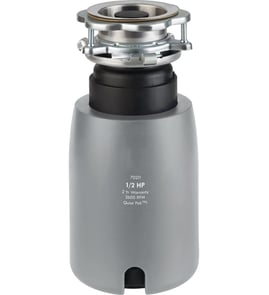

Are all garbage disposals universal fit?
Most garbage disposals are not a universal fit. Many are designed to mount to a common sink drain opening, but the mounting hardware style, discharge outlet alignment, under-sink clearance, and electrical hookup can differ. For Kenmore model 58770211410, confirm the mounting assembly and connection requirements in the owner's manual.
What usually is (and is not) “universal”
Many disposals share similar sink-flange sizing, but the rest of the install can vary by brand and model.
- Sink opening compatibility: many kitchens use a standard-style sink drain opening, but flange and ring designs can differ
- Mount system style: 3-bolt style vs. proprietary twist-lock systems (not interchangeable)
- Discharge elbow position: outlet height and direction affect how it lines up with your trap
- Dishwasher inlet: some models include it; others require a knockout plug step
- Electrical connection: plug-in cord vs. hardwired connection (both must be grounded)
Quick fit checklist before you buy
Use this checklist to avoid a mismatch with plumbing or wiring.
| What to check | What you’re looking for | Why it matters |
|---|---|---|
| Mounting style | Same flange and mounting ring type | Determines whether it will physically attach to the sink |
| Under-sink space | Enough clearance for the disposer body | Prevents cabinet or pipe interference |
| Discharge alignment | Outlet lines up with existing drain trap | Reduces rework and leak risk |
| Power setup | 110-120V, 60 Hz circuit; grounded cord or grounded wiring | Prevents electrical hazards and nuisance trips |
Electrical and safety notes for 58770211410
Our Kenmore 58770211410 disposer is designed to run on 110-120 Volt, 60 Hz power and must be properly grounded. Turn off the circuit breaker (or remove the fuse) before installation or wiring changes.
Why it matters
A “close enough” fit can turn into leaks, vibration, or a disposal that cannot be mounted securely. Verifying the mount system, discharge elbow location, and power connection upfront saves time and prevents repeat installation.
Last updated: February 2026
Why don't plumbers like garbage disposals?
Plumbers often dislike garbage disposals because they increase the chances of clogs, jams, and leaks when they are used like a trash can. With a Kenmore 58770211410 disposer, the safest approach is to grind only small, soft food scraps and flush thoroughly with cold water, as outlined in the owner's manual.
What causes the plumbing problems
Garbage disposals can stress a drain system when food waste does not break down and flush cleanly through the trap and drain line.
Common troublemakers include:
- Grease and fats (they cool and coat pipes, trapping debris)
- Starches like rice, pasta, and potato peels (they swell and form paste)
- Fibrous foods like celery, corn husks, and onion skins (they wrap and slow drainage)
- Hard items like large bones, pits, and shells (they can jam and increase grinding time)
- Non-food items like bottle caps, foil, glass, or utensils (they can damage the disposer and cause loud noise)
How we recommend using the Kenmore 58770211410 to avoid clogs
The operating guidance in the manual is designed to keep waste moving through the plumbing.
Best practices:
- Run a medium flow of cold water before and during grinding
- Feed small amounts at a time; avoid packing the chamber
- Let the disposer and water run about 15 seconds after shredding stops to flush the trap
- Throw away large bones and fibrous husks instead of forcing them through
- Keep the stopper in place when not in use to prevent foreign objects from falling in
Quick do and don’t table
| Do | Don’t |
|---|---|
| Use cold water while grinding | Use hot water while running the disposer |
| Grind small table scraps | Pour hot grease or fats into the disposer |
| Flush 15 seconds after grinding | Put glass, metal, foil, or plastic in the disposer |
| Turn power off before clearing a jam | Put hands or fingers into the disposer |
Why it matters
Most “plumbers hate disposals” complaints come from preventable misuse. When the disposer sends sticky, fibrous, or greasy waste into the drain, it can build up in the trap and branch line, leading to slow drains, backups, and service calls.
Last updated: February 2026
What is the average lifespan of a garbage disposal?
A garbage disposal typically lasts 10 to 12 years on average (often 8 to 15 years total range). For your Kenmore 58770211410 garbage disposal, lifespan depends most on what you grind, how often you run it, and whether you clear jams safely using the steps in the owner's manual.
Typical lifespan and what changes it
Most disposals fail from wear to the grinding components, corrosion, repeated jams, or motor issues.
Usually lasts longer when you:
- Run cold water at a medium flow while grinding
- Let water run about 15 seconds after shredding stops to flush the drain
- Grind only normal food scraps (peelings, rinds, seeds, pits, coffee grounds)
- Keep foreign objects out (utensils, bottle caps, foil)
- Leave the stopper in when not in use to prevent items from falling in
Usually wears out faster when you:
- Put hot grease or hot liquids into the disposer
- Grind hard or risky items (glass, metal, plastic, large whole bones, cornhusks)
- Use caustic drain cleaners
- Keep running it while it is jammed or making abnormal loud noise
Quick “repair vs replace” guide
| Symptom | Most likely cause | Best next step |
|---|---|---|
| Hums but will not grind | Jammed impellers or stuck object | Turn power off; clear jam safely (no hands) |
| Loud rattling | Foreign object in grind chamber | Turn power off; remove object with tongs/pliers |
| Frequent clogs | Not flushing with enough cold water | Improve flushing routine; avoid fibrous waste |
| Leaks from housing | Seal or internal corrosion | Plan for replacement |
Why it matters
A worn or poorly used disposal can clog the trap and drain, strain the motor, and increase the chance of jams. Following the operating steps (cold water, proper flushing time, safe jam clearing) helps you get the full expected service life.
Last updated: February 2026
Can you buy parts for a garbage disposal?
Yes. You can buy replacement parts for your Kenmore garbage disposal model 58770211410 to fix common issues like leaks, clogs, or a worn splash guard, instead of replacing the entire unit. Use the exploded-view diagrams and part list in the 58770211410 owner's manual to identify what you need.
Common garbage disposal parts people replace
Even when a disposer motor is fine, these items often wear out or get damaged:
- Sink stopper (helps control draining and can help prevent items from falling in)
- Splash guard (reduces splash-back and helps keep utensils out)
- Mounting hardware (sink flange, mount rings, snap ring, mounting screws)
- Rubber gaskets and seals (help prevent leaks at joints)
- Waste elbow and elbow gasket (common leak point under the sink)
How to identify the right part for your Kenmore 58770211410
We recommend matching parts by model number and by where the part sits in the assembly.
- Confirm the model number 58770211410 on the disposer label
- Use the parts breakdown and diagrams in the manual to name the assembly (mount, drain, stopper)
- Compare your existing part shape and connection style (especially drain elbow and mount pieces)
- If you connect a dishwasher, confirm whether the dishwasher inlet knockout plug has been removed
Quick fit check table
| What you are replacing | What to verify before ordering | Why it matters |
|---|---|---|
| Splash guard or stopper | Diameter and style of the sink opening | Prevents poor fit and splash-back |
| Waste elbow parts | Elbow angle and gasket placement | Stops leaks at the drain connection |
| Mounting assembly parts | Correct stacking order of rings, gasket, and snap ring | Prevents vibration and leaks |
Why it matters
Replacing the correct small part can stop leaks, reduce noise from foreign objects, and keep the disposer draining properly. The manual also calls out safe practices like avoiding chemical drain cleaners (they can corrode metal parts) and keeping the disposer clear before running the dishwasher.
Last updated: February 2026
Which is better, 1/2 hp or 3/4 hp garbage disposal?
A 3/4 HP garbage disposal is better for heavier daily use because it grinds faster, handles tougher scraps with fewer slowdowns, and typically jams less; a 1/2 HP unit is a solid choice for lighter, everyday kitchen scraps and lower cost. For Kenmore model 58770211410, match horsepower to how often you grind and what you put down the sink (see the owner's manual).
Quick recommendation (based on how you cook)
- Choose 1/2 HP if you mostly grind small amounts of soft food scraps (plate scrapings, peels) and you run the disposer a few times a day.
- Choose 3/4 HP if you cook often, have a larger household, or regularly grind tougher items (seeds, pits, small bones) and want quicker clearing.
- If you frequently hear the disposer slow down, you will benefit from the extra torque of 3/4 HP.
What changes between 1/2 HP and 3/4 HP
| Feature | 1/2 HP | 3/4 HP |
|---|---|---|
| Best for | Light to moderate use | Moderate to heavy use |
| Grinding speed | Good | Faster |
| Jam resistance | Moderate | Better |
| Noise (typical) | More noticeable | Often quieter (varies by design) |
| Cost | Lower | Higher |
Use and care tips that matter more than horsepower
The Kenmore 58770211410 operating steps are the same regardless of motor size; good habits reduce clogs and jams.
- Run a medium flow of cold water before and during grinding.
- Feed small batches; avoid dumping a full bowl at once.
- Let the disposer and water run for about 15 seconds after shredding stops to flush the trap and drain.
- Skip hot water while grinding; cold water helps keep fats solid so they flush away.
- Avoid problem items like grease, metal, glass, and large whole bones.
Why it matters
Horsepower mainly affects how well the disposer maintains speed under load. More power means less stalling on fibrous scraps and fewer nuisance jams, but proper cold-water flushing and smart loading habits do the most to prevent drain issues.
Last updated: February 2026