Owner’s manual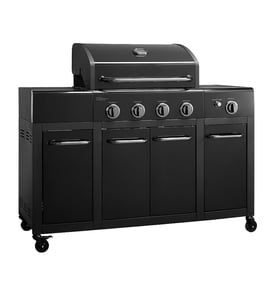


How do you tell what type of grill you have?
You can tell what type of grill you have by checking the fuel system and identification label. For Kenmore model 14658841810, the user manual specifies it is an LP (propane) gas grill used outdoors with the supplied regulator/valve assembly; the model number on the rating label confirms the exact grill.
- Look for the rating label (often on the cart frame, inside a door, or near the control panel) and match the model number: 14658841810.
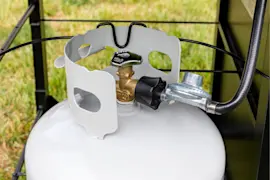
- Check the fuel connection: an LP grill uses a propane cylinder and regulator hose.
- Confirm the control layout: gas grills have control knobs feeding a manifold and burners.
- Review the parts diagram and parts list to match your cart, firebox, and control panel layout.
- Verify safety notes: this model is intended for outdoor use only and should never be used in enclosed spaces.
The owner's manual confirms key identifiers for this model:
- Designed for residential outdoor use
- Uses LP (propane) gas only with the supplied regulator/valve assembly
- Requires clearances (for example, keep the grill at least 3 ft. from walls and maintain extra clearance from ignition sources)
| Grill type | Main identifier | Typical fuel source |
|---|---|---|
| Gas grill (LP) | Regulator hose connects to a propane cylinder | 20 lb LP tank |
| Gas grill (natural gas) | Fixed gas supply line connection | Home NG line |
| Charcoal grill | No gas manifold or regulator | Charcoal/briquettes |
| Pellet grill | Hopper and auger feed system | Wood pellets |
Correct identification helps you choose the right replacement parts (igniter, manifold, panels) and follow the right safety and lighting steps. Using the wrong fuel type or mismatched gas components can cause ignition problems and unsafe operation.
Last updated: February 2026
How to find Kenmore Grill model number?
Your Kenmore grill model number is printed on the rating label attached to the grill body, typically on the back panel of the grill base or inside the cabinet area. For Kenmore model 14658841810, match the full number exactly before ordering parts or using troubleshooting steps in the owner's manual.
Check these common label locations first:
- Back panel of the grill base (rear of the cart)
- Inside the cabinet (open the doors and look on side walls or the back)
- Near the firebox area on the frame (behind or below the control panel)
- On a side panel near the propane tank mounting area
Record the information exactly as shown on the label:
- Model number (example: 14658841810)
- Color/version if listed (some Kenmore grills share a manual across colors)
- Any additional ID numbers on the same label (helpful for parts matching)
The model number is what ties your grill to the correct parts diagram and replacement parts. Kenmore grills often have similar-looking frames and control panels, but the manifold, igniter, and hardware can differ by model.
Use this table to avoid common mix-ups:
| What you see | What it means | What to do |
|---|---|---|
| 146.58841810 | Same model family as 14658841810 | Use the full model number when searching parts |
| Multiple 146.xxx numbers in the manual | One guide covers several color variants | Match your exact label number |
| Missing or unreadable label | Model ID is not available on the grill | Use the parts diagrams in the manual to visually match assemblies |
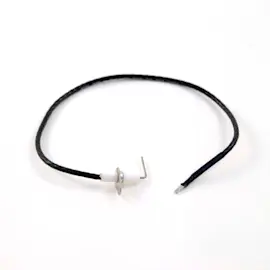
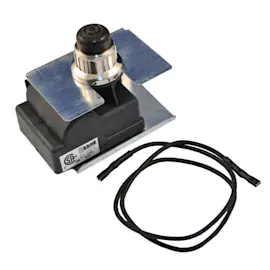
Once you have the model number, use it to match parts by name and ID. Common examples for this model include the gas grill manifold 30400047 and gas grill igniter 30400052 (choose the exact part that matches your grill’s configuration).
Last updated: February 2026
How to tell if a regulator is bad on a gas grill?
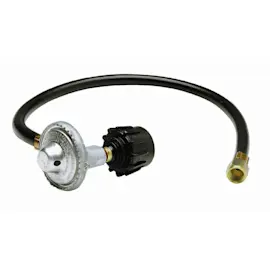
On your Kenmore 14658841810 gas grill, a bad regulator typically shows up as very low flames, trouble lighting, or a loud rushing sound at the tank connection. Confirm by doing the leak test and connection checks in the owner's manual before replacing any gas-train parts.
- Flames are unusually low even with burners set to HIGH
- Grill lights, but heat output is weak or inconsistent
- You hear a rushing sound when opening the LP tank valve (shut the tank off immediately)
- The regulator or tank connection shows bubbles during a soapy-water leak test
- The regulator frosts over during use (shut the grill and tank off immediately)
- Turn all control knobs to OFF.
- Make sure the regulator is tightly connected to the LP tank and the nipple is centered in the tank valve.
- Open the LP tank valve slowly. If you hear a rushing sound, turn the gas off immediately and correct the connection.
- Brush a soapy-water solution on the regulator, hose, and valve connection points; bubbles indicate a leak.
If the grill still has low flames after you shut everything off and reconnect the regulator, the issue is usually one of these: restricted gas flow (regulator), a tank valve flow-limiting condition, or a leak at the coupling seal.
| Symptom | Most likely cause | What to do next |
|---|---|---|
| Low flames on all burners | Regulator flow restriction or tank valve limiting | Reconnect and leak-test; replace regulator/hose assembly if needed |
| Bubbles at coupling | Loose connection or damaged seal | Reseat connection; leak-test again |
| Frosting at regulator | Cylinder problem | Stop using that cylinder and replace it |
| Humming/whistling | Normal regulator noise | No repair needed if flames are normal |
A regulator that is leaking or not controlling pressure correctly can cause unsafe operation and poor burner performance. Leak testing and proper connection technique prevent flare-ups, gas odor issues, and ignition problems.
Related help: how to replace a gas grill pressure regulator
Last updated: February 2026
What is the average lifespan of a gas grill?
A gas grill typically lasts 10 years. With consistent cleaning, safe operation, and replacing wear items (like igniters and gas valves) as needed, many grills run 5 to 15 years. Use the care and safety steps in the 14658841810 owner's manual to help your Kenmore grill reach the high end of that range.
- Heat and grease exposure: flare-ups and heavy grease buildup accelerate corrosion
- Storage and weather: rain, salt air, and freeze-thaw cycles shorten life
- Cleaning habits: regular firebox and lid cleaning prevents rust and blocked airflow
- Gas system condition: worn hoses, valves, or regulator issues can end a grill’s usable life early
- How often you cook: frequent high-heat grilling wears burners and ignition parts faster
We follow the same basics recommended in the Kenmore Use and Care guidance:
- Check hoses before each use for cuts or wear; replace damaged hoses promptly
- Confirm valves operate correctly (knobs spring back and turn smoothly)
- Clean the inside of the lid and bottom with detergent and water or a grill cleaner; rinse and air dry
- Keep vents and openings clear (do not block holes in the sides or back)
- Operate with proper clearances and in a well-ventilated outdoor space
| Symptom | Usually means | Typical fix path |
|---|---|---|
| Uneven heat or cold spots | Burner ports clogged or burner worn | Clean burners; replace burner if needed |
| Won’t ignite but gas flows | Igniter/electrode issue | Replace igniter (see parts below) |
| Knobs don’t spring back or valves feel stuck | Valve/manifold wear | Replace manifold/valve assembly |
| Heavy rust-through in firebox | Structural failure | Replacement grill is often the practical choice |
If ignition or gas control is the weak point, these model-matched parts are common fixes:
A grill can still “light,” but worn valves, damaged hoses, and heavy grease buildup raise the risk of flare-ups and unsafe operation. Routine checks and cleaning protect performance, fuel efficiency, and safety.
Last updated: February 2026