Owner’s manual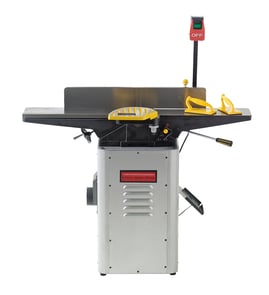


Where can I buy CRAFTSMAN replacement parts?
You can buy replacement parts for your Craftsman jointer/planer model 113232210 through our parts listings and diagrams, using the exact model number and the part number from the 113232210 owner's manual. This is the most reliable way to match parts like the switch, guard, belt-drive items, and hardware to your specific tool.
Best way to get the right part for model 113232210
Use the parts list in the manual and order by part number (not the diagram key number). The manual also notes the model number is on a plate attached to the base, which helps confirm you are shopping the correct Craftsman jointer/planer.
- Confirm the model tag reads 113232210
- Find the part in the manual parts list (examples include switch assembly, cutter assembly, table assembly)
- Write down the part number and description
- Compare the part name to what you are replacing (for example, switch, capacitor, guard, spring)
- Order the part using the model number and part number
Common parts people replace on this jointer/planer
These are examples pulled from the model 113232210 parts lists to help you know what to look for.
| Assembly area | Examples of parts listed | What it affects |
|---|---|---|
| Switch assembly | Locking switch, relay, capacitor, key-switch | Power on/off and electrical starting |
| Cutter assembly | Cutter, wedge, blade, screws | Cut quality and snipe/chatter |
| Table/guard area | Guard, torsion spring, dovetail spacer/slide | Safety guarding and smooth adjustments |
Why it matters
Craftsman tools often have similar-looking parts across model families. Ordering by model 113232210 and the exact part number prevents fit issues, wiring mismatches (switch/relay/capacitor), and safety problems (guard and spring).
Last updated: February 2026
Is there a jointer planer combo?
Yes. A jointer/planer combo is a single woodworking machine that performs both jointing (flattening and squaring an edge/face) and planing (thicknessing). Your Craftsman model 113232210 is a jointer/planer, so it is already a combo tool; see the 113232210 owner's manual for setup, alignment, and safe operation.
What a jointer/planer combo does
A combo jointer/planer is built to handle two common stock-prep steps with one cutterhead and tables.
- Jointer function: flattens one face and squares one edge using the infeed/outfeed tables, fence, and cutter guard
- Planer function: removes material to bring boards to a consistent thickness (on this style of machine, the manual focuses heavily on safe feeding and depth-of-cut control)
- Shared cutterhead: the cutterhead speed and pulley sizing matter for safe cutting and to reduce kickback risk
Key safety and setup points (model 113232210)
The manual for this Craftsman jointer/planer calls out several must-do items before you run the tool.
- Mount the jointer/planer securely and keep it upright before turning power on (gravity-sensitive starting relay)
- Do assembly and alignment before plugging in
- Keep the work area clear; do not leave the tool running unattended
- Use a light depth of cut; deep cuts make feeding harder and increase kickback risk
- If you hear unusual noise or feel excessive vibration, stop and correct the cause before restarting
Quick comparison: combo vs separate machines
| Option | Best for | Tradeoffs |
|---|---|---|
| Jointer/planer combo (like 113232210) | Saving space; one machine for stock prep | More setup discipline; you rely on one cutterhead for both operations |
| Separate jointer + thickness planer | Higher throughput; dedicated setups | More floor space; higher total cost |
Why it matters
Using a true jointer/planer combo helps you prep lumber accurately in a smaller shop, but safe results depend on correct alignment, proper feed rate, and conservative depth of cut to prevent binding and kickback.
Last updated: February 2026
What sizes do jointers come in?
Jointer sizes are usually described by the maximum board width the cutterhead can joint in one pass. Common sizes are 6-inch, 8-inch, and 10-inch jointers; your Craftsman model 113232210 is a 6-1/8 inch jointer/planer, which fits the most common “6-inch class” size.
Common jointer sizes (and what they’re best for)
- 6-inch (including 6-1/8 inch models like 113232210): general home-shop use; edging and flattening narrower stock
- 8-inch: more capacity for wider boards; fewer glue-ups needed
- 10-inch and larger: production work and wide stock; heavier machines with more power
- Benchtop vs. floor-standing: benchtop units are compact; floor models are heavier and typically run smoother
- Capacity is width, not thickness: width rating is the key “size” spec for jointers
How to choose the right size for your projects
Pick the size based on the widest boards you joint most often, plus the space and power you have available.
| If you usually work with… | A good jointer size is… | Why it fits |
|---|---|---|
| 1x and 2x lumber, small panels | 6-inch class | Handles most common stock efficiently |
| Furniture parts, wider hardwood boards | 8-inch | More width capacity, less ripping and re-gluing |
| Wide slabs and large panels | 10-inch+ | Maximum capacity and stability |
Why it matters
A wider jointer reduces extra steps (ripping, jointing, and re-gluing) and helps you keep faces and edges flatter with fewer passes. For safer, cleaner results on the 113232210, we follow the manual’s guidance to keep the depth of cut between 1/32 and 1/16 inch for most operations. See the owner's manual for operating and safety details.
Last updated: February 2026
Who makes the best jointer planer combo?
For a jointer/planer combo, the “best” brand depends on your budget, shop space, and how often you’ll run hardwood through it. For Craftsman model 113232210, we focus on safe setup, correct cutterhead speed, and proper alignment so you get straight, smooth cuts regardless of brand; use the owner's manual as your baseline.
What “best” usually means for a jointer/planer combo
Most woodworkers judge combo machines on these factors:
- Cut quality and repeatability (tables stay coplanar; fence stays square)
- Changeover speed (jointer to planer and back)
- Cutterhead type (straight knives vs helical inserts)
- Dust collection and chip ejection (less clogging, cleaner finish)
- Parts support and serviceability (belts, bearings, knives, switches)
How to compare brands quickly
Use this checklist when you’re comparing any jointer/planer combo to what you already know from a Craftsman-style jointer/planer.
| What to compare | What to look for | Why it matters |
|---|---|---|
| Cutterhead speed | Stable RPM under load | Reduces tear-out and chatter |
| Fence design | Rigid, easy-to-lock, stays square | Improves edge-joint accuracy |
| Table adjustment | Smooth, backlash-controlled | Makes depth-of-cut consistent |
| Guard and controls | Easy to use every pass | Improves safety and workflow |
Model-specific safety note that applies to any brand
Your Craftsman 113232210 manual calls out two points that translate directly to evaluating and using any combo machine:
- Do not power on until assembly and alignment are complete.
- Cutterhead speed matters; changing pulleys or motor type changes RPM and can increase the risk of binding, kickback, or thrown blades.
- Never leave the tool running unattended; shut it off and wait for a complete stop.
Why it matters
A premium jointer/planer combo can be a great investment, but even the best machine performs poorly if the tables are out of alignment, the fence is not square, or the cutterhead speed is incorrect. Starting with the correct setup and safety practices protects your workpiece, your knives, and your hands.
Last updated: February 2026