


How many years should a snowblower last?
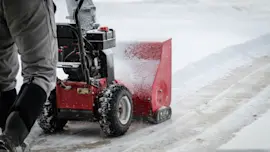
A snowblower typically lasts 10 to 20 years. For your Craftsman model 536918000 snowblower, lifespan depends most on routine maintenance, proper storage, and avoiding impact damage; those factors determine whether you land closer to 10 years or closer to 20.
Typical lifespan by snowblower type
Most owners see these ranges with normal residential use and basic upkeep:
- Single-stage (lighter duty): 8 to 15 years
- Two-stage (most common): 10 to 20 years
- Heavy-duty/pro grade: 15 to 25 years
| What affects lifespan most | What it looks like in real use |
|---|---|
| Maintenance consistency | Fresh fuel practices, lubrication, timely wear-part replacement |
| Storage conditions | Dry storage reduces rust, seized cables, and chute binding |
| Snow conditions | Heavy, icy snow increases wear on auger and drive components |
| Operator habits | Avoiding gravel, curbs, and hidden objects prevents major damage |
Maintenance that adds the most years
These actions extend the service life of a Craftsman snowblower like 536918000:
- Change engine oil on schedule (at least once per season for heavy use)
- Use fresh fuel; add fuel stabilizer before off-season storage
- Inspect and replace worn shear pins promptly
- Check auger belt and drive belt for cracking, glazing, and slippage
- Keep skid shoes adjusted so the housing does not grind into pavement
- Clear packed snow after use and let the unit dry before storing
Signs it is nearing end-of-life
A snowblower can still be repairable, but these issues often signal rising repair frequency:
- Repeated belt failures or ongoing traction problems
- Loud gearbox noises, binding, or metal debris
- Persistent hard-starting after basic tune-up items are addressed
- Excessive vibration from bent auger/impeller or crankshaft damage
- Rust-through on the housing or chute that affects performance
Why it matters
If your snowblower is still within the typical 10 to 20-year window, replacing common wear items (belts, shear pins, skid shoes, scraper bar) usually restores performance and helps prevent bigger failures.
To confirm you are using the correct model number when looking up replacement parts, use how to find your appliance model number (and what it means for parts).
Last updated: February 2026
How to tell year of Craftsman snowblower by serial number?
You can tell the build year of a Craftsman snowblower by decoding the serial number format used on the machine. For Craftsman model 536918000 (20" snow blower), the key is identifying whether the serial tag follows a Craftsman-style code or an MTD-style code, then reading the year digit(s) in that pattern.
Step 1: Find the correct ID tag
Most Craftsman snowblowers have a model and serial tag on the frame near the engine, chute base, or rear housing.
- Clean the tag so every character is readable
- Write down the full serial number (letters and numbers)
- Note whether the serial starts with letters (often MTD-style) or is mostly numeric
- If the tag is missing, check for a stamped number on the frame
For help confirming you are using the right model identifier, use how to find your appliance model number (and what it means for parts).
Step 2: Decode the year from the serial number
Craftsman snowblowers commonly fall into one of these serial number patterns.
- Craftsman-style serial format: the 5th character is the year within a decade
- MTD-style serial format (common on Craftsman units): the first 5 characters often contain the date code; the letter indicates the month and the following digits indicate day and year within the decade
Quick decoding guide
| Serial number type | What to look for | How you get the year |
|---|---|---|
| Craftsman-style | 5th character | A single digit gives the year in the decade (example: “1” can mean 2001 or 2011) |
| MTD-style | Month letter + digits | Month letter (A=Jan through L=Dec), then digits for day and year-in-decade |
How to choose the correct decade (2001 vs 2011, etc.)
A single year digit repeats every 10 years, so we narrow it down using what matches the machine.
- Compare the snowblower’s styling and controls (older units often have simpler dash layouts)
- Check engine label date codes (many small engines include a manufacture date or code)
- Look for emissions label wording; newer labels typically reference more recent standards
- Consider purchase history and typical service life
Why it matters
Knowing the build year helps us match the correct Craftsman parts diagrams and avoid ordering the wrong auger belt, friction wheel, shear pins, or carburetor parts for your 536918000 snowblower.
Last updated: February 2026
Is it cheaper to repair or replace a snowblower?
For a Craftsman 536918000 20" snow blower, it’s cheaper to repair when the fix is a normal wear item and the total repair cost stays under about half the price of a comparable new snowblower. Replacement makes more sense when the engine or drive system needs major work, or when you’re paying for repeated repairs every season.
A practical cost rule we use
If you can restore reliable starting, throwing, and drive performance with basic maintenance parts and 1 to 2 hours of labor, repair is the better value. If the repair involves major assemblies or multiple systems at once, replacement usually wins.
Common “repair” situations:
- Won’t start due to old fuel, fouled spark plug, or carburetor varnish
- Poor throwing caused by a worn belt, shear pins, or packed chute
- Drive issues caused by a stretched traction belt or worn friction components
Common “replace” situations:
- Low compression, heavy smoking, or internal engine damage
- Gearcase or auger drive failures that require extensive teardown
- Severe rusted structure (handles, housing, auger area) that keeps spreading
Quick checklist: repair vs replace
- Repair if it’s a single, clear problem and the machine is otherwise solid
- Replace if you have 2 or more major symptoms (starting + drive + auger) at the same time
- Repair if you can do the work yourself and only need standard tune-up items
- Replace if you rely on paid labor and the estimate approaches 50% of a new unit
Typical cost comparison (what you’re paying for)
| Scenario | What’s involved | Usual best choice |
|---|---|---|
| Basic no-start | Fuel system cleanout, spark plug, fresh fuel | Repair |
| Weak auger/throw | Belt(s), shear pins, chute cleanup | Repair |
| No drive/poor drive | Traction system diagnosis, belt/friction service | Repair |
| Major engine problem | Internal engine repair or replacement | Replace |
Why it matters
A snowblower like the Craftsman 536918000 is most cost-effective when you treat it like seasonal equipment: fresh fuel, correct oil level, and replacing wear parts before they fail. That prevents the expensive “cascade” where one neglected issue leads to multiple repairs.
Helpful next step
If you’re unsure whether you’re looking at a simple electrical or wiring issue versus a bigger mechanical failure, use a meter to confirm power and continuity before buying parts; our guide how to use a multimeter to test electrical parts video walks through the basics.
Last updated: February 2026
What's better, a 2 stage or 3 stage snow blower?
A 2-stage snow blower is the better choice for most homeowners because it balances power, traction, and maneuverability for typical driveways and sidewalks. A 3-stage is better when you regularly face very deep, heavy, wet, or plow-packed snow and want faster clearing with less bogging down.
2-stage vs 3-stage: what changes in performance
Both types use an auger and an impeller, but a 3-stage adds an accelerator (a third rotating component) that helps break up dense snow and feed it into the impeller faster.
- 2-stage: strong all-around performance; handles mixed conditions well
- 3-stage: faster intake in heavy, icy, or end-of-driveway snow
- Clearing speed: 3-stage typically clears faster in tough snow; 2-stage is plenty for average storms
- Control: 2-stage units are often easier to maneuver and “feel” lighter at the handles
- Maintenance: 3-stage designs add complexity (more moving parts to inspect)
How to choose for a Craftsman 536918000 (20" snow blower)
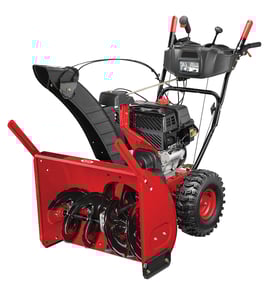
Your Craftsman 536918000 is a 20 inch snow blower, which is commonly sized for smaller to mid-size areas. In that use case, a 2-stage machine is usually the practical sweet spot unless your snow is consistently heavy and deep.
Use this quick decision guide
| Your conditions | Better pick | Why |
|---|---|---|
| Typical residential snowfall, 2 to 10 inches at a time | 2-stage | Versatile and easier to handle |
| Frequent wet, heavy snow or plow berms | 3-stage | Breaks up and feeds dense snow faster |
| Tight spaces, narrow paths, lots of turning | 2-stage | Better maneuverability |
| Large driveway and you want maximum speed | 3-stage | Higher throughput in demanding conditions |
Why it matters
Choosing the right stage helps you avoid clogging, slow clearing, and excessive wear on shear pins, belts, and the auger/impeller system. Matching the machine to your snow type and area size usually matters more than simply buying the “most stages.”
Parts and model matching tip
When you are comparing machines or ordering replacement parts, always match by the full model number (536918000) so you get the correct auger drive, traction drive, and chute components. Our guide on how to find your appliance model number (and what it means for parts) helps you confirm the model tag location and what the numbers mean.
Last updated: February 2026