Installation guide
 Owner’s manual
 Error Codes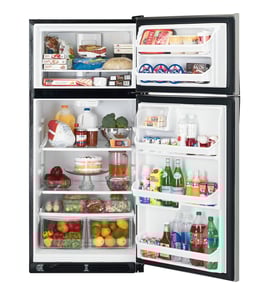


How to reset a Frigidaire refrigerator?
For the Frigidaire FFTR1814TWG top-mount refrigerator, the most reliable “reset” is a power reset: unplug the refrigerator (or switch off the breaker) for about 5 minutes, then restore power and allow the controls and cooling system to restart normally. Use the FFTR1814TWG owner’s manual for control-specific steps.
Quick reset options (in order)
- Power reset (best first step): Unplug for 5 minutes, then plug back in.
- Cooling system off/on reset: Turn the temperature control to “0” (stops cooling), wait 5 minutes, then return to your normal setting.
- After a power outage: Restore power, confirm interior lights come on, then give the refrigerator time to stabilize.
- If you were adjusting temperatures: Make small changes and wait 24 hours between adjustments.
Important safety notes
- Turning the control to “0” stops cooling but does not disconnect power; unplugging is what removes power.
- Plug the refrigerator into a properly grounded 3-prong outlet; avoid extension cords and adapter plugs.
- Unplug before cleaning or replacing a light bulb.
What to expect after a reset
| What you did | What it resets | What happens next |
|---|---|---|
| Unplugged for 5 minutes | Control “glitches” and basic electronics | Compressor and fans restart; temps recover over several hours |
| Set control to “0” then back | Cooling cycle only | Cooling resumes; allow time for stabilization |
| Adjusted temperature settings | Temperature targets | Wait 24 hours to judge results |
Why it matters
A reset clears minor control hiccups and restarts the compressor and fans. It also prevents unnecessary parts replacement when the real issue is a temporary power or control interruption.
Last updated: February 2026
Is the Frigidaire FFTR1814TWG garage ready?
Yes. The Frigidaire FFTR1814TWG top-mount refrigerator is designed for garage use when the surrounding temperature stays within the recommended operating range (commonly about 45°F to 110°F). For the exact guidance and control settings for your unit, follow the FFTR1814TWG installation guide.
Recommended garage setup
- Keep the refrigerator plugged into a properly grounded outlet (no extension cord).
- Set the cabinet level so it sits solidly on all corners.
- Confirm the anti-tip bracket is installed if your setup requires it.
- Set the fresh food and freezer controls to the recommended starting positions.
- Recheck door closing and sealing after the unit is loaded.
Temperature range and what to expect
| Garage condition | What you may notice | What we recommend |
|---|---|---|
| 45°F to 110°F | Normal cooling performance | Use standard control settings |
| Near the low end (around 45°F) | Longer run times or less frequent cycling | Monitor freezer temps for 24 hours |
| Near the high end (around 110°F) | Longer run times, warmer cabinet exterior | Allow extra airflow around the cabinet |
Quick checks if cooling seems “off” in the garage
- Verify both temperature controls are set correctly.
- Make sure the doors close fully and the gaskets seal all the way around.
- Leave space around the refrigerator for ventilation.
- Avoid frequent door openings during very hot or very cold weather.
- If you see frost buildup or warm freezer temps, inspect the defrost system components (for example, the refrigerator defrost heater 242044008).
Why it matters
Garages swing hotter and colder than kitchens. Staying within the recommended ambient range helps the compressor, evaporator fan, and defrost system maintain stable refrigerator and freezer temperatures.
Last updated: February 2026
What is the most common problem with a Frigidaire refrigerator?
The most common issue we see with Frigidaire refrigerators like model FFTR1814TWG is a cooling problem: the freezer may seem OK while the fresh food section warms up. This is usually tied to restricted airflow (frost buildup), dirty condenser coils, or a fan problem that stops cold air from circulating.
Most common symptoms customers notice
- Freezer is cold but refrigerator section is warm
- Frost or ice buildup on the freezer back wall
- Temperature swings; food freezes in the fridge or spoils early
- Louder-than-normal fan noise, or no fan sound at all
- Ice maker (if equipped) slows down because the freezer is not cold enough
Quick checks we recommend first (no tools)
- Confirm control settings and give changes time to work (allow about 24 hours to stabilize).
- Look for airflow blockage: overpacked shelves can block vents between freezer and refrigerator.
- Check for frost buildup on the freezer rear panel; heavy frost often points to a defrost system issue.
- Clean the condenser area (dust buildup makes it harder to remove heat).
- If the unit was just plugged in, allow the cool-down period before judging temperatures (the manual recommends at least 8 hours with doors closed).
For model-specific operating guidance and “Before you call” troubleshooting, use the FFTR1814TWG owner's manual.
Common causes and what they typically affect
| Likely cause | What you’ll usually see | Common next step |
|---|---|---|
| Dirty condenser coils | Warm fridge, longer run times | Clean coils and recheck temps |
| Defrost system problem (heater/thermostat) | Frosted freezer panel, weak airflow | Inspect/test defrost parts; replace as needed |
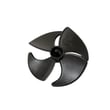
| Evaporator fan issue | Little to no airflow to fridge, odd noises | Check fan motor/blade; replace failed part |
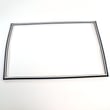
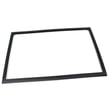
| Door not sealing | Moisture, frost, temps drift | Inspect gasket and door alignment |
Parts that often solve cooling and frost complaints
If troubleshooting points to the defrost system or airflow, these model-compatible parts are common fixes:
- Refrigerator defrost heater 242044008 (helps clear frost from the evaporator)
- Refrigerator defrost bi-metal thermostat 5303918634 (helps control defrost cycling)
- Refrigerator evaporator fan motor 242219204 (moves cold air into the refrigerator section)
Why it matters
Cooling problems are usually airflow-related; when cold air cannot move from the freezer to the fresh food compartment, the refrigerator warms up even though the freezer still feels cold. Catching frost buildup early also helps prevent longer run times and food spoilage.
Last updated: February 2026