


How much does it cost to run a 6000 BTU AC for a month?
A 6,000 BTU air conditioner typically costs $15 to $35 per month to run when it’s used about 8 hours per day and electricity is around $0.15 per kWh. Your actual cost depends on the unit’s running watts, daily runtime, and your local rate.
Quick way to estimate your monthly cost
Use this formula:
- Monthly cost = (Watts ÷ 1000) × hours/day × 30 × $/kWh
- Most 6,000 BTU window or portable units run around 400 to 650 watts while the compressor is on.
Example cost table (common scenarios)
| Running watts | Hours/day | Rate ($/kWh) | Est. monthly cost |
|---|---|---|---|
| 450 W | 8 | 0.15 | $16.20 |
| 600 W | 8 | 0.15 | $21.60 |
| 600 W | 12 | 0.15 | $32.40 |
| 650 W | 12 | 0.20 | $46.80 |
What changes the cost the most
- Thermostat setting (lower setpoints run longer)
- Outdoor temperature and humidity (more heat load increases runtime)
- Insulation and air leaks (poor sealing increases run time)
- Filter and coil cleanliness (restricted airflow raises energy use)
- Unit efficiency and age (older units typically use more electricity)
How this relates to your Goodman CKJ60-1
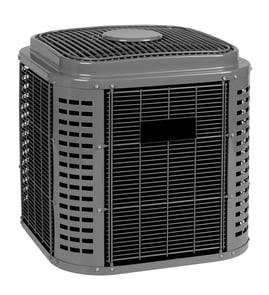
The Goodman CKJ60-1 is a central A/C condensing unit, not a 6,000 BTU room A/C. Central systems are much higher capacity, so monthly operating cost is typically higher. If the outdoor unit has trouble starting or runs inconsistently, a weak run capacitor is a common cause.
Parts that can affect starting and run behavior
| Part | What it can cause when failing |
|---|---|
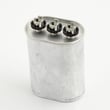
| Capacitor CAP050800440RTP | Hard starting, humming, fan not spinning |
| Capacitor 60 CAP050600440RTP | Compressor or fan struggles to start, overheating |
| Capacitor 45 12769 | Intermittent starting, reduced performance |
Why it matters
Estimating operating cost helps you spot abnormal energy use. If your bill jumps without a weather change, longer runtime from airflow restrictions or a weakening capacitor is often the reason.
Last updated: February 2026
How to tell AC tonnage by model number?
For Goodman model CKJ60-1, the “60” in the model number typically indicates about 60,000 BTU/h of cooling capacity, which equals 5 tons (60,000 ÷ 12,000). We use this same BTU-to-tons method across most central AC condensing units.
Quick tonnage math (BTU to tons)
Use this simple conversion:
- Find the capacity code in the model number (often 18, 24, 30, 36, 42, 48, 60)
- Treat it as thousands of BTU/h (example: 36 = 36,000 BTU/h)
- Divide BTU/h by 12,000
- The result is the nominal tonnage
| Capacity code | Approx. BTU/h | Approx. tons |
|---|---|---|
| 24 | 24,000 | 2 |
| 36 | 36,000 | 3 |
| 48 | 48,000 | 4 |
| 60 | 60,000 | 5 |
What to check if the model number is unclear
If the number is missing, worn off, or doesn’t follow the common pattern, these checks help confirm capacity:
- Look for the data plate on the outdoor condensing unit cabinet
- Compare the outdoor unit size with the indoor coil/air handler match (mismatches reduce performance)
- Check the compressor and fan motor nameplate ratings for clues
- Verify the electrical specs match what a unit of that tonnage typically uses
If you’re troubleshooting cooling issues while confirming capacity, testing electrical components can be part of the process; our how to use a multimeter to test electrical parts video can help you do that safely and correctly.
Why it matters
Correct tonnage affects comfort and efficiency. An oversized unit can short-cycle and leave humidity high; an undersized unit can run constantly and still not keep up on hot days.
Last updated: February 2026
What are the common problems with Goodman AC units?
Common problems we see on Goodman central AC condensing units like model CKJ60-1 include not cooling, weak airflow, outdoor unit not starting, buzzing or rattling noises, and intermittent shutdowns. Many issues trace back to power and control parts, dirty coils, or failing start/run components.
Most common symptoms and what they usually point to
- Outdoor unit will not start: tripped breaker, disconnect issue, thermostat call not reaching the condenser, or a failed contactor/capacitor
- Runs but does not cool: dirty condenser coil, low refrigerant charge, restricted airflow indoors, or compressor problems
- Buzzing or chattering at the unit: worn contactor contacts, loose wiring, or failing capacitor
- Fan runs but compressor does not: weak run capacitor, hard-start issues, or compressor electrical fault
- Short cycling (starts and stops quickly): overheating from dirty coil, electrical control issues, or refrigerant problems
Parts that commonly fail on outdoor condensing units
These are frequent wear items on many Goodman condensers, and they are also common suspects when the unit will not start or hums.
| Part type | What it does | Common failure signs |
|---|---|---|
| Contactor | Sends line voltage to compressor and fan | clicking/buzzing, pitted contacts, unit will not start |
| Run capacitor | Helps start and run the compressor/fan | humming, hard starts, fan or compressor not running |
| Filter drier | Helps keep moisture/debris out of the sealed system | restriction symptoms after sealed-system work |
If you are diagnosing a no-start or humming issue, the capacitor CAP050800440RTP and capacitor 40 12871 are examples of run capacitors listed for CKJ60-1, and the contactor is another common electrical failure point.
Safe, practical checks you can do first
- Set thermostat to cool and lower setpoint; confirm indoor blower is running
- Check the breaker and outdoor disconnect (power must be present)
- Clear debris and keep at least 18 to 24 inches of space around the condenser
- Inspect for obvious burnt wires or loose connections (power off)
- If the unit hums but will not start, test the capacitor with a meter (power off and discharged)
For electrical testing basics, use how to use a multimeter to test electrical parts video.
Why it matters
Catching a weak capacitor or failing contactor early helps prevent repeated hard starts, nuisance shutdowns, and added strain on the compressor, which is the most expensive component in the outdoor unit.
Last updated: February 2026
What is the average lifespan of a Goodman AC unit?
A Goodman central air conditioner condensing unit like model CKJ60-1 typically lasts 12 to 15 years. With correct installation, clean airflow, and yearly service, many units reach 15 to 20 years before major repairs (like a compressor or coil issue) become more likely.
What affects lifespan the most
- Installation quality: correct refrigerant charge, proper airflow, and correct electrical sizing
- Maintenance: keeping the outdoor coil clean and the indoor filter changed regularly
- Runtime and climate: long cooling seasons and extreme heat shorten life
- Electrical health: stable voltage and tight wiring connections reduce contactor and capacitor wear
- Refrigerant system condition: leaks and moisture contamination accelerate failures
Typical lifespan ranges (what to expect)
| Condition | Typical lifespan | What you usually see |
|---|---|---|
| Minimal maintenance | 8 to 12 years | higher energy use, more hard-starts, more service calls |
| Average maintenance | 12 to 15 years | occasional repairs (capacitor, contactor) |
| Excellent maintenance | 15 to 20 years | fewer breakdowns, steadier cooling performance |
Repairs that commonly show up as a unit ages
These are common wear items on outdoor condensing units and often cost far less than replacing the whole system:
- Run capacitor issues (humming, fan not starting, compressor struggles to start)
- Contactor problems (outdoor unit will not turn on, chattering, burned contacts)
- Wiring and connection problems (overheating, intermittent operation)
If you are troubleshooting electrical symptoms, our how to use a multimeter to test electrical parts video can help you test safely and accurately.
Why it matters
Knowing the expected lifespan helps you decide whether to invest in a repair (like a capacitor or contactor) versus planning for replacement, especially if cooling performance is dropping or repairs are becoming frequent.
Last updated: February 2026