
What size blade is a craftsman 137271180 table saw?
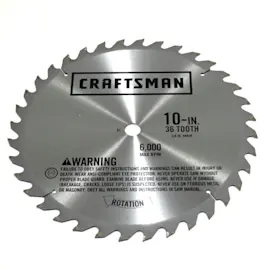
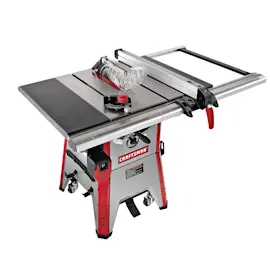
The Craftsman table saw model 137271180 typically uses a 10-inch table saw blade (the most common size for this class of saw). To confirm fit, match the blade’s arbor hole to your saw’s arbor size and verify the maximum blade diameter listed for your saw in table saw common question.
How to confirm the blade size and fit
Check these items before you buy or install a new blade:
- Blade diameter: Most jobsite and contractor-style table saws use 10-inch blades.
- Arbor hole size: Common sizes are 5/8 inch (most common) and 1 inch (less common).
- Kerf (tooth width): Thin-kerf blades reduce load on the motor; full-kerf blades are more rigid.
- Max RPM rating: The blade’s max RPM should meet or exceed your saw’s no-load speed.
- Blade type: Rip, crosscut, combination, or fine-finish depending on material.
Quick blade selection guide
| What you’re cutting | Recommended blade type | Typical tooth count |
|---|---|---|
| Framing lumber | Combination | 40T to 50T |
| Plywood, veneered panels | Fine-finish | 60T to 80T |
| Fast ripping in thick stock | Rip | 24T to 30T |
| General shop use | Combination | 40T to 50T |
Why it matters
Using the correct blade diameter and arbor hole keeps the blade properly clamped, reduces vibration, and helps the Craftsman 137271180 cut straighter with less burning and kickback risk.
If your cuts look off after a blade change
A new blade can reveal alignment issues. These guides help you dial it in:
Last updated: February 2026
How do I get rid of an old table saw?
For a Craftsman table saw model 137271180, the best way to get rid of it is to reuse it if it still runs (sell, donate, or give away) or recycle it as scrap metal/e-waste if it’s broken. Before it leaves your shop, make it safe by removing the blade and securing loose parts.
Safe prep steps before disposal
- Unplug the saw and remove the switch key (if equipped).
- Remove the blade; store it in a rigid sleeve or wrap the teeth to prevent cuts.
- Lower the blade fully and lock the bevel/height adjustments.
- Remove accessories (miter gauge, rip fence, throat plate) and bag small hardware.
- If the cord is damaged, tape the plug to the cord so it can’t be energized.
Best disposal options (most common)
- Sell or give away (working saw): List it locally as “Craftsman 137271180 table saw” and note any missing guards or fence issues.
- Donate (working or repairable): Many reuse centers accept power tools if they’re complete and safe to transport.
- Recycle (non-working saw): Take it to a scrap metal recycler or a local transfer station that accepts tools.
- Haul-away service: Use a local junk removal service if you can’t transport it.
What to do with the blade and other materials
| Item | Recommended handling | Why |
|---|---|---|
| Saw blade | Wrap teeth; recycle as metal where accepted | Prevents injuries during handling |
| Motor and wiring | Treat as e-waste where required | Some areas restrict electronics in trash |
| Cast/steel table and stand | Scrap metal recycling | Keeps heavy metal out of landfill |
Why it matters
Table saws are heavy, have sharp edges, and often contain reusable metal and electrical components. Prepping it safely reduces injury risk and helps ensure it’s handled correctly by donation centers or recyclers.
For more table saw care and end-of-life decisions (including what’s worth fixing), use our DIY overview: table saw common question.
Last updated: February 2026
Can you use an 8 inch blade on a 10 inch table saw?
Yes, you can use an 8-inch blade on a 10-inch table saw like the Craftsman 137271180 as long as the blade’s arbor hole matches your saw’s arbor size and the blade is rated for the saw’s RPM. The tradeoff is reduced maximum cut depth.
What changes when you downsize to an 8-inch blade
Using a smaller diameter blade is usually fine for light-duty cuts, but it affects capacity and setup.
- Shallower cut depth: an 8-inch blade cuts less deep than a 10-inch blade.
- Guard and riving knife alignment: the blade may sit lower, so the guard, splitter, or riving knife might not line up correctly.
- Fence and miter accuracy still matters: a smaller blade does not fix alignment issues.
- Blade selection matters more: choose the right tooth count and grind for plywood vs. ripping.
- Kickback risk can increase if the riving knife/guard cannot be used properly.
Quick compatibility checklist (what must match)
| Item to check | What you want | Why it matters |
|---|---|---|
| Arbor hole | Matches the saw arbor (commonly 5/8 inch on many 10-inch saws) | Prevents wobble and unsafe mounting |
| Blade RPM rating | At or above the saw’s no-load RPM | Prevents blade failure |
| Kerf thickness | Works with your riving knife/splitter (if used) | Helps reduce binding and kickback |
| Blade type | Rip, crosscut, combo, or dado (if supported) | Improves cut quality and reduces strain |
If you are asking about an 8-inch dado set
Many dado sets are 8 inches in diameter and are commonly used on 10-inch table saws because dado cuts are non-through cuts. Before installing a dado stack, confirm your saw setup supports it (throat plate clearance, arbor length, and guarding approach). For blade installation basics, follow how to replace a table saw blade.
Why it matters
On a table saw, blade diameter affects cut depth, guarding, and how safely you can control the workpiece. If an 8-inch blade prevents you from using the guard or riving knife correctly, it is better to switch back to a properly matched 10-inch blade and focus on alignment and technique.
For cut-quality problems after swapping blades, use table saw bad cuts to narrow down common causes (dull blade, misaligned fence, warped stock, or incorrect feed rate).
Last updated: February 2026
What are the common table saw mistakes?
The most common mistakes on a Craftsman table saw like model 137271180 are skipping basic safety steps, using the wrong cutting setup, and running a dull or incorrect blade. Fixing these habits improves cut quality, reduces kickback risk, and helps the saw run smoother.
Common mistakes we see most often
- Cutting without proper PPE (eye and hearing protection at minimum)
- Cutting without a splitter or riving knife when the saw is designed to use one
- Standing directly behind the workpiece (in the kickback line)
- Using the rip fence and miter gauge together for the same cut (can pinch and bind)
- Using a dull, dirty, or wrong-tooth-count blade for the material
- Setting the blade too high above the workpiece
- Cutting freehand instead of using the fence, miter gauge, or a sled
- Not using push sticks or push blocks for narrow rips
Quick setup checks before you cut
- Blade height: Set the blade so the gullets clear the top of the stock; most cuts work best with the blade only slightly above the material.
- Fence and miter gauge: Use one guiding reference for the cut (fence for ripping, miter gauge/sled for crosscuts).
- Work support: Support long boards with outfeed/side support so the piece does not tip or twist.
- Body position: Stand slightly to the side of the blade path, not directly behind the board.
Mistake-to-symptom guide
| Mistake | What you’ll notice | What to do instead |
|---|---|---|
| Dull/incorrect blade | Burning, tear-out, slow feed | Use the right blade type and keep it sharp/clean |
| Blade too high | Rougher cut, more exposed blade | Lower blade to a practical cutting height |
| Freehand cutting | Wandering cuts, binding | Use fence, miter gauge, or a sled |
| Poor alignment/setup | Bad angles, inconsistent cuts | Re-check blade-to-miter-slot and fence alignment |
Why it matters
Most “table saw problems” are actually setup and technique issues. Correct blade selection, alignment, and safe feeding reduce binding and kickback while improving accuracy and finish quality.
Helpful DIY resources
- Use our how to use a table saw safely checklist to tighten up your routine.
- If your cuts are off, follow table saw bad angle cuts to diagnose alignment and setup issues.
Last updated: February 2026
What is the best rated table saw?
The “best rated” table saw depends on what you need most (jobsite portability, cabinet-saw power, or maximum safety). For owners of a Craftsman 137271180 table saw, the best choice is usually the saw that matches your cut capacity, fence accuracy, and safety expectations for the work you do.
How to pick the best rated table saw for your needs
Most top-rated saws score well in the same areas:
- Fence accuracy and repeatability (a solid, easy-to-square rip fence matters more than raw motor power)
- Safety features (blade guard, riving knife, anti-kickback pawls, and a reliable power switch)
- Power and cut quality (stable RPM under load, minimal vibration)
- Rip capacity and table support (especially for sheet goods)
- Adjustments that stay put (blade-to-miter-slot alignment, bevel stops)
- Dust collection (helps visibility and reduces cleanup)
Quick comparison: which “best rated” category fits you?
| If you prioritize... | Look for... | Typical best fit |
|---|---|---|
| Portability | Folding stand, lighter weight, onboard storage | Jobsite table saw |
| Accuracy for furniture work | Heavier trunnions, better fence, flatter table | Hybrid or contractor saw |
| Power for thick hardwood | 3 HP class motor, heavier cabinet | Cabinet saw |
| Maximum injury prevention | Advanced blade-brake style safety | Safety-focused saw category |
What to check on your Craftsman 137271180 before upgrading
If your current saw is cutting well and adjusting correctly, you may not need a new saw. We recommend checking these common “rating killers” first:
- Blade condition (dull, pitch buildup, wrong tooth count for the cut)
- Fence parallel to the blade and miter slot
- Riving knife alignment and free movement
- Arbor runout or wobble symptoms (noise, vibration, burning)
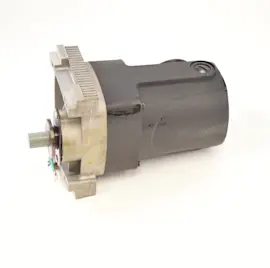
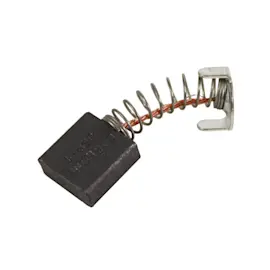
- Drive system condition (belt tension on belt-drive models; brush wear on some motors)
A lot of “this saw is bad” complaints are really setup, alignment, or blade issues. Our DIY guide table saw common question covers the most common performance and setup topics.
Why it matters
A table saw can be “best rated” for one user and a poor fit for another. Matching the saw to your material, space, and safety expectations improves cut accuracy, reduces kickback risk, and saves money by avoiding an unnecessary upgrade.
Last updated: February 2026