Owner’s manual
 View engine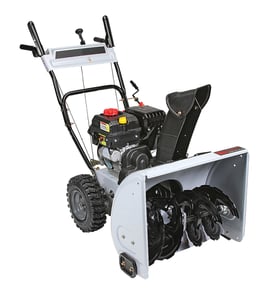





How many years should a snowblower last?
A gas snowblower like the Craftsman C950-52948-0 lasts 10 to 20 years with normal residential use and consistent maintenance. The biggest lifespan drivers are fuel care, oil changes, and keeping the drive and auger systems clean, lubricated, and properly adjusted (see the C950-52948-0 owner's manual).
| Use and care level | Typical lifespan | What usually ends it first |
|---|---|---|
| Light use, stored correctly | 15 to 20 years | Rubber friction wheel wear, belts, carburetor varnish |
| Average use, basic upkeep | 10 to 15 years | Belts, shear pins, drive wear, corrosion |
| Heavy use, poor storage | 5 to 10 years | Fuel system issues, drivetrain wear, rusted hardware |
- Treat or drain fuel for storage; run the engine after adding stabilizer so treated fuel reaches the carburetor.
- Change engine oil before offseason storage (4-cycle engines).
- Lubricate the drive system; wipe the hex shaft and lubricate chains as recommended.
- Check the spark plug each season; replace if worn or damaged.
- Keep fasteners and guards tight and in place; vibration loosens hardware over time.
Follow the storage steps in the manual; these are the items that most directly prevent “won’t start next winter” problems.
- Run the engine until the tank is empty or add stabilizer and run at least 10 minutes
- Store fuel only in approved containers, outdoors when draining
- Change oil (4-cycle)
- Lubricate key moving parts before storage
Most “short lifespan” snowblowers are mechanically fine; they get sidelined by stale fuel, neglected oil, or a dry, corroded drive system. Doing the storage and lubrication steps every year keeps the engine and traction drive reliable and prevents expensive wear.
Last updated: February 2026
How do I tell what year my snowblower is?
For your Craftsman snow thrower model C950-52948-0, the most reliable way to determine the year is to use the serial number from the snow thrower’s identification label and match it to the date-coding method shown in the C950-52948-0 owner's manual. We recommend recording the model and serial information so you can reference it later.
Look for the snow thrower ID label on the machine frame (commonly near the auger housing or handle support area). The manual’s record section calls out these fields:
- Snow thrower model number and serial number
- Engine model number and serial number
- Date purchased (if you still have it)
- Store and location details (helpful for your own records)
Because Craftsman snowblower date codes vary by production run, we use a quick, repeatable process:
- Write down the snow thrower serial number exactly as shown.
- Write down the engine model and serial numbers (engine tag/label).
- Compare your serial format to the examples and guidance in the C950-52948-0 owner's manual.
- If the snow thrower serial format is unclear, use the engine serial number as a cross-check because the engine build date is often close to the snowblower’s build year.
Use this to keep your info organized before you decode it:
| Item | What to record | Where it’s used |
|---|---|---|
| Snow thrower | Model: C950-52948-0; Serial: (from frame label) | Primary identifier for parts and age |
| Engine | Model; Serial | Cross-check for approximate build timeframe |
| Purchase info | Date purchased (if known) | Helps confirm the likely model year |
Knowing the approximate year helps us match the correct parts and specs for your C950-52948-0, especially for wear items and safety-related components like the lawn & garden equipment engine safety key 794696. It also helps when you reference maintenance procedures and adjustments.
Last updated: February 2026
Should I spray my snowblower with WD-40?
Yes, you can lightly spray a water-displacing product on the snow-contact areas of your Craftsman C950-52948-0 snow thrower to help reduce snow sticking and surface rust; keep it off belts, the rubber friction wheel, and the disc drive plate, and clean and dry the machine after each use as outlined in the owner's manual.
Use a light coating only on surfaces that touch snow and tend to ice up.
Good places to apply a light spray
- Inside the discharge chute and chute deflector
- Auger housing interior (where snow flows)
- Exposed bare metal areas after washing and drying
Avoid spraying these areas
- Rubber friction wheel and disc drive plate (slip and rapid wear risk)
- Belts, pulleys, and drive linkages where overspray can attract grit
- Hot engine and muffler areas
The manual emphasizes post-use cleanup to prevent freezing and corrosion.
- Let the engine idle a few minutes to melt snow and ice on the engine
- Remove snow, slush, and debris from the entire unit
- Flush with water if possible to remove salt and chemicals
- Wipe the snowblower dry before storage
| Goal | Better approach | Notes |
|---|---|---|
| Stop chute clogging | Light spray on chute interior | Apply before blowing, wipe excess |
| Prevent rust in storage | Clean, dry, then protect bare metal | Cover and store indoors when possible |
| Protect drive system | Keep lubricants off friction surfaces | Overspray can cause slipping |
On the C950-52948-0, traction and auger drive depend on clean, dry friction surfaces. The manual specifically warns that grease or oil contacting the rubber friction wheel or disc drive plate can damage the rubber and cause drive problems.
If your machine will not start because the key is missing or damaged, replace the lawn & garden equipment engine safety key 794696. For additional parts for this model, use the parts list for C950-52948-0 or search by model on Sears PartsDirect.
Last updated: February 2026
How to tell if a snowblower auger belt is bad?
On the Craftsman C950-52948-0 snow thrower, a bad auger drive belt typically shows up as poor or no snow discharge even though the engine runs normally. If the auger belt is loose or damaged, the manual directs checking cable adjustment first, then inspecting the belt and replacing it if needed; the auger must also stop within 5 seconds when you release the auger control. See the owner's manual.
- Augers do not turn, or they turn but slow down under load
- Snow throws weakly or stops throwing when you hit heavier snow
- Squealing noise when you engage the auger control
- Burning rubber smell (belt slipping on pulleys)
- Visible belt damage: cracks, fraying, glazing (shiny spots), missing chunks
- Confirm the symptom: If the unit fails to discharge snow, the manual points to checking auger control cable adjustment and the auger drive belt condition.
- Stop the engine and disconnect the spark plug wire before removing any covers.
- Inspect belt condition: Look for cracking, frayed edges, glazing, or rubber dust near the pulleys.
- Check belt tension/deflection: After proper adjustment, the manual spec is about 1/2 inch (12.5 mm) deflection with moderate pressure on the belt span opposite the idler pulley.
- Check the safety stop: With the auger control released, the auger must stop within 5 seconds. If it coasts longer, the belt/cable adjustment needs attention.
| Check | Belt likely OK | Belt likely bad |
|---|---|---|
| Visual condition | Matte surface, no cracks | Cracks, fraying, glazing, chunks missing |
| Under load | Keeps throwing snow | Slips, squeals, smells hot |
| Tension/deflection | About 1/2 inch deflection | Too slack or inconsistent tension |
| Auger stop time | Stops within 5 seconds | Coasts longer than 5 seconds |
A slipping auger belt reduces throwing power and can overheat, which accelerates belt wear and can affect related components like the idler pulley and cable adjustment. Keeping the auger drive system adjusted helps performance and safety.
- If the belt is damaged or won’t hold proper tension, replace it and then re-check cable adjustment as noted in the manual.
- For parts shopping beyond what’s listed for this model, search by model number C950-52948-0 on Sears PartsDirect.
Last updated: February 2026