Installation guide
 Owner’s manual
 Error Codes




What is the life expectancy of a GE gas range?
Most GE gas ranges typically last 13 to 15 years with normal household use and basic maintenance. If you keep burners clean, avoid overheating controls, and fix small issues early, it is common to see 15+ years of service.
Typical lifespan and what affects it
A range’s life depends more on usage and maintenance than brand alone.
- Heavy daily cooking shortens lifespan faster than occasional use
- Spills and boilovers that get into switches and igniters cause early failures
- Frequent self-clean cycles can stress wiring, sensors, and control boards
- Poor ventilation and high heat around the control area can damage electronics
- Prompt replacement of worn parts (like a door gasket) helps the oven hold heat efficiently
What “end of life” usually looks like
These are the most common symptoms that show up as a range ages:
| Symptom | Common cause | Typical fix |
|---|---|---|
| Oven temperature swings | Weak sensor or control issue | Test sensor, check wiring, replace failed part |
| Burner will not light or heats unevenly | Ignition or burner component wear | Clean, adjust, or replace burner parts |
| Oven takes too long to preheat | Heat loss or heating system issue | Check door seal, verify bake performance |
| Error codes on display | Sensor, latch, or control problem | Diagnose by code and test components |
Why it matters
Knowing the typical 13 to 15 year lifespan helps you decide whether to repair or replace. If your range is near that age and needs multiple major repairs, planning ahead can prevent unexpected downtime.
Helpful model-specific note
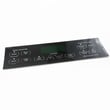
Your Sears PartsDirect page is for a GE JB640SR5SS electric range, not a gas range. For safety and installation requirements on this model (clearances, anti-tip bracket, and electrical circuit details), follow the installation guide. For troubleshooting display faults, use GE freestanding range error codes.
Last updated: February 2026
Is GE JB640SR5SS considered high end?
GE JB640SR5SS is generally considered a mainstream, mid-range electric range, not a true “high-end” model. It is a solid freestanding range built for everyday cooking; “high end” in GE’s lineup typically means premium feature sets, finishes, and price tiers above standard models.
How we’d classify this model
Most shoppers place ranges into three practical tiers based on features and price:
- Value/basic: fewer cooking modes, simpler controls
- Mid-range (where JB640SR5SS fits): reliable core features, common replacement parts, standard installation
- Premium/high-end: more advanced cooking systems, specialty modes, upgraded design packages
For model-specific operation and features, use the JB640SR5SS owner's manual.
What “high end” usually means for an electric range
High-end ranges typically include more of these:
- Advanced cooking modes (more specialty bake/roast options)
- Higher-end control systems and displays
- More premium fit and finish (handles, knobs, glass, trim)
- Expanded convenience features (more automation and customization)
- Higher overall replacement-part costs due to premium assemblies
Quick comparison
| Tier | Typical focus | What you usually see |
|---|---|---|
| Mainstream/mid-range | Everyday performance | Standard radiant elements, straightforward controls |
| High-end/premium | Feature depth and design | More specialty modes, upgraded controls, premium styling |
Why it matters
Knowing the tier helps set expectations for features, repair cost, and part pricing. For example, if you are troubleshooting heating or control issues on JB640SR5SS, common service parts like the range oven control board WB27X45466 and wall oven temperature sensor WB21X22134 are typical of mainstream designs.
Last updated: February 2026
What are the benefits of JB640SR5SS?
The GE JB640SR5SS electric range’s biggest benefits are straightforward electric cooking, flexible radiant surface heating, and an installation setup designed for standard 120/240V or 120/208V homes on a dedicated 40-amp circuit. For exact operating features and care details, use the owner's manual.
Key benefits you will notice day to day
- Reliable electric oven performance for baking and roasting with consistent heat.
- Radiant cooktop flexibility (common 6-inch and 8-inch element sizes) for small pans and larger cookware.
- Serviceable design; common wear items like surface elements, switches, and oven parts are replaceable.
- Standard electrical compatibility; designed for single-phase 60 Hz 120/240V or 120/208V supply on an individual grounded circuit.
- Clear installation clearances to help protect cabinets and reduce heat exposure when installed correctly.
Installation-related advantages (safety and fit)
The installation requirements for JB640SR5SS are clearly defined, which helps avoid nuisance issues like drawer interference and improper clearances.
| Topic | What this model supports | Why it helps |
|---|---|---|
| Electrical supply | 120/240V or 120/208V, 60 Hz | Fits common US home wiring setups |
| Circuit | 40 amp (minimum) dedicated branch circuit | Helps prevent breaker trips and overheating |
| Cord options | 3-conductor or 4-conductor UL-listed range cord | Supports common connection types |
| Cabinet clearance | 30-inch minimum to unprotected cabinets above cooktop (24-inch if properly protected) | Reduces heat risk above the cooktop |
Parts that support long-term value
When performance drops, replacing the failed component often restores normal cooking without replacing the whole range. Examples of commonly replaced parts for this model include:
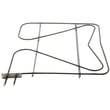
- Range bake element WB44X45499 (oven not heating or slow preheat)
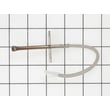
- Wall oven temperature sensor WB21X22134 (temperature swings, error conditions)
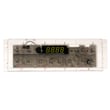
- Range oven control board WB27X45466 (display or control issues)
Why it matters
A range that is installed to the specified clearances and electrical requirements heats more consistently, avoids preventable power problems, and is easier to maintain with replaceable GE parts.
Last updated: February 2026
What are common problems with GE ranges?
Common problems we see on GE electric ranges like model JB640SR5SS include the oven not heating or heating unevenly, surface elements not turning on or not regulating temperature, error codes on the display, and door or light issues. Many of these trace back to a failed heating component, sensor, switch, or control.
Most common symptoms (and what they usually point to)
- Oven will not heat or takes too long to preheat: failed bake element, temperature sensor, or control board
- Uneven baking or temperature seems off: temperature sensor out of range, poor door seal, or calibration needed
- One surface element will not heat: failed radiant element or a bad infinite switch
- Dual element not working correctly: dual surface element control switch issue
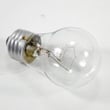
- Oven light not working: burned-out bulb or failed light socket
Parts that commonly fix these problems on JB640SR5SS
If your symptoms match, these model-compatible parts are common repair solutions:
| Symptom | Likely part to check | Example part for this model |
|---|---|---|
| Oven not heating | Bake element | Range bake element WB44X45499 |
| Oven temp inaccurate | Temperature sensor | Wall oven temperature sensor WB21X22134 |
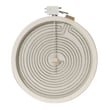
| Surface element not heating | Radiant surface element | Range radiant surface element, 8-in WB30T10132 |
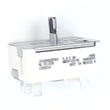
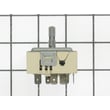
| Burner stuck on high or won’t regulate | Surface element control switch | Range surface element control switch WB24T10145 |
| Display issues or erratic operation | Oven control board | Range oven control board WB27X45466 |
Quick checks we recommend before replacing parts
- Confirm the range has power (no tripped breaker, no loose cord connection).
- For an oven heat complaint, look for visible damage on the bake element (blistering, cracks).
- For a cooktop element complaint, swap pans and try a different element setting to confirm it is not cookware-related.
- If the hot surface light or an error code is involved, write down the exact code before resetting power.
- Review electrical and safety requirements before any service; the installation guide covers grounding, circuit requirements, and safe setup basics.
Error codes and what they mean
GE ranges use error codes to point you toward a circuit or component (sensor, door lock, control). Use our model-relevant guides to match the code to the next best check:
Why it matters
Heating and control problems can cause undercooked food, overheating, or repeated breaker trips. Catching a weak bake element, drifting temperature sensor, or failing switch early helps restore normal cooking performance and prevents secondary damage.
Last updated: February 2026