Error Codes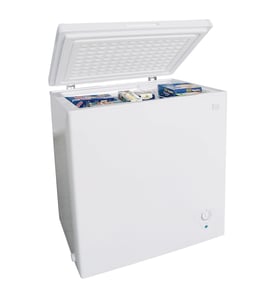

How do I find my chest freezer model number?
For your Kenmore chest freezer, the model number is printed on a rating label attached to the cabinet. On model 1985815210, you will typically find that label on an inside wall, on an exterior side panel, or on the back of the unit.
- Inside the freezer on a side wall near the top rim
- On the outside cabinet side panel
- On the back panel near the power cord area
- Near the hinge side of the lid opening (around the rim)
Most Kenmore chest freezers use a paper or foil rating label that includes:
- Model number (example: 1985815210)
- Serial number
- Electrical ratings (volts/amps)
- Refrigerant type
| What you see | What it means | What to write down |
|---|---|---|
| Model No. | Identifies the exact freezer design | The full model number (all digits) |
| Serial No. | Identifies your specific unit | The full serial number |
We use the model number to match the correct Kenmore parts diagrams and replacement parts (like lid insulation, cabinet fasteners, and sealants). Using the full model number helps avoid ordering a similar-looking part that will not fit.
- Check for a faint “shadow” outline where the label used to be (inside wall or back panel)
- Look for a second label near the compressor area on the back
- If you are resealing or repairing around the cabinet, use the correct sealant for appliance work such as cement WP279368 so moisture does not get into insulation
Last updated: January 2026
What are the common chest freezer problems?
Common problems on a Kenmore chest freezer model 1985815210 are warm temperatures, heavy frost, constant running, water leaks during defrosting, and unusual noises. Most issues come from lid air leaks, poor loading and airflow, dirty condenser areas (when equipped), or a failing start or control component.
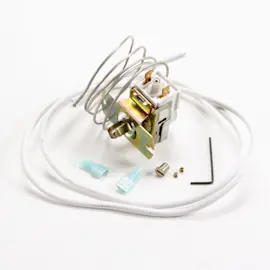
- Freezer too warm: lid not sealing, overpacked cabinet restricting airflow, temperature control issue, or sealed-system problem
- Excessive frost buildup: lid left ajar, air leak at the lid area, humid room air entering
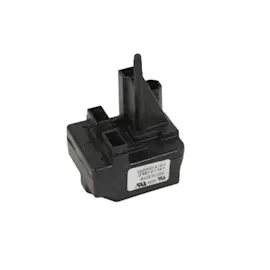
- Compressor runs constantly: warm room location, frequent openings, dirty condenser area, weak compressor start components
- Water on the floor: meltwater during manual defrost, cabinet sweating from high humidity, lid not sealing
- Clicking, buzzing, or rattling: start device struggling, tubing vibration, loose panels or fasteners
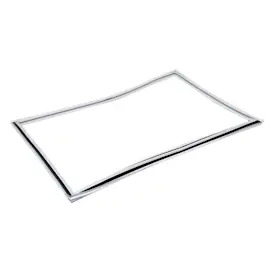
- Confirm the lid closes tightly all the way around; remove packages that prevent closure.
- Defrost if frost is about 1/4 inch thick or more, then restart the freezer.
- Improve loading: leave space around baskets and interior walls for air circulation.
- Clean the condenser area (if accessible on your design) and keep clearance around the cabinet.
- Listen for a repeating click every few minutes; that points to a compressor start problem.
| Symptom | Best next step | Helpful resource or part (when applicable) |
|---|---|---|
| Too warm | Check lid seal and loading; defrost | How to defrost a freestanding freezer |
| Heavy frost | Check for air leaks; reduce humidity exposure | Sealer 212643 for sealing small gaps after repairs (not a lid gasket substitute) |
| Noisy or vibrating | Check for loose hardware and panels | Screw WP486579 for replacing missing or stripped screws |
| Error code on display (if equipped) | Identify the code and follow the diagnostic path | Kenmore electronic control module freezer error codes |
Chest freezers stay cold by running long, steady cycles. Lid air leaks, blocked airflow from overpacking, or weak compressor starting forces longer run times, raises temperatures, and increases frost and energy use.
Last updated: January 2026
What is the lifespan of a deep freezer?
A deep freezer typically lasts 10 to 20 years; chest freezers like Kenmore 1985815210 commonly land in the 12 to 16 year range when the lid seal stays tight, the unit is kept clean, and it runs in a moderate-temperature space.
| Freezer type | Typical lifespan | Notes |
|---|---|---|
| Chest freezer | 12 to 20 years | Fewer moving parts, lid opened less often |
| Upright freezer | 10 to 15 years | More air exchange and components |
- Hot locations (garage or utility room heat) make the compressor run longer and wear faster.
- Poor lid seal lets warm, moist air in, causing frost buildup and longer run times.
- Heavy frost acts like insulation on cold surfaces and reduces efficiency.
- Dust and grime around the cabinet and vents can trap heat.
- Overloading or blocking airflow can create warm spots and longer cycles.
- Defrost when frost buildup reaches about 1/4 inch.
- Wipe the lid gasket area clean so the seal stays consistent.
- Keep the freezer reasonably full (but not packed tight) to stabilize temperatures.
- Use a freezer thermometer and aim for about 0°F.
- Touch up chips or scratches to help prevent cabinet rust using touch-up paint (white) 350930.
A freezer that runs longer than normal to hold temperature uses more electricity and puts extra strain on the sealed system. Simple steps like controlling frost and protecting the cabinet finish help your Kenmore chest freezer stay efficient and last longer.
Last updated: January 2026