
Is a 6 1/2 or 7 1/4 circular saw better?
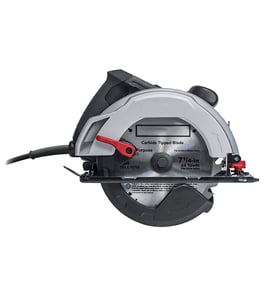
For most DIY and framing work, a 7-1/4 inch circular saw (like the Craftsman 315109030 7-1/4 inch circular saw) is the better all-around choice because it delivers more cutting depth and handles angled cuts through thicker lumber more reliably. A 6-1/2 inch saw is better when low weight and one-handed control matter most.
Quick comparison (what you gain and what you give up)
| Feature | 6-1/2 inch circular saw | 7-1/4 inch circular saw (Craftsman 315109030 type) |
|---|---|---|
| Best for | Light-duty cuts, portability | Versatility, framing, thicker stock |
| Cutting depth | Shallower | Deeper |
| Bevel cuts (angled cuts) | More limited on thick lumber | More capable on 2x material |
| Handling | Lighter, easier overhead | Heavier, steadier on long rips |
| Blade availability | Good, but fewer options | Widest selection and common pricing |
Choose a 7-1/4 inch saw if you do any of these
- Cut 2x lumber often (2x4, 2x6, 2x8) and want fewer “almost made it” cuts
- Make bevel cuts (common angles like 45 degrees) on framing material
- Rip sheet goods with a straightedge and want extra power and stability
- Use thicker blades or specialty blades (more options in 7-1/4 inch)
- Want one saw that covers the most jobs without workarounds
Choose a 6-1/2 inch saw if these matter most
- You work overhead, on ladders, or in tight spaces where weight is the main issue
- You mainly break down plywood, OSB, or trim stock (not thick framing)
- You prioritize maneuverability over maximum depth
- You already own a larger saw and want a lighter “grab-and-go” option
Why it matters
The biggest real-world difference is cutting depth at an angle. A smaller blade can handle many straight cuts, but it runs out of depth faster on bevel cuts and thicker boards. That is why a 7-1/4 inch saw stays the most versatile size for general construction and serious DIY.
Parts and repair note for model 315109030
If your saw struggles to cut, check basics first: blade sharpness, correct blade type (wood vs. plywood vs. framing), and that the blade is installed in the right direction. For repair parts, use the model number 315109030 when searching on Sears PartsDirect.
Last updated: February 2026
Where can I buy Craftsman replacement parts?
You can buy replacement parts for your Craftsman 315109030 7-1/4 in. circular saw by searching the model number on Sears PartsDirect to match the exact parts list for your tool, then ordering the components you need (such as switches, brushes, cords, guards, or hardware).
Best way to get the right part for model 315109030
Using the full model number keeps you from ordering a look-alike part that will not fit.
- Confirm the model number on the saw’s nameplate (often on the motor housing or base plate)
- Use the model-based parts list to identify the exact component name and diagram location
- Compare your original part to the diagram (shape, wire terminals, mounting holes)
- If the saw has symptoms (no power, sparking, weak torque), diagnose first, then order
- Replace worn fasteners and damaged wire connectors during reassembly
Common Craftsman circular saw parts people replace
These are the most frequent wear or failure items on a 7-1/4 in. corded circular saw.
| Symptom | Most likely part area | What to check first |
|---|---|---|
| Will not start | Power cord, switch, brush set | Loose plug, damaged cord jacket, worn brushes |
| Runs but sparks heavily | Brush set, commutator | Brush length, spring tension, burnt smell |
| Cuts poorly or binds | Blade, lower guard, base alignment | Dull blade, sticky guard pivot, bent shoe |
| Overheats | Venting, bearings, blade choice | Packed sawdust, rough bearing feel, wrong blade type |
Why it matters
Ordering by model number helps you get parts that fit your Craftsman 315109030 correctly, which reduces downtime and prevents unsafe operation from mismatched electrical parts (like a switch or cord) or misaligned guard components.
Last updated: February 2026
What brand of circular saw is best?
For most people, the “best” circular saw brand is the one that matches how you cut (framing vs. finish), how often you use it, and the power system you already own. For the Craftsman 315109030 7-1/4" circular saw, Craftsman is a solid value choice; pro-focused brands like Makita, DEWALT, and Milwaukee typically lead for heavy daily use.
How to pick the best brand for your needs
Use these factors first; brand comes second.
- Corded vs. cordless: Corded is consistent for long rip cuts; cordless is best for mobility.
- Blade size and depth: Most 7-1/4" saws handle common 2x lumber well.
- Motor type: Brushless (common on newer cordless) runs cooler and typically lasts longer under load.
- Shoe and guard quality: A rigid base and smooth lower guard improve accuracy and safety.
- Ergonomics: Handle angle, balance, and sightline matter more than most specs.
- Parts availability: If you plan to keep a saw for years, serviceable parts matter.
Quick brand comparison (typical strengths)
| Brand | Best for | What you usually get |
|---|---|---|
| Makita | All-day pro use | Smooth cutting, strong build quality |
| DEWALT | Jobsite power | High torque, wide tool ecosystem |
| Milwaukee | Cordless performance | Strong battery platform, fast cutting |
| Skil | DIY value | Good features for the price |
| Craftsman | Homeowner value | Practical performance, familiar platform |
What “best” means for a Craftsman 315109030 owner
If you already own and like your Craftsman 315109030, the best move is usually to keep it cutting safely and accurately by maintaining wear items and checking alignment.
- Verify the blade is sharp and correct for the material (framing blade vs. plywood/finish blade).
- Check the base (shoe) for square to the blade at 0 degrees and 45 degrees.
- Make sure the lower blade guard snaps back freely without sticking.
- Inspect the power cord (if corded) for nicks, heat damage, or loose strain relief.
- Confirm the arbor nut is tight and the blade is mounted in the correct direction.
Why it matters
A “top” brand will not cut well with a dull blade or a saw that is out of square. Choosing based on your cut quality needs, comfort, and long-term serviceability gets you better results than chasing a single brand name.
For general DIY safety and repair-readiness, we recommend reviewing are diy appliance repairs safe.
Last updated: February 2026
What is a 140 tooth circular saw blade used for?
A 140-tooth circular saw blade is used for ultra-smooth, low tear-out cuts in thin sheet goods and trim materials. On a Craftsman 315109030 7-1/4" circular saw, this high tooth count is best for finish-quality crosscuts where a clean edge matters more than fast cutting.
Best uses for a 140-tooth blade
Use a 140T blade when you want the cleanest possible cut surface, especially on:
- Plywood and veneered panels (reduces splintering on the face veneer)
- Melamine and laminated shelving (helps minimize chipping)
- Hardboard, thin MDF, and paneling
- Finish trim and thin stock (careful, controlled feed)
- Non-ferrous metals or plastics only if the blade is specifically rated for that material
When a 140-tooth blade is the wrong choice
A 140T blade cuts slowly and can overheat if you push it like a framing blade. Avoid it for:
- Ripping thick lumber (2x material and thicker)
- Wet, pressure-treated, or very resinous wood
- Demolition work (nails and grit ruin fine teeth quickly)
Quick comparison: tooth count vs. cut quality
| Blade type (7-1/4") | Typical tooth count | Best for | What you’ll notice |
|---|---|---|---|
| Framing blade | 18 to 24T | Fast rough cuts | More splintering, faster feed |
| General purpose | 40 to 60T | Mixed cutting | Balanced speed and finish |
| Fine finish | 80T to 140T | Clean crosscuts in sheet goods | Slow feed, very smooth edge |
Setup tips to get the cleanest cut
- Set blade depth so only about 1/4" of tooth clears the material
- Support the work fully to prevent vibration and pinching
- Use painter’s tape on the cut line for fragile veneers/laminates
- Feed steadily; if you smell burning, slow down and check for dull teeth
- Keep the shoe/base plate flat and square to the work
Why it matters
Using the right tooth count prevents tear-out, reduces sanding, and helps your Craftsman circular saw produce finish-ready edges. A 140T blade is a precision option; it trades speed for cut quality.
For general DIY safety practices before changing blades or troubleshooting power issues, see are diy appliance repairs safe.
Last updated: February 2026
How deep can a 5 3/8 circular saw cut?
Most 5-3/8 inch circular saws cut about 1-5/8 inches at 90 degrees; at 45 degrees the cut depth is typically closer to 1-1/8 inches. If you are comparing that to your Craftsman model 315109030, use the depth gauge on the saw and measure to confirm your exact maximum.
Typical cut depth for a 5-3/8 inch circular saw
These compact saws are built to handle sheet goods and light framing; bevel cuts always reduce capacity.
- 90 degrees (straight cut): about 1-5/8 in.
- 45 degrees (bevel cut): about 1-1/8 in.
- Depth changes slightly with shoe thickness and blade diameter (worn blades cut shallower)
- A thin-kerf blade does not increase depth; it mainly reduces load on the motor
How to measure your saw’s real maximum cut depth
This works for any circular saw, including Craftsman saws like 315109030.
- Unplug the saw (or remove the battery)
- Set bevel to 0 degrees
- Set the depth adjustment to maximum
- Measure from the bottom of the shoe to the lowest tooth tip
- Repeat at 45 degrees to check bevel capacity
Quick comparison (typical)
| Blade size | Typical max depth at 90 degrees | Typical max depth at 45 degrees |
|---|---|---|
| 5-3/8 in. | ~1-5/8 in. | ~1-1/8 in. |
| 7-1/4 in. | ~2-3/8 in. | ~1-13/16 in. |
Why it matters
Knowing true cut depth tells you whether you can cut a board in one pass or need to flip the material; it also helps you set blade depth correctly for safer, cleaner cuts.
For help confirming you are looking up the correct Craftsman model for parts, use how to find your appliance model number (and what it means for parts).
Last updated: February 2026
