Owner’s manual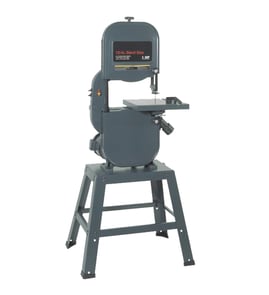

How to replace belt on Craftsman band saw?
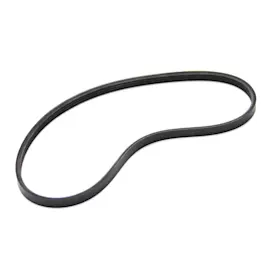
To replace the drive belt on a Craftsman band saw model 137224120, we open the wheel covers, loosen the idler wheel and motor mounts to release tension, move the belt off the motor and saw pulleys, then install the new belt and set proper tension (about 1/2 inch of flex at mid-span). Use the 137224120 owner's manual for the exact adjustment points and speed-belt routing.
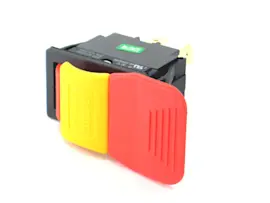
- Turn the switch OFF and unplug the band saw before any adjustment.
- Keep fingers clear of pulleys and the idler wheel while setting tension.
- Close and latch the wheel covers before restoring power.
- If the power cord is worn or cut, replace it before using the saw.
- Open the wheel covers (pull the cover knobs).
- Loosen the idler wheel by turning the idler wheel handle to reduce belt pressure.
- Loosen the motor mount nuts and slide the motor sideways to slacken the V-belt.
- Remove the belt from the motor pulley and the band saw pulley.
- Install the new belt on the pulleys in the groove combination that matches your desired blade speed.
- Re-tension the belt by sliding the motor back, then tighten the motor mount nuts (do not overtighten).
- Set final pressure by turning the idler wheel handle to press the idler wheel against the belt.
- Close the covers before operating.
The manual’s spec is simple: the belt is correctly tensioned when it has about 1/2 inch of flex when pressed at the center between pulleys.
| Check | What you should see | What to do if not |
|---|---|---|
| Deflection at mid-span | ~1/2 inch flex | Reposition motor to adjust tension |
| Belt tracking on pulleys | Belt stays centered in grooves | Re-seat belt in correct grooves |
| After belt work | Blade tension, tracking, guides still correct | Recheck adjustments before cutting |
A loose belt can slip and make the band saw cut slowly or stall; an overtight belt can increase noise and wear on bearings and pulleys. Correct belt tension helps the motor deliver steady power and keeps your blade speed consistent.
We recommend using the parts diagrams for Craftsman 137224120 to identify the correct belt and related hardware; you can also search by model number on Sears PartsDirect if you are sourcing additional maintenance items.
Last updated: February 2026
Why does my Craftsman bandsaw blade keep falling off?
On the Craftsman 137224120 band saw, a blade usually falls off when blade tracking and tension are not set correctly, or when the blade guides and support bearings are too close or misadjusted. Set proper tension first, then adjust tracking so the blade runs centered on the wheel.
- Unplug the saw and open the upper cover.
- Set blade tension first using the blade tension knob; tracking adjustments only work correctly after the blade is properly tensioned.
- Back the guides and support bearings away from the blade before tracking.
- Hand-rotate the upper wheel forward and watch where the blade rides.
- If the blade walks toward the front of the wheel, turn the blade tracking knob clockwise to move it back toward center.
- Re-check that the blade stays centered through several full wheel rotations.
| What to check | What “good” looks like | What to do if it’s not |
|---|---|---|
| Blade tracking | Blade stays centered on the upper wheel when turned by hand | Adjust the blade tracking knob until centered |
| Blade tension | Blade is tight enough to track without fluttering | Increase tension; relax tension when stored |
| Guides and support bearings | Not rubbing the teeth; only supporting the blade during the cut | Re-adjust guides and bearings per the manual |
| Blade condition | No kinks, twists, or damaged weld | Replace the blade |
When the blade does not run in the center of the upper wheel, it can climb the wheel edge and derail. Correct tracking, correct tension, and properly set blade guides keep the blade stable, improve cut quality, and reduce blade breakage.
- Use the step-by-step adjustment procedure in the 137224120 owner's manual.
- If the blade still walks off after adjustments, follow our troubleshooting path for band saw blade slips off the wheel.
If you need replacement parts for your Craftsman 137224120, start with the parts list for your model, or search by model number on Sears PartsDirect.
Last updated: February 2026
What is the 4 inch rule for bandsaw?
The 4-inch rule for a band saw is a safety best practice: we keep our hands and fingers at least 4 inches away from the moving blade during any cut. On the Craftsman 137224120 band saw, we also set the blade guides correctly and keep the guide assembly close to the work to reduce risk.
- Use a push stick, push block, or a scrap “push pad” whenever your hands would get within 4 inches of the blade.
- Keep the workpiece flat on the table and feed with steady, gentle pressure; do not force the cut.
- Adjust the upper guide assembly down close to the work (a common target is about 1/8 inch above the workpiece for many cuts).
- Keep the blade properly tensioned and tracked before you start the saw.
- Use the correct blade width for the cut (narrow for tight curves, wider for straighter cuts).
The 4-inch rule works best when the saw is adjusted correctly. Use the 137224120 owner's manual to confirm the exact adjustment procedure for your saw.
| What to check | What “good” looks like | What happens if it’s off |
|---|---|---|
| Blade tension and tracking | Blade runs centered on the wheels | Blade can wander or slip off the wheel |
| Upper and lower guides/bearings | Guides support the blade without binding | More drift, rough cuts, higher kickback risk |
| Feed rate | Slow, controlled feed | Forcing can twist the blade or break it |
Keeping hands 4 inches away gives you a buffer if the stock shifts, the blade drifts, or you need to reposition. Proper guide height, blade selection, and correct tension/tracking reduce the chance you will need to “reach in” close to the blade.
If you are tempted to push harder because cutting feels slow, we use the troubleshooting steps in band saw cutting slowly to correct the cause (blade condition, setup, feed technique) instead of forcing the cut.
For parts and diagrams for the Craftsman 137224120, we use the model parts list first; for broader parts searching by model number, use Sears PartsDirect.
Last updated: February 2026
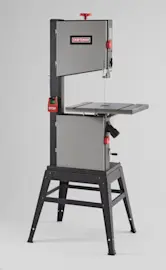
What are the parts of a bandsaw?
A band saw like the Craftsman 137224120 is built around a continuous blade running on two wheels, guided above and below the table for controlled cutting. Key parts include the wheels, blade guides, table and trunnion, tension and tracking controls, and the motor drive system (belt and pulleys). See the owner's manual for your exact component names and adjustment points.
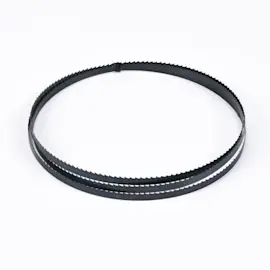
- Blade: The continuous band that does the cutting; this saw uses 90-inch blades in widths up to 1/2 inch for wood and similar materials.
- Upper and lower wheels: The blade rides on these wheels; proper blade position is centered on the wheels.
- Blade guides and bearings: Upper and lower guide assemblies keep the blade stable and reduce twisting.
- Blade tension knob: Tightens the blade on the wheels; correct tension helps prevent breakage and wandering cuts.
- Blade tracking adjustment: Keeps the blade running in the correct position on the wheels.
- Table with insert: Supports the workpiece; the insert surrounds the blade slot.
- Trunnion and table tilt hardware: Supports the table and allows bevel adjustments.
- Miter gauge: Fits the table slot for angled crosscuts (tilts 0 to 45 degrees right or left).
- Motor and drive system: Motor power transfers through cords and the drive components to move the wheels.
- Wheel cover doors: Must be closed before operation.
| Part | What it controls | Common symptom when it is off |
|---|---|---|
| Blade tension | Blade stiffness on wheels | Blade breaks, wanders, or slips |
| Tracking | Blade position on wheels | Blade walks off wheel edges |
| Guides/bearings | Side-to-side stability | Not cutting straight, rough cuts |
| Table/trunnion | Work support and bevel angle | Inaccurate bevel cuts |
Most cutting problems trace back to setup: blade tension, tracking, and guide alignment must be adjusted before use. Correct setup improves cut speed, accuracy, and blade life, and it reduces the chance of the blade coming off the wheels.
We list model-specific replacement parts by diagram and description; if you are shopping by model number or browsing other tool parts, use Sears PartsDirect.
Last updated: February 2026