Owner’s manual
 Error Codes




What is the problem with the LG bottom freezer refrigerator?
On the LG LFXC22526S, the most common “problem” we see customers describe is uneven cooling: the fresh food section gets too warm while the freezer stays very cold. This is usually tied to restricted airflow, a temperature-sensing issue, or a fan/defrost-related problem (not a single universal defect). See the troubleshooting section in the LFXC22526S owner’s manual.
Quick checks we recommend first
- Confirm the refrigerator is set near 37°F and the freezer near 0°F (target settings).
- Make sure air vents inside the fresh food section are not blocked by food packages.
- Check that doors close fully and gaskets seal all the way around.
- Listen for the evaporator fan running when the doors are closed.
- Look for frost buildup on the freezer back wall (a clue of a defrost/airflow issue).
Likely causes (and what they affect)
| Symptom you notice | Common cause | What to check next |
|---|---|---|
| Fridge warm, freezer OK | Airflow restriction or fan issue | Vents, fan sound, frost pattern |
| Temps swing up and down | Sensor/thermistor reading off | Error codes, temperature consistency |
| Musty odors, stale air | Air filter overdue | Replace and reset indicator |
| Frost buildup in freezer | Defrost system problem | Frost pattern, defrost components |
Parts that often relate to these symptoms
If your LFXC22526S has odor issues or the fresh food section seems “stuffy,” start with the air filter and basic airflow checks. If you suspect a sensor issue, a temperature sensor is a common diagnostic path.
- LG refrigerator air filter ADQ73214408: helps reduce odors and supports proper air circulation through the fresh air system.
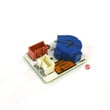
- Refrigerator temperature sensor 6500JB2002E: reports compartment temperature to the control; inaccurate readings can contribute to uneven cooling.
Why it matters
When the refrigerator section warms up, food safety and freshness are affected quickly. Catching airflow, door-seal, or sensor problems early can prevent longer run times, excess frost, and inconsistent temperatures.
Last updated: January 2026
Why is my LG bottom freezer frosting up?
On LG model LFXC22526S, bottom-freezer frost buildup is most often caused by warm, moist air leaking in (door not sealing or left ajar) or by a defrost drain that’s restricted, which can lead to ice collecting and refreezing in the freezer. Use the steps below to pinpoint the cause using the LFXC22526S owner’s manual.
Quick checks we recommend first
- Make sure the freezer drawer is fully closing and not hitting a bin, bag, or ice buildup.
- Check the door gaskets for gaps, tears, or areas that look flattened.
- Confirm the freezer temperature is set correctly (typical target is 0°F).
- Look for a sheet of ice on the freezer floor; that often points to a drain issue.
- Reduce door openings for 24 hours and see if frost slows down.
If you see ice on the freezer floor (likely a drain issue)
A blocked or partially blocked defrost drain can cause water to back up, freeze, and create a thick layer of ice that leads to recurring frost.
- Unplug the refrigerator.
- Remove food and the lower freezer bins/drawers.
- Manually defrost the ice (use towels; do not use sharp tools).
- After defrosting, inspect the drain path and drain tube for blockage.
If the drain tube is damaged or won’t clear, replacing the drain component is often the fix; see refrigerator drain tube 5251JA3003D.
If frost is on packages and walls (likely an air leak)
Frost on food and interior walls usually means humid room air is entering the freezer.
Common causes:
- Freezer door gasket not sealing evenly
- Drawer not closing squarely
- Overpacked freezer preventing full closure
Parts that may be involved
| Symptom | What to inspect | Example compatible part |
|---|---|---|
| Frost near door edges | Freezer door gasket condition and fit | Refrigerator freezer door gasket MDS38201427 |
| Frost after door is “closed” | Drawer alignment, obstructions | (No part needed in many cases) |
Why it matters
Frost buildup reduces airflow, makes the freezer work harder, and can lead to temperature swings that affect ice production and food quality.
Last updated: January 2026
How to tell if an LG compressor is bad?
On the LG LFXC22526S, a bad compressor is most often suspected when the refrigerator is warm even though it has power, and you hear repeated clicking from the machine compartment or the compressor never settles into a steady run. Use the LFXC22526S owner’s manual to confirm normal operation and temperature settings before diagnosing sealed-system issues.
Quick symptoms that point to the compressor (or its start circuit)
- Fridge and freezer temperatures rise and do not recover after several hours
- Repeated click every few minutes from the lower rear area (start attempt then trip)
- Compressor is extremely hot to the touch (do not touch bare metal; burn risk)
- Compressor is silent while fans run (or you only hear a brief hum)
- Breaker trips when the compressor tries to start
What to check first (before calling the compressor “bad”)
Many “bad compressor” complaints on LFXC22526S are actually caused by the start components, airflow, or controls.
- Confirm it is not in a non-cooling mode: Make sure Display/Store mode is off and temps are set correctly.
- Listen for fans: If the condenser fan is not running, the unit can overheat and stop cooling.
- Check for heavy dust on coils: Dirty condenser coils can mimic compressor failure.
- Look for error codes: LG error codes can point you toward a fan, sensor, or control issue.
Parts commonly involved when the compressor won’t start
If you hear clicking or the compressor won’t run, these parts are often checked with the compressor:
| What you observe | More likely cause | Example part for this model |
|---|---|---|
| Clicks every few minutes, no steady run | Start/overload device tripping | Refrigerator compressor overload protector 6750CL0001D |
| Hums briefly then stops, warm cabinet | Weak start circuit or compressor locked | Refrigerator run capacitor EAE58905704 |
| Runs but cooling is poor, long run times | Airflow or heat rejection problem | Refrigerator condenser fan motor EAU65058502 |
Why it matters
A compressor is part of the sealed refrigeration system; misdiagnosing it can lead to unnecessary parts replacement. Verifying the start components and condenser airflow first helps you pinpoint whether you have an electrical start problem versus a true compressor or sealed-system issue.
Last updated: January 2026
What is the most common problem with LG refrigerators ice?
On the LG LFXC22526S, the most common ice-related problem is the ice maker not making ice (or making it slowly) because water flow is restricted. The first things we check are the water filter age, household water pressure, and whether the supply line is kinked; see the ice maker and water system sections in the LFXC22526S manual.
Quick checks we recommend first
- Confirm the ice maker is turned ON and the ice bin is fully seated.
- Make sure the freezer is cold enough; ice makers typically need about 15°F (-9°C) or below to start cycling.
- Replace the water filter if it is older than 6 months or water flow at the dispenser is slow.
- Verify the shutoff valve is fully open and the water line behind the refrigerator is not kinked.
- If you use reverse osmosis (RO), confirm the RO system is supplying adequate pressure.
Model-specific requirements that affect ice making
The LFXC22526S family owner’s manual lists these key specs:
| Item | Spec | Why it matters |
|---|---|---|
| Water pressure (normal) | 20 to 120 psi | Low pressure can cause no ice, small cubes, or slow fill |
| Water pressure (RO system) | 40 to 60 psi minimum to RO system | RO setups can reduce flow to the inlet valve |
| Ice maker start temp | 15°F (-9°C) or below | Ice maker will not begin operating until cold enough |
When a part is likely involved
If the checks above do not restore ice production, these model-compatible parts are common suspects:
- LG lt1000p refrigerator water filter ADQ74793501 if water flow is weak or the filter is overdue.
- Refrigerator water inlet valve MJX61892901 if the dispenser and ice maker are not getting water even with good pressure.
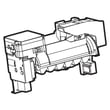
- Ice maker assembly (AEQ72909602) - refrigerator ice maker part by LG AEQ72909602 if the ice maker will not cycle, harvest, or fill.
Why it matters
Ice makers depend on steady freezer temperature and consistent water flow. A partially clogged filter or marginal water pressure can mimic a failed ice maker by causing slow production, hollow cubes, or intermittent batches.
Last updated: January 2026