Installation guide
 Owner’s manual
 Error Codes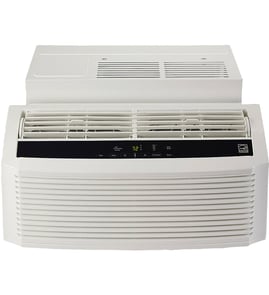




How many square feet will a 10,000 BTU air conditioner cool?
A 10,000 BTU room air conditioner typically cools about 400 to 550 sq. ft. In real homes, the “right” coverage depends on sun exposure, insulation, ceiling height, and how freely air can flow into the space, as described in the 25376223410 owner's manual.
Use this as a practical starting point for a Kenmore room air conditioner like model 25376223410:
- Best fit: ~400 to 450 sq. ft. (most typical rooms)
- Possible upper range: ~500 to 550 sq. ft. (good insulation, limited sun, normal ceilings)
- May feel undersized: open floor plans, high ceilings, lots of west-facing glass
- May feel oversized: small bedrooms where short cycling causes clammy air
- Airflow matters: choose a window location that lets cool air flow directly into the room, not around corners
These factors commonly shift the “effective” cooling area up or down:
- Ceiling height: 8 ft is the baseline; taller ceilings need more BTUs
- Sun and windows: strong afternoon sun increases load
- Insulation and air leaks: weather stripping and insulation help keep warm air out
- Room layout: air does not move well around corners; closed doors reduce circulation
- Heat sources: cooking, laundry, and electronics add heat
| Room conditions | Typical coverage for 10,000 BTU | What you may notice |
|---|---|---|
| Shaded, insulated, 8 ft ceilings | 500 to 550 sq. ft. | Steady cooling, shorter run times |
| Average home conditions | 400 to 450 sq. ft. | Normal cycling and comfort |
| Hot sun, leaky, open layout, high ceilings | 300 to 400 sq. ft. | Longer run times, warmer room |
Correct BTU sizing helps your air conditioner remove heat and humidity efficiently. If the unit is too small, it can run constantly and still feel warm; if it is too large, it can cool fast but leave the room feeling damp.
If your Kenmore unit is not cooling as expected, use the Kenmore error codes guide to match any display code to the most likely cause.
Last updated: January 2026
How much does an AC unit cost for a 1800 square foot house?
A typical installed central AC system for a 1,800 sq ft house commonly costs about $5,600 to $14,700, depending on efficiency (SEER2), brand, ductwork condition, and whether you also replace the furnace or air handler. Our Kenmore 25376223410 is a room (window) air conditioner, so it is priced and sized differently than whole-home central AC.
Central air pricing is mostly labor and system design, not just the outdoor unit.
- Outdoor condenser and indoor coil (or air handler)
- Refrigerant line set work (reuse or replace)
- Electrical disconnect, whip, and circuit work as needed
- Startup, refrigerant charge verification, and airflow checks
- Permits and disposal (varies by area)
Most homes around 1,800 sq ft land in the 2.5 to 3.5 ton range, but the correct size depends on insulation, windows, climate, and duct leakage.
| Home situation | What happens | Cost impact |
|---|---|---|
| Leaky ducts or poor insulation | Needs more capacity to feel comfortable | Often increases total cost |
| Higher SEER2 equipment | Lower operating cost | Higher upfront cost |
| Adding or upgrading ductwork | Better airflow and comfort | Can add significant labor |
A room air conditioner like Kenmore 25376223410 is meant to cool a room or zone, not an entire 1,800 sq ft home. If you use window units for multiple rooms, plan for higher total electrical use and more maintenance (filters, drainage, and airflow).
- Clean the air filter regularly for best cooling performance
- Keep the front and back of the unit clear for airflow
- Expect normal compressor delays; many units use a short time-delay restart to protect the compressor
For model-specific operation and care details, use the 25376223410 use and care guide.
Correct sizing and installation quality drive comfort, humidity control, and energy use. An oversized central AC can short-cycle and leave humidity high; an undersized system can run constantly and still not keep up.
For help interpreting display codes on Kenmore window units, use Kenmore window air conditioner with heater error codes.
Last updated: January 2026
What is the 20 rule for air conditioning?
The “20-degree rule” is a comfort and efficiency guideline: we typically recommend setting your air conditioner about 20°F cooler than the outdoor temperature (or less). On a Kenmore room air conditioner like model 25376223410, pushing for a bigger temperature drop can mean longer run times, higher energy use, and more wear.
- If it’s 95°F outside, set the room temperature around 75°F.
- If it’s 85°F outside, set the room temperature around 68 to 72°F (comfort varies).
- Use CLOSED exhaust/vent when you want maximum cooling; OPEN can bring in warmer outdoor air and reduce cooling performance.
- Keep the air filter clean and make sure airflow is not blocked by curtains or furniture.
- If the unit is newly installed or moved, keep it upright for 1 hour before operating.
| Outdoor temp | Typical setpoint using the rule | What you’ll notice |
|---|---|---|
| 80°F | 60 to 70°F | Often comfortable; may run steadily |
| 90°F | ~70°F | Longer cycles; humidity control matters |
| 100°F | ~80°F | Unit may run nearly nonstop |
Room air conditioners are designed to cool and dehumidify within normal operating limits. A very low setpoint during extreme heat can keep the compressor running continuously, which increases energy costs and can contribute to icing, poor airflow, or nuisance fault codes.
- For operating tips (including vent/exhaust settings and normal behavior), use the 25376223410 owner’s manual.
- If you see a code on the display, use Kenmore error codes to identify what it means and what to check first.
Last updated: January 2026