Owner’s manual
 Error Codes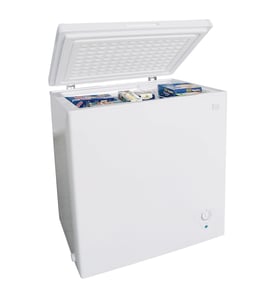





How big is a Kenmore chest freezer model 2539185110?
The Kenmore chest freezer model 2539185110 is a compact chest-style freezer. For exact exterior dimensions and clearance requirements for your specific unit, we recommend checking the specifications section in the 2539185110 owner's manual.
What to measure (so you get the right “fits” size)
Use a tape measure and record these:
- Width: left-to-right across the front
- Height: floor to top of the lid (closed)
- Depth: front to back (include the handle if it sticks out)
- Lid swing clearance: space needed above and behind to fully open the lid
- Ventilation clearance: space around the cabinet for airflow
Typical size range for compact Kenmore chest freezers
If you need a planning estimate before measuring, most compact chest freezers are approximately:
| What you need | Typical range |
|---|---|
| Width | 20 to 25 in. |
| Height | 32 to 35 in. |
| Depth | 21 to 25 in. |
Why it matters
Correct dimensions help you avoid airflow problems, lid-interference issues, and installation headaches. Proper clearance also supports stable temperatures and efficient operation.
Quick tips before you move or install it
- Measure doorways and hallways the freezer must pass through
- Keep the freezer upright during transport when possible
- Allow time for the freezer to cool down before loading unfrozen food (the manual notes a 4-hour cool-down period)
- Set the temperature control gradually and allow several hours between adjustments
Last updated: January 2026
What are the disadvantages of a chest freezer?
Chest freezers like Kenmore 2539185110 are great for long-term storage and steady temperatures, but the main disadvantages are harder organization (deep storage), more hands-on defrosting and cleaning, and needing more floor space for the lid to open fully. See the 2539185110 owner's manual for model-specific features like baskets and defrost options.
Common disadvantages (what you notice day to day)
- Harder to organize: Items stack vertically, so food can get buried under other packages.
- Harder access: Reaching the bottom often means moving baskets or lifting out food.
- Manual defrost is common: Many chest freezers need defrosting when frost reaches about 1/4 to 1/2 inch.
- More floor clearance needed: You need overhead and front clearance to lift the lid fully.
- Cleaning can take longer: You typically remove food, wipe interior surfaces, and avoid harsh cleaners.
What this model’s manual highlights (Kenmore 2539185110)
The manual for this freezer type calls out a few chest-freezer realities that can feel like “disadvantages”:
- Leveling matters: If the freezer is not level, the lid may not close or seal properly, which can lead to frost or moisture issues.
- Cool-down time: For safe food storage, allow about 4 hours for the freezer to cool down completely before loading unfrozen food.
- Temperature control location: On chest models, the temperature control is typically on the left outside wall.
Upright vs. chest freezer: quick comparison
| Feature | Chest freezer | Upright freezer |
|---|---|---|
| Organization | Harder (stacking) | Easier (shelves/door bins) |
| Floor space | More (lid clearance) | Less (front door swing) |
| Defrosting | Often manual | Many are frost-free |
| Temperature stability | Typically very steady | Can vary more with door use |
Why it matters
These disadvantages affect food rotation, energy use habits (how long the lid stays open), and maintenance time. If you plan to store lots of small items, adding or replacing storage accessories like a basket 216848200 can make a chest freezer much easier to live with.
Last updated: January 2026
What are the most common issues with 2539185110?
The most common issues we see with the Kenmore 2539185110 chest freezer are warm temperatures (not freezing), excessive frost buildup, unusual clicking or humming from the compressor area, and lid seal problems that let warm air leak in. Use the 2539185110 owner's manual for model-specific operating and care steps.
Common symptoms and what usually causes them
- Not cold enough or thawing: control set too warm, poor airflow from overpacking, dirty condenser area, or a start component issue.
- Runs constantly: lid not sealing, frequent openings, warm room temperature, or heavy frost reducing efficiency.
- Clicking and not starting: compressor start components or overload protection opening on overheat.
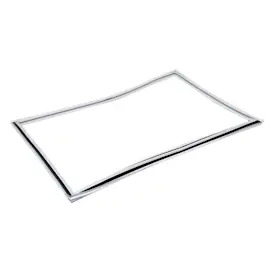
- Heavy frost: lid left ajar, damaged gasket, or humid air entering repeatedly.
- No power or intermittent power: outlet issue, loose wiring, or a failed indicator light.
Quick checks we recommend first
- Confirm the control is set to a colder setting and give it 24 hours to stabilize.
- Make sure the lid closes fully; check for packages preventing closure.
- Reduce frost; manual defrost when ice buildup is thick enough to restrict space and airflow.
- Verify the freezer is on a dedicated, working outlet (test with a lamp).
- Listen at the compressor area: repeated click every few minutes points to a start/overload problem.
Parts that commonly relate to these problems
| Symptom | Part to consider | What it does |
|---|---|---|
| Clicking, won’t start | Overload protector 216100113 | Protects the compressor by opening if it overheats or draws too much current |
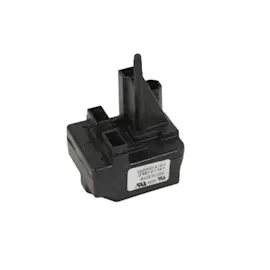
| Clicking, hard start | Ptc starter 5304410953 | Helps start the compressor motor |
| Poor cooling efficiency | Freezer condenser coil 5300120779 | Rejects heat; dirt or damage reduces cooling |
| Warm temps after sealed-system work | Filter drier 5303305677 | Keeps moisture/contaminants out of the refrigerant circuit |
| Power light out | Signal light 216598300 | Indicates power/operation status |
Why it matters
A chest freezer that runs warm or runs nonstop can spoil food and drive up energy use. Catching airflow, frost, and start-component issues early helps protect the compressor, which is the most expensive component.
Last updated: March 2026