 Owner’s manual




What is the average lifespan of an LG dishwasher?
LG dishwashers typically last 10 to 15 years with normal home use. For your LG LDP7808BD, consistent maintenance and correct cycle options (especially hot water and rinse aid use) help you reach the higher end of that range; see the LDP7808BD owner's manual for care and operating guidance.
What affects lifespan the most
- Water quality and temperature: hot water at the start of the cycle improves cleaning and reduces strain.
- Rinse aid use: helps drying and reduces water spotting that can lead to buildup.
- Filter and sump cleanliness: prevents recirculating debris that can wear pumps.
- Loading habits: overloading blocks spray and increases rewash frequency.
- Leak prevention: keeping seals clean helps avoid moisture damage to components.
Maintenance checklist (best ROI)
- Run the kitchen hot water until it is hot before starting a cycle (helps if the dishwasher is far from the water heater).
- Keep rinse aid filled; adjust the rinse aid level if drying performance needs a boost.
- Clean the tub and filters regularly; remove food debris from the bottom area.
- Use the right detergent amount for your water hardness.
- Let the dry cycle finish before opening the door for best drying results.
Common wear items vs. “big ticket” components
| Item type | What you may notice | Typical fix |
|---|---|---|
| Seals and door components | Drips at the door, moisture at corners | Clean/replace door seal such as dishwasher door seal 3920DD3002D |
| Drain and circulation components | Standing water, poor wash pressure, unusual noise | Clear clogs; inspect pump(s) and spray paths |
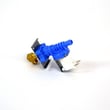
| Fill components | Slow fill, no fill, fill errors | Check supply; inspect inlet valve such as dishwasher water inlet valve 5221DD1001E |
Why it matters
A dishwasher that is cleaned, supplied with hot water, and used with rinse aid runs fewer repeat cycles and keeps internal parts (like pumps, diverters, and seals) under less stress. That directly supports a longer service life for the LDP7808BD.
Last updated: February 2026
Can I replace dishwasher parts myself?
Yes, for the LG LDP7808BD dishwasher, we can replace many common parts ourselves if we shut off power and water first and follow the step-by-step procedure in the LDP7808BD owner's manual. For plumbing and leak-related repairs, we always run a test cycle afterward and recheck connections.
Good DIY repairs vs. better left to a pro
Many dishwasher repairs are straightforward, but anything involving wiring, tight plumbing spaces, or repeated leaks deserves extra caution.
Usually DIY-friendly
- Cleaning the filter area and checking for debris in the sump
- Replacing a door seal if the tub edge is clean and undamaged
- Replacing a spray arm if it is cracked or clogged
- Replacing rack rollers or small rack hardware
- Tightening a loose water supply connection (then rechecking for leaks)
Often better for an experienced DIYer or technician
- Water fill problems tied to the dishwasher water inlet valve 5221DD1001E
- Drain problems that require pump access or hose rerouting
- Door won’t latch or won’t start issues involving the door switch/lock
- Any repair that requires pulling the dishwasher out of the cabinet
Safety and prep checklist (do this every time)
- Turn off the breaker to the dishwasher (do not rely on the control panel being “off”)
- Shut off the dishwasher water supply valve
- Protect the floor with towels; keep a shallow pan handy
- Take photos of wire and hose routing before disconnecting anything
- After reassembly, run a cycle and check the water supply and drain hose connections for leaks
Quick “after repair” verification
The manual recommends powering on and running a cycle to verify operation, then checking for leaks at the drain hose and water supply connection.
| What you see | What it usually means | What to do next |
|---|---|---|
| Water under the front | Door seal or door alignment issue | Clean sealing surfaces; inspect seal; confirm door closes evenly |
| Water under left/right side | Hose connection seep or clamp issue | Tighten fittings; reposition clamp; rerun a cycle |
| OE error | Drain hose kink/pinch or drain issue | Reroute hose to remove kinks; confirm proper drain path |
Why it matters
Dishwashers like the LG LDP7808BD can run normally even with a small seep; catching leaks immediately after a repair helps prevent cabinet damage and repeat service.
Last updated: February 2026
What is the most common problem with the LG dishwasher?
The most common issues we see with LG dishwashers like model LDP7808BD are poor cleaning, not draining, and fill-related problems. In many cases, the fix starts with basic maintenance (filters, spray arms, hoses) and then moves to checking error codes and key parts.
Most common symptoms (and what usually causes them)
- Not cleaning well: clogged filters, blocked spray arm holes, low water temperature, or loading issues
- Not draining: clogged filter area, kinked drain hose, blocked air gap or disposal connection, or a failing drain pump
- Not filling or filling slowly: kinked/clogged inlet hose, water supply issue, or a failing inlet valve
- Stops mid-cycle or won’t run: door not latching fully, control sensing a leak/overflow condition, or a motor-related fault
- Leaks: door seal wear, oversudsing from wrong detergent, or the unit not level
Quick checks we recommend first
- Cancel the cycle and let it drain; then check the bottom for standing water.
- Clean the filters and remove any debris around the sump area.
- Inspect hoses for kinks: water inlet hose and drain hose.
- Run the hot water at the sink before starting if the dishwasher is far from the water heater (helps cleaning and drying).
- Use only automatic dishwasher detergent; hand dish soap can cause oversudsing and leaks.
Error codes: the fastest way to narrow it down
Your LDP7808BD owner's manual includes an error-code chart that points to the most likely cause:
| What you notice | Common code category | What to check first |
|---|---|---|
| Not filling | Water inlet problem | Inlet hose kinks/clogs, water supply valve open |
| Not draining | Drainage problem | Drain hose, air gap/disposal, filters |
| Leaking/alert sound, drain pump runs | Leak/overflow condition | Suds, leveling, door seal, water supply off |
For a quick code lookup and plain-English explanations, use LG dishwasher error codes.
Parts that commonly fix these problems on LDP7808BD
If the basic checks don’t solve it, these model-matched parts are frequent culprits:
- Dishwasher water inlet valve 5221DD1001E for fill problems
- Dishwasher drain pump ABQ75742501 for draining problems
- Dishwasher door lock AGM76209501 for start/stop and latch-related issues
- Dishwasher door seal 3920DD3002D for leaks at the door
Why it matters
Poor cleaning and drying often trace back to water temperature, rinse aid use, and spray/filter flow. Drain and leak issues can trigger protective behavior (like intermittent draining) that makes the dishwasher seem “dead” until the underlying cause is corrected.
Last updated: February 2026





