Owner’s manual
 Error Codes



Can you replace an LG water filter without turning off water?
Yes. On the LG LFC21776D refrigerator, you can typically replace the water filter without shutting off the home water supply because most filter housings are designed to stop flow when the filter is removed. We still recommend turning off the refrigerator’s water supply valve first to reduce pressure and prevent drips.
- Dispense water for 5 to 10 seconds before starting to relieve line pressure.
- Turn the water supply valve off (recommended).
- Place a towel under the filter area to catch a small spill.
- Remove the old filter and install the new one fully seated and locked.
- Turn the water back on and check for leaks for 1 to 2 minutes.
- Flush several cups of water to clear air and carbon fines.
For model-specific filter location and the exact lock and unlock method, follow the steps in the owner's manual.
Most of the time, the internal shutoff prevents a steady stream of water, but you can still see a brief drip or spurting if there is pressure in the line.
| Situation | What you’ll see | What to do |
|---|---|---|
| Normal change with water on | A few drips | Use a towel; proceed |
| High pressure in the line | Short spurt, then drips | Dispense water first; consider shutting valve |
| Filter not fully seated | Ongoing leak | Reseat and lock filter; recheck |
A quick shutoff and pressure relief helps protect the filter seals and reduces the chance of a slow leak that can cause water puddles, cabinet damage, or ice maker and dispenser performance issues.
Last updated: February 2026
What is the most common problem with LG refrigerators?
For LG refrigerators like model LFC21776D, the most common customer-reported problem is cooling trouble (fresh food or freezer not staying cold). In many cases, the root cause is airflow or temperature-control related (fan, sensor, frost buildup), and it shows up as warm temps, thawing, or unusual running behavior. See the owner's manual for model-specific operating checks and diagnostics.
- Refrigerator section warms up while freezer seems “okay”
- Freezer warms up and ice cream gets soft
- Loud fan noise, rattling, or intermittent buzzing
- Frost buildup on the back wall of the freezer
- Temperature swings after the door is opened often
- Ice maker slows down or stops when temps rise
- Confirm settings: Set refrigerator to about 37°F and freezer to about 0°F.
- Check airflow: Make sure food packages are not blocking vents in either compartment.
- Inspect door sealing: Look for gaps, torn gasket areas, or doors that do not close smoothly.
- Listen for the evaporator fan: When the door switch is held closed, you should typically hear the fan running.
- Look for frost patterns: Heavy frost often points to a defrost or airflow issue.
If your LFC21776D is running but not cooling correctly, these model-matched parts are common suspects:
| Symptom | Likely area | Model-matched part to consider |
|---|---|---|
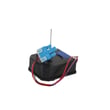
| Warm temps, weak airflow | Evaporator fan system | LG refrigerator evaporator fan motor 4681JB1027C |
| Temps read wrong, cycling seems odd | Temperature sensing | Refrigerator temperature sensor 6500JB2002X |
| Frost buildup, warming over time | Defrost system | Kenmore elite refrigerator defrost heater 5300JK1005Z |
| Poor heat release, long run times | Condenser/airflow underneath | Refrigerator condenser coil ACG73784701 |
Cooling problems can quickly lead to food spoilage and can also make related features act up (ice maker performance, water dispensing, and defrost timing). Catching airflow, fan, gasket, or sensor issues early usually prevents bigger temperature swings.
Your LFC21776D manual describes Smart Diagnosis steps (using the speaker area near the right door hinge and holding the Freezer Temperature button). We use that procedure to help narrow down cooling and control issues faster; follow the owner's manual instructions exactly.
Last updated: February 2026
How to tell if an LG compressor is bad?
On an LG LFC21776D bottom-mount refrigerator, a bad compressor typically shows up as warming temperatures (fresh food and freezer) with little or no steady compressor run sound; you may also hear repeated clicking from the lower rear area as the compressor tries to start and shuts off.
- Fridge and freezer temperatures rise even though the lights and display work
- Compressor is silent when it should be running, or it runs briefly then stops
- Repeated clicking every few minutes from the compressor area (start attempt, then overload trips)
- Condenser fan runs but cooling does not improve
- Unit cools intermittently, then warms back up
- Confirm airflow and heat removal: Make sure the condenser area is not packed with dust and the condenser fan is running.
- Listen and feel: A running compressor usually has a steady hum and slight vibration.
- Rule out a control or sensor issue: A failed temperature sensor can cause incorrect run behavior; for this model, a common related part is the refrigerator temperature sensor 6500JB2002X.
- Check for frost pattern problems: If the evaporator is heavily iced, a defrost failure can mimic compressor trouble; the kenmore elite refrigerator defrost heater 5300JK1005Z is one part involved in defrost on this platform.
Clicking often points to a start problem (overload/capacitor) or a locked compressor.
| What you notice | Most likely area | What it means |
|---|---|---|
| Click every few minutes, no cooling | Start components | Compressor cannot start or stay running |
| Compressor runs but temps still rise | Sealed system or airflow | Cooling system issue, not always the compressor |
| No compressor sound at all | Control, power, or compressor | Needs electrical diagnosis |
A common start component is the refrigerator run capacitor EAE58905704.
Your LFC21776D has a Smart Diagnosis feature that can transmit operating data through a phone when instructed. The steps and button sequence are in the owner's manual.
Replacing a compressor is a major repair. Confirming symptoms and ruling out airflow, defrost, and start-component problems helps avoid replacing the wrong part and restores proper cooling faster.
Last updated: February 2026
Why is the bottom of my LG refrigerator leaking?
A leak at the bottom of your LG LFC21776D bottom-mount refrigerator usually comes from a clogged defrost drain (water backs up and spills), a leaking ice maker water supply connection, or condensation caused by a door gasket that is not sealing. Use the owner's manual for safe access and panel removal guidance.
- Unplug the refrigerator before inspecting inside panels.
- Look for a sheet of ice on the freezer floor (points to a defrost drain issue).
- Pull the refrigerator forward and check the water line connection area for drips.
- Inspect door gaskets for tears, gaps, or areas not sealing flat.
- Check the drain pan area for overflow or a cracked pan.
| What you notice | Most likely cause | What to do next |
|---|---|---|
| Ice on freezer floor, water after defrost | Clogged defrost drain | Melt ice with warm water; flush drain until it runs freely |
| Drips near back or under unit | Water line or valve seep | Tighten fittings; replace seeping valve |
| Moisture around doors, sweating | Door gasket leak | Clean gasket; reshape with low heat; replace if torn |
If turning off the household water supply stops the leak, focus on the inlet valve and tubing. Replace the valve if it seeps or will not shut off fully; use the matching refrigerator water valve AJU72911105.
Water at the base can damage flooring and create hidden ice buildup that restricts airflow, which reduces cooling performance and increases compressor run time.
For prevention tips, see how to prevent water dispenser and ice maker problems.
Last updated: February 2026